
Infrared Moisture Survey in Thornton, CO
Map suspect moisture below commercial roofing in Thornton with infrared imaging and targeted core cuts. Get roof-zone findings for repair and capital decisions.
A roof can look intact while wet insulation remains hidden beneath the membrane. When leak history or surface conditions raise that question, an infrared moisture survey can help focus the next inspection. We scan under suitable conditions, map suspect patterns by roof zone and verify selected points with core cuts when needed. A thermal image is evidence to investigate, not proof of moisture by itself. NWS documented roof damage after hail crossed Thornton and Northglenn in May 2024. A current survey can help an owner determine whether an area needs testing, repair or broader evaluation.

Scan conditions: make the image useful
Infrared scanning depends on a temperature difference between roof areas and the conditions at the time of capture. Sun exposure, cloud cover, wind, surface material, roof assembly and moisture can affect the result. We review the roof type and weather window before scanning. If the surface or assembly is not suitable, we explain why and use another method. A useful survey records the scan conditions and does not claim precision the image cannot provide.
We inspect accessible areas before and after imaging, noting drains, curbs, penetrations, patches, rooftop equipment and any visible ponding or damage. We compare thermal patterns with those physical observations. A dark or warm region may result from surface variation rather than wet insulation. We mark it as suspect until a core cut or other targeted check confirms what lies below. This keeps the report from turning a color pattern into an unsupported replacement recommendation.
Verification: pair patterns with core cuts
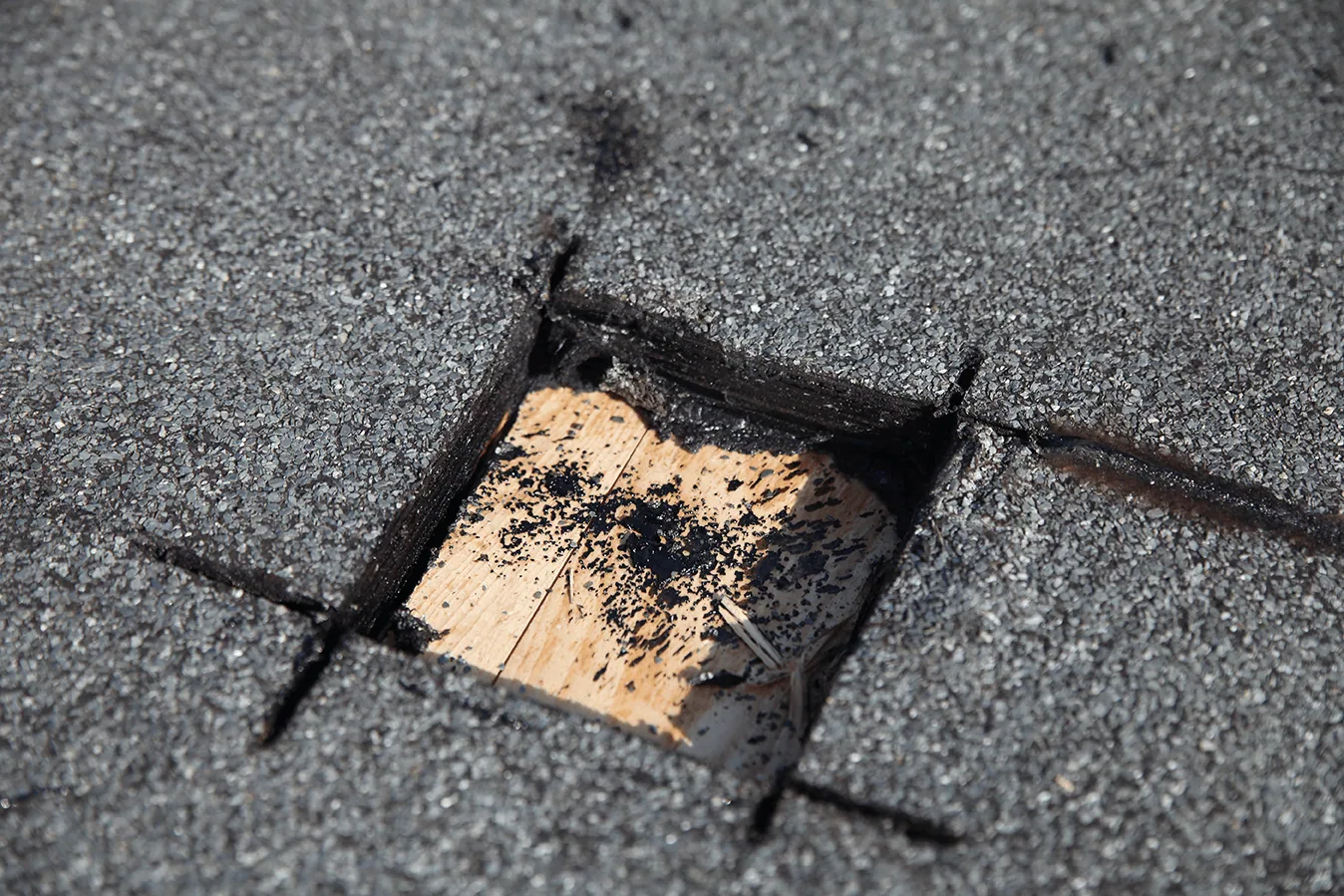
Core cuts show the roof assembly at selected points. We document the membrane, insulation layers, moisture condition and deck visible in each opening, then restore the cut using a compatible repair. Test locations should answer a specific question: whether a scan boundary contains wet insulation, how far a condition extends or whether a roof zone differs from the plan. We avoid opening the roof without a reason and record locations so results can be compared later.
Findings are mapped as confirmed wet, dry at the sampled point, or still uncertain. A dry core cut does not prove every nearby area is dry. We use more than one sample when the scan pattern, roof history or building risk calls for it. The final record explains the sample locations and limitations. If water entry is active, our leak response can protect the interior while survey results guide permanent repair.
Thornton context: connect the survey to the asset
Thornton includes distribution, manufacturing, healthcare and retail properties, each with different assemblies and access constraints. The city’s North Valley Tech Center is identified as a major employment area, while North Washington Commerce Center is a multi-building industrial development near I-25. Those land uses suggest where a survey may support asset planning, but they do not tell us roof age or material. We verify the building, review available plans and tie every scan to the correct roof section.
The hail report gives another reason for targeted investigation. NWS documented one to two inch hail and roof damage across the Thornton and Northglenn storm path. That does not mean every roof has concealed moisture. We compare the date of a reported leak with the location of visible damage, then test only where evidence supports a closer look. Denver’s winter snowfall records are regional context for scheduling, not a substitute for the current roof condition.
Decision boundary: identify what the survey can answer
A moisture survey can help estimate how much insulation may require removal, locate areas for additional testing and compare roof zones before replacement. It cannot determine structural capacity, establish code compliance or prove the cause of water entry without supporting evidence. We state those limits in the report. If the scan and core cuts confirm wet material, we show the area for removal or repair. If the evidence is mixed, we identify the next sample or inspection step rather than broadening the scope by assumption.
When moisture is limited, selective repair may be possible. Widespread wet insulation can change the decision toward partial or full replacement. The roof’s existing layers and attachment also affect whether a recover remains viable. We can compare recover, replacement and targeted repair after the affected boundaries are verified. Each option should name what the survey confirmed and what remains concealed.
Report: give the owner a usable map
The deliverable includes scan images, roof-zone labels, suspect areas, core-cut locations, findings and recommended next steps. We document weather conditions and limitations that could affect interpretation. Photos of each sample show the materials actually found. The report separates confirmed moisture from thermal patterns still awaiting verification. A facility manager can use that distinction to set repairs, maintenance tasks or a capital review without treating every colored region as a defect.
Cost and timing depend on roof area, surface access, number of structures, scan conditions, sample count and repair of test openings. We agree on the survey boundary before mobilization and identify any restricted zones. For portfolios, condition reports can carry the findings into a property record, while capital planning helps compare confirmed wet areas with other roofs needing attention.
Next step: use the evidence to set the scope
Send the roof plan, system history, leak locations, recent repair records and any hail inspection notes. Tell us when the building can be accessed and whether work below needs coordination. We will review scan suitability, set sample locations and document the results. If we cannot confirm a boundary, the report will say what test is needed next.
A moisture survey should make a decision clearer. It may justify a targeted opening, support a selective repair or show that a larger capital review is warranted. We connect the findings to the actual assembly and identify the work window, access plan and temporary protection required. For a roof at 25 Commerce Park or another Thornton business property, we confirm the building details before interpreting the scan.
Commercial Roofing Questions
Does infrared imaging prove that insulation is wet?
No. Infrared identifies thermal patterns that may be consistent with moisture, but surface material, shade, wind and other conditions can produce similar patterns. We verify suspect areas with selected core cuts or another appropriate test. The report distinguishes the image observation from confirmed moisture so the repair scope uses evidence from the assembly.
When is the best time to perform an infrared survey?
The roof and weather need to support a useful temperature contrast. We review recent sun exposure, clouds, wind, surface conditions and the assembly before choosing a date. If the expected conditions are poor, we may defer the scan or use a different inspection method. The report records the conditions that influence interpretation.
Will core cuts damage the roof?
Each test opening passes through the roof assembly, so we select locations that answer a clear question and repair every opening after sampling. We document the layers and moisture found at that point. A sample represents the selected location, not an entire roof zone, and additional testing may be needed if conditions vary.
Can you survey a roof after hail in Thornton?
Yes, when the roof is safe to access and scanning conditions are suitable. The May 2024 storm crossed Thornton and Northglenn and NWS recorded hail-related roof damage. We inspect the property first, then use imaging if it can help identify areas for verification. Surface impact, interior leaks and concealed moisture are recorded as separate observations.
What decision should the survey help us make?
The survey can help define test boundaries, locate confirmed wet insulation and compare selective repair with broader replacement. It does not answer every structural, code or cause question. We state what is verified and what needs another review, then prepare a scope that keeps those limits visible.
Map moisture before setting the repair boundary
Send roof plans, leak locations, recent repair records and access restrictions. We will check scan conditions, verify suspect zones with selected samples and report what the evidence supports.
Call 555-555-5555 or send the form and we will set up a visit.