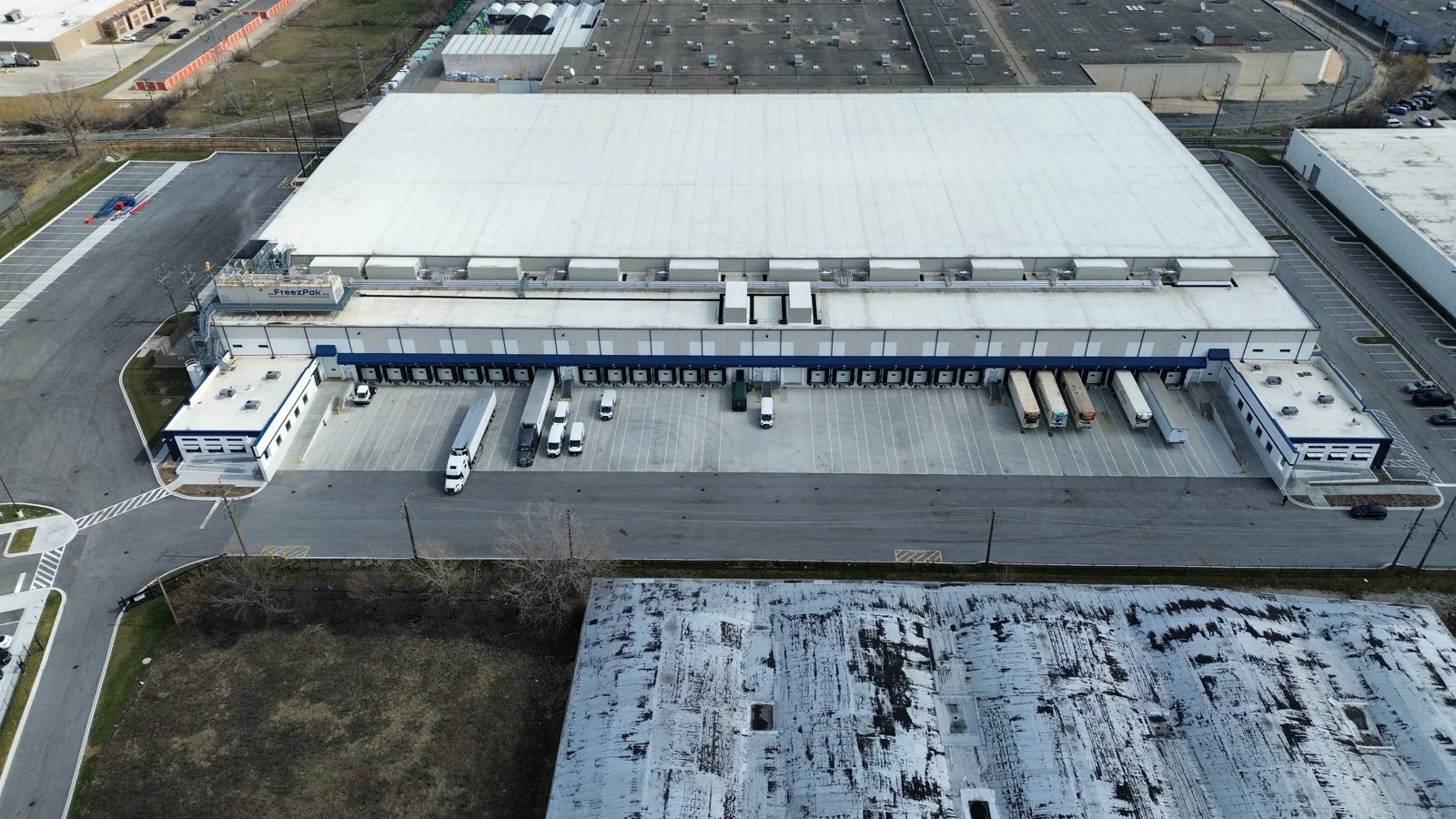
Cold Storage Commercial Roofing in Thornton, CO
Protect cold-storage roof assemblies in Thornton from leaks and condensation. We inspect insulation, vapor control, penetrations and close-in timing by zone.
Condensation below a freezer roof can point to a vapor-control problem as well as a leak. We inspect the roof layers, penetrations, insulation and interior reports before separating those causes. A cold-storage building needs a close-in plan that protects temperature-controlled operations while each area is repaired. In Thornton, winter access and the facility’s thermal conditions both affect when the roof can be opened.
Thermal boundary: inspect insulation and air leakage
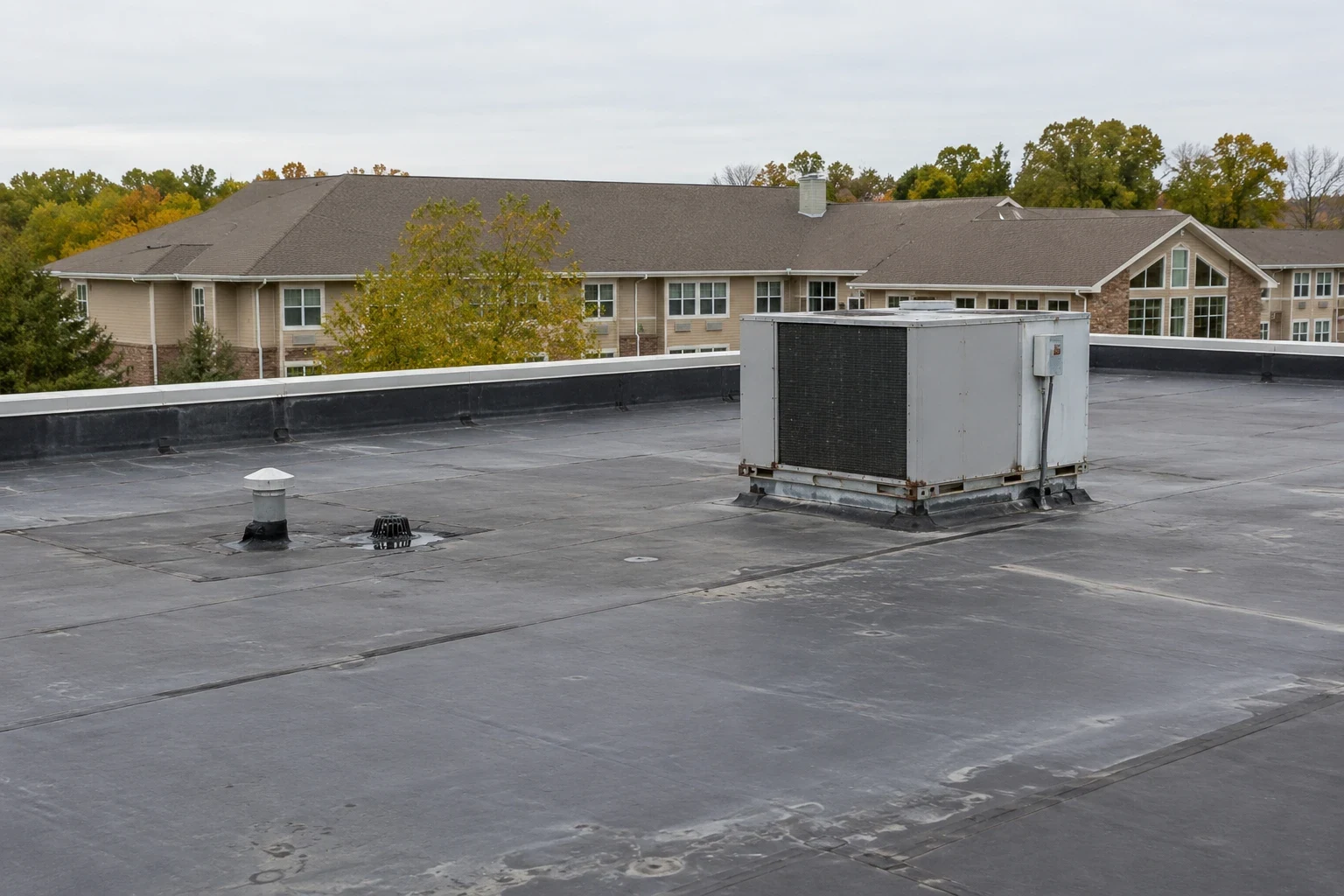
A cold room creates a strong temperature difference across the roof. Gaps at joints, curbs or wall transitions can allow warm, moist air to reach colder layers and condense. We inspect insulation continuity, vapor-control details, roof penetrations and signs of frost or moisture below the assembly. A roof leak may create similar symptoms, so we trace the water path and identify whether testing or a selective opening is needed.
We check around refrigeration lines, exhaust, support frames, drains and roof hatches. A flashing detail that is loose or poorly tied into the vapor-control layer can affect more than the membrane surface. Penetration repairs can be sequenced with insulation work where the opening requires both. Insulation and cover board work should restore the layers and transitions identified in the project scope.
Temperature control: coordinate each roof opening
Before tear-off, we identify the room below, product sensitivity, refrigeration equipment, sanitation schedule and any shutdown limit. The work area should be small enough to inspect the substrate, replace wet material and close the roof within the planned shift. We coordinate temporary protection with the facility team and agree on notification steps if an unexpected condition appears. The roof should not remain exposed while a production decision is pending.
Thornton’s business-park portfolio includes sites where food production is listed as a potential use, including 25 North Business Park. That fact makes temperature-controlled operations relevant to local planning but does not identify a specific cold-storage building. The facility’s actual process and access plan guide the work. For a property in 25 North Business Park, we would confirm loading, refrigeration and roof access at the address before setting quantities or staging.
Moisture diagnosis: distinguish leakage from condensation
We compare interior frost, stains or ceiling damage with roof drains, seams, curb flashings and transitions. A leaking membrane may wet insulation from above; air leakage can move moisture from below. Both conditions can exist in one roof zone. Infrared patterns can direct attention, but a scan does not identify the water source by itself. We record test locations and use a targeted opening when direct confirmation changes the repair.
If insulation is wet, leaving it under a new membrane can preserve the problem. We define removal limits and restore the vapor-control and air-seal details within the agreed scope. If the membrane remains sound and layers are dry, a localized repair may be enough. Moisture mapping can help plan sampling, and a hands-on inspection documents visible seams, edges and drainage paths.
Thornton weather: time the winter close-in
Denver climate records show substantial January and February snowfall and wide winter extremes. Those are regional data, not a measurement from a Thornton facility. Snow and ice can block roof access, hide drains and make membrane work unsafe. We check the actual forecast and surface before removal. Each day’s plan defines how much insulation or membrane can be opened and the point at which the assembly must be secured.
Hail also warrants a roof review when a property reports impact or new leakage. The May 30, 2024 storm crossed Thornton and Northglenn and brought reported roof damage. That event does not diagnose a cold-storage roof. We inspect the site, photograph observed conditions and separate impact from condensation or older moisture. If an opening is active, our emergency response can install temporary protection while permanent work is planned for a suitable window.
System choice: compare repair with full assembly renewal
A repair can fit when leakage is isolated and the surrounding insulation, vapor control and attachment remain intact. Repeated condensation, widespread wet layers or failed transitions may require broader assembly work. We inspect representative zones and mark what still needs testing. A recover is appropriate only when existing layers are dry, stable and compatible with the proposed roof system. The decision includes drainage, edge height, penetrations and refrigeration access.
Cold-storage roofs share some access needs with warehouse buildings, but thermal control changes the inspection and detailing. A distribution-center scope may also need dock phasing, while a data center’s equipment and uptime priorities differ. We keep each facility type’s operating assumptions clear. Roof system selection can include TPO or another specified membrane if attachment, vapor control and product requirements support it.
Work sequence: protect refrigeration and inventory
Cost and timing depend on temperature limits, access, roof height, insulation depth, membrane layers, equipment density, interior protection and whether refrigeration must pause. We separate roof labor from mechanical shutdown and product relocation. If tear-off finds wet board or a damaged deck, the scope explains how added quantities are approved. That keeps the work aligned with the facility’s inventory controls and the capital decision.
North Washington Commerce Center is an industrial development with an e-commerce fulfillment phase and dock access. Its I-25 corridor access can help with regional deliveries, while a cold facility needs a site-specific staging review. We coordinate any roofing visit with the specific facility. The handoff records affected zones, installed layers, areas that remain untested and the next inspection date.
Closeout: preserve the thermal and roof record
Photos and notes should show membrane repairs, insulation replacement, vapor-control transitions, penetrations and interior protection. We identify which rooms or zones were affected and any condition that needs monitoring. If a repair was completed in a limited access window, the record states what was opened and secured. That gives maintenance and refrigeration teams a shared basis for tracking later frost or moisture.
Send roof drawings, refrigeration equipment locations, interior condensation reports, leak history, operating hours and the capital deadline. We will map the roof and thermal boundary, then return a phased scope with daily close-in needs. For facilities that also handle ambient inventory, condition reporting can distinguish cold-room details from other roof zones and support future budgeting.
Commercial Roofing Questions
How can we tell whether moisture is a roof leak or condensation?
We compare interior symptoms with roof seams, penetrations, insulation and vapor-control transitions. Thermal differences can help explain condensation, while wet layers and a mapped water path may point to leakage. Testing or a selective opening can confirm the source where the scope depends on it.
Can the freezer remain in operation during roof repairs?
The facility schedule and size of the work zone set that limit. We coordinate refrigeration, inventory protection and interior access, then phase work so the roof is secured within each shift. The site team identifies any temperature or sanitation restriction before mobilization.
Why inspect vapor-control details during a roof repair?
Warm, moist air can move through gaps and condense at colder layers. A surface membrane repair alone may leave that path open. We inspect transitions, penetrations and insulation so the scope can restore the affected layers rather than only cover the roof field.
Can wet insulation remain under a new membrane?
We identify the moisture boundary and remove wet material where the approved scope requires it. Covering saturated insulation can leave performance and durability concerns in place. Test results and selective openings help determine removal quantity and the tie-in to dry layers.
What delays cold-storage roof work in Thornton?
Refrigeration windows, inventory protection, roof access, winter conditions, delivery staging and concealed moisture can affect timing. We plan small work zones and confirm the weather and interior requirements before removal. If conditions change, the close-in plan protects the open area.
Plan the roof around temperature-controlled operations
Share roof drawings, refrigeration locations, interior moisture reports, leak history, operating hours and the capital deadline. We will map the thermal boundary and phase repairs by zone.
Call 555-555-5555 or send the form and we will set up a visit.