
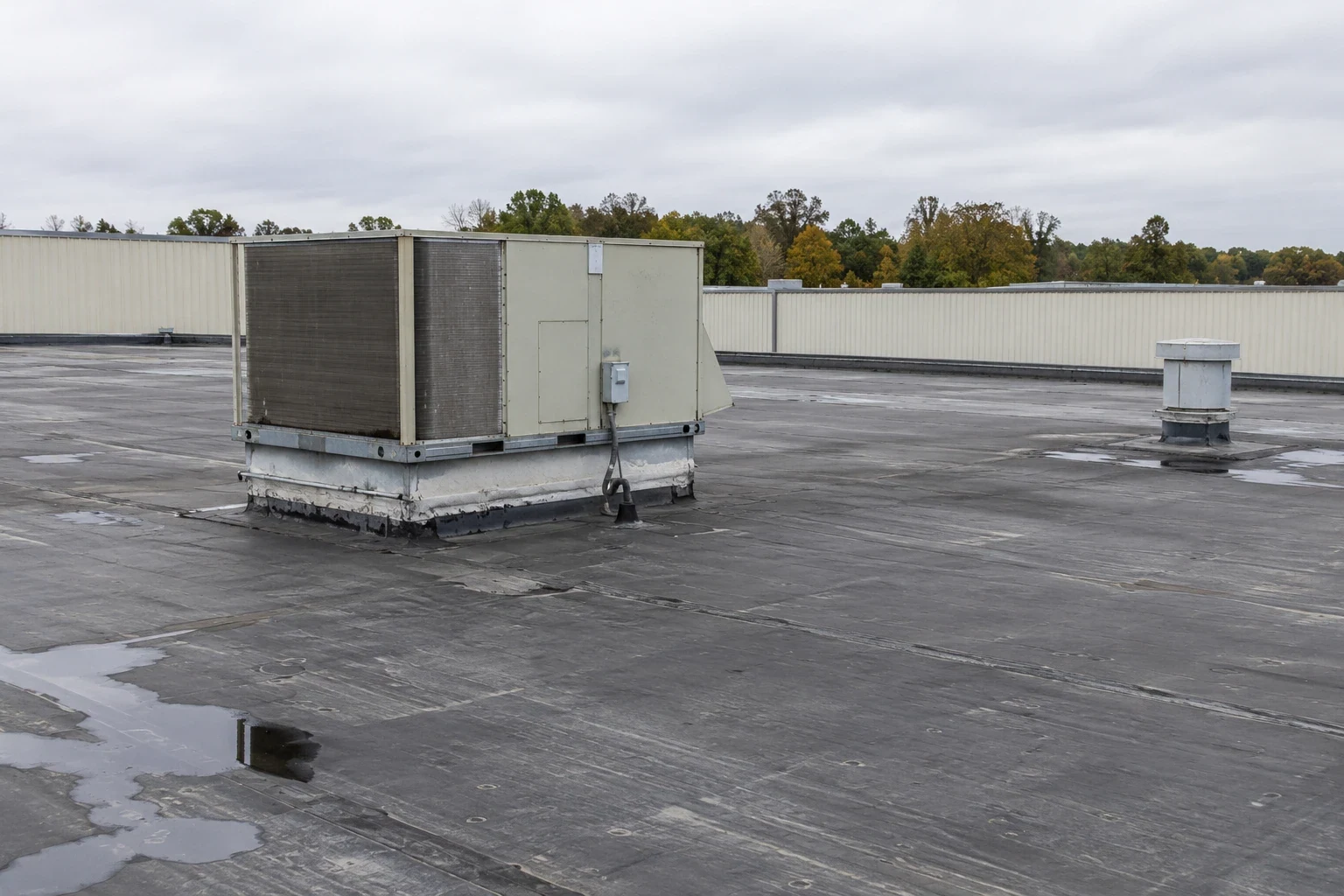
Manufacturing Plant Roofing in Thornton, CO
Plan manufacturing plant roof repairs in Thornton around exhaust, equipment and production windows. We map exposure, leaks and shutdown needs by zone.
A production shutdown can be expensive, so a roof repair needs a clear work boundary before equipment is moved. We inspect the membrane around exhaust, utility penetrations, curbs and service paths, then coordinate the sequence with plant operations. Process conditions can affect material compatibility, but the inspection must confirm what reaches the roof. The written scope separates roofing from mechanical, electrical and structural work.
Process exposure: identify what reaches the roof
Manufacturing processes can release heat, moisture, grease, dust or other substances through vents. We ask the facility team what equipment operates, where discharge exits and whether cleaning materials contact the roof. Product-specific compatibility should be checked when an exposure is known. We inspect the membrane and flashing for cracking, softening, discoloration or deposits, then identify whether testing or product review is needed before repair.
Thornton’s major-employer list includes Intrex along with Amazon and HCA HealthONE Mountain Ridge. The list shows a varied local economy, not a particular plant process or roof assembly. At 25 North Business Park, possible uses include manufacturing and food production. Those land-use descriptions help frame process questions; only the facility can confirm its equipment and discharge. We record the roof condition separately from information supplied by operations.
Roof openings: coordinate exhaust and supports
Vents, ducts, pipes, conduit and equipment curbs interrupt the membrane. We inspect each flashing, support, nearby seam and drain path. Heat or vibration can affect the detail, and maintenance access may cause wear around a unit. A sealant bead over a cracked boot will not correct a loose curb or wet insulation. We define the repair boundary and identify any mechanical adjustment needed before roofing can close the opening.
We map exhaust locations against air intakes and occupied areas before work. Temporary protection or a shutdown may be needed while a curb is repaired. Our equipment-support coordination can align base repairs with mechanical work, while penetration flashing addresses openings and transitions. We agree on who disconnects, moves and restores equipment so the roof detail does not remain open between trades.
Production window: phase noisy and exposed work
Roof removal, fastening and material handling can create noise above production lines. We coordinate work hours, line shutdowns, sensitive instruments, deliveries and interior protection with the plant manager. Roof zones should be small enough for the crew to inspect the deck, repair substrate and secure the membrane during the shift. If concealed damage changes the quantity, we document it before covering the area and revise the close-in plan.
Thornton’s Business Park district permits industrial, manufacturing, transport, warehouse and clinic uses. Facilities along I-25 and E-470 may have delivery traffic that affects staging, but each plant’s shift and truck routes are property-specific. We confirm access and crane requirements before mobilization. Phased reroof planning can help define work zones where operations continue in other areas. If a leak reaches active equipment, our emergency response can protect the interior while permanent repairs are scheduled.
Condition map: separate process wear from roof failure
We document membrane type, seam condition, ponding, corrosion, previous patches and moisture findings by roof zone. If a process vent has deposits on nearby surfaces, the inspection notes the extent and asks the facility to identify the discharge. That evidence informs material selection without assuming chemical damage from the presence of a stack. If the roof has multiple additions, we verify each assembly and identify where transitions need a separate detail.
A hailstorm crossed Thornton and Northglenn on May 30, 2024, with NWS reporting roof damage. A manufacturing property can use the event date to request a review, but we document its actual panel or membrane condition. The record distinguishes impact from process exposure and long-term wear. Moisture testing can guide follow-up where leaks or surface changes suggest a concealed issue.
Repair threshold: compare a plant-wide scope with zones
Localized repair is reasonable when the membrane and substrate remain sound outside a limited detail. Repeated leaks, broad moisture or failed attachment may support replacement. We compare testing results across the roof and identify which zones can stay in service. A coating or recover is considered only when the assembly, moisture condition, drainage and product compatibility allow it. The scope lists the process and access assumptions behind each option.
For a plant near Creekside Innovation Park, the developer’s target uses include aerospace, light manufacturing, distribution and research. The property description does not establish the roof assembly. We inspect the specific building and stage materials around operating routes. A distribution-site comparison can be useful when one property combines production and fulfillment areas, while warehouse planning focuses on storage and dock operations.
Cost and closeout: keep trade boundaries visible
Cost depends on roof access, height, membrane and insulation layers, exhaust count, equipment congestion, repair quantity, interior protection and production restrictions. We separate roofing quantities from mechanical shutdowns, crane work, electrical changes and structural review. If testing or removal reveals hidden damage, the proposal states the approval process. This gives the plant manager a scope that can be matched to shutdown and capital calendars.
Closeout photos show repairs, details and zones that need observation. We record materials, work dates, access restrictions and any item assigned to another trade. A condition report can help maintain a roof history with each process area labeled. Send the roof plan, equipment list, discharge information, shift calendar, leak history and capital date so we can map the work before production is interrupted.
Commercial Roofing Questions
Can plant exhaust affect a roofing material?
It can, depending on the substance, concentration and path to the membrane. We identify vents and ask operations what they discharge, then check the product data for compatibility. If the exposure is uncertain, the scope notes the information or test needed before material is selected.
How do you schedule work around a production line?
We map the roof zone above the line, identify noise and access limits, and coordinate the work window with plant operations. A phased sequence can keep unaffected areas running. Each opened section needs enough time for deck review and secure close-in before crews leave.
Should rooftop equipment be moved before a reroof?
The inspection identifies which units or supports block removal, flashing or new membrane. We coordinate moves and shutdowns with the mechanical team and state them separately from roofing. Equipment should not be lifted until the curb and temporary protection plan are ready.
Can hail damage be distinguished from process-related roof wear?
We photograph observed impact, deposits, cracks and seams by location. The May 2024 storm record is regional context; a property inspection establishes actual conditions. Process details supplied by the plant help us evaluate where exhaust or heat may affect the material.
What information helps you price a plant roof repair?
A roof plan, process vent list, equipment schedule, shift calendar, access rules and leak history help define the work. We verify roof conditions before finalizing quantities. The proposal separates roofing from shutdowns, structural review and other trade scopes.
Fit roof work to the plant calendar
Send roof plans, equipment and vent locations, discharge details, shift times, leak reports and the capital deadline. We will define roof zones, trade boundaries and close-in needs.
Call 555-555-5555 or send the form and we will set up a visit.