
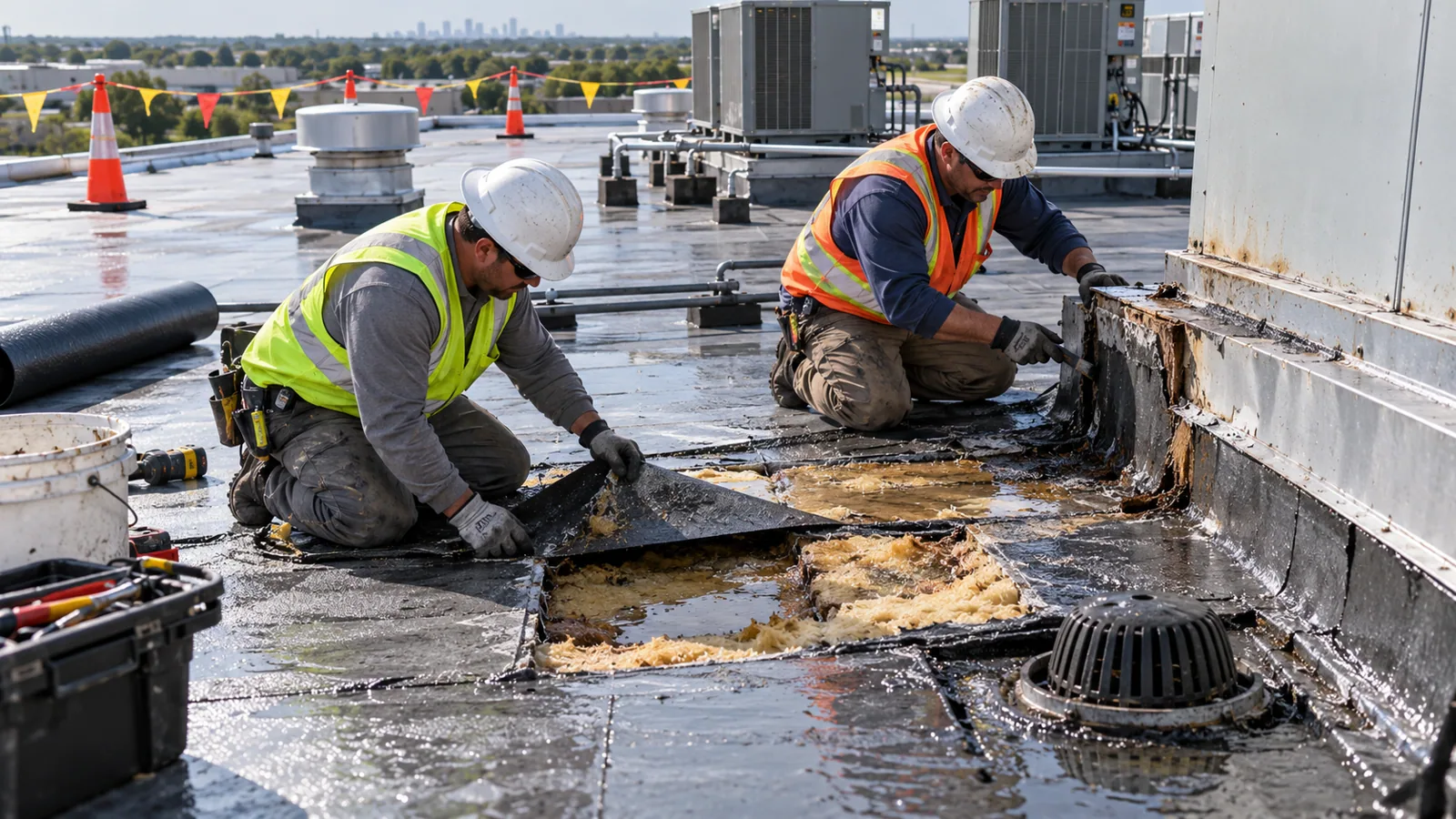
Commercial Wind Damage Roof Repair in Thornton, CO
Inspect wind-related roof damage, secure exposed areas and scope repairs by roof zone for Thornton commercial buildings and facilities.
A lifted coping joint can expose the roof edge before a leak appears inside. We inspect the perimeter, corners, flashings, membrane and equipment supports, then record where wind-related movement is visible. The repair scope identifies the affected zone, immediate protection and any test needed before permanent work. Thornton’s summer severe-weather window makes timing relevant, but the observed condition sets the recommendation.
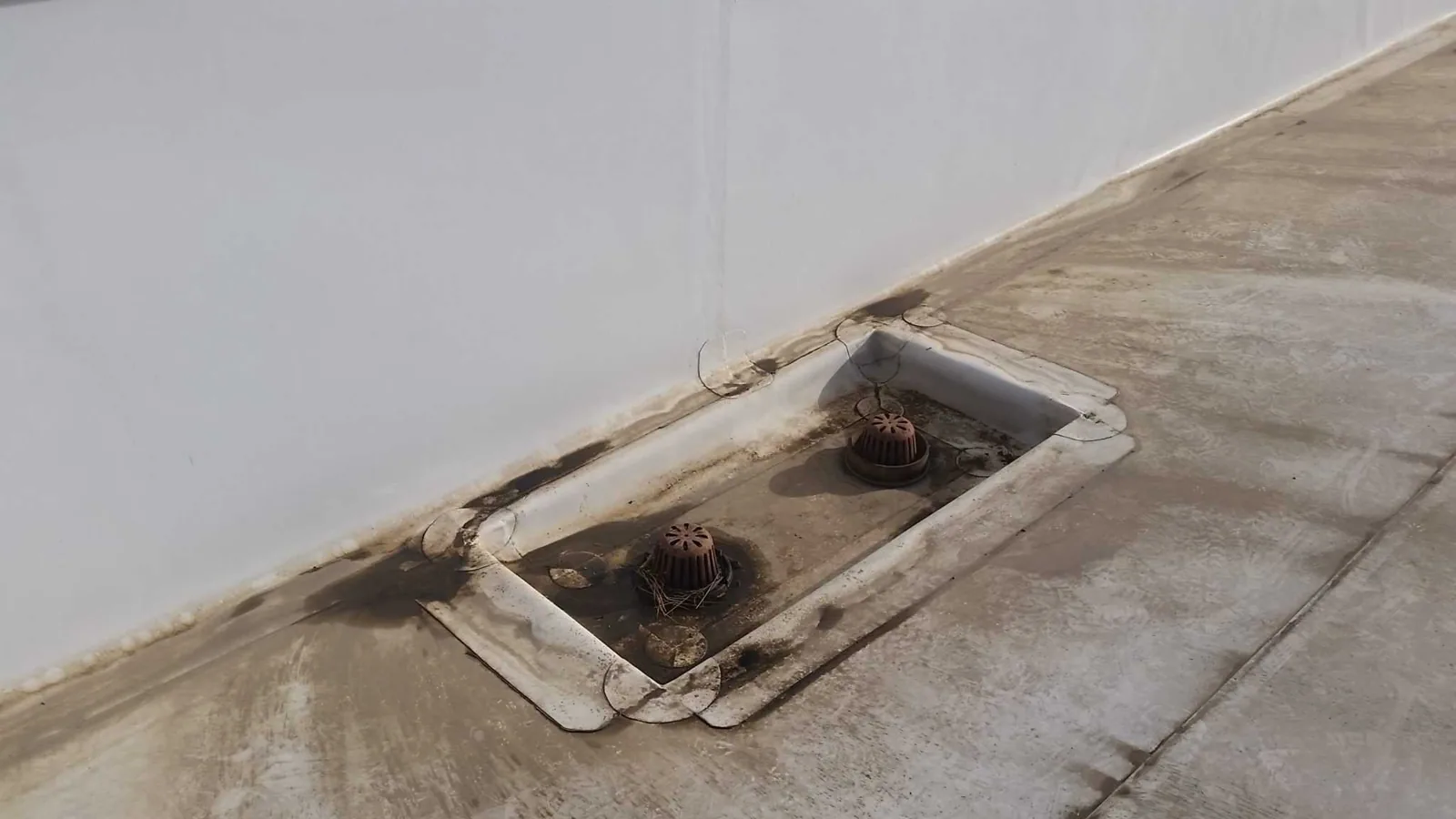
Perimeter review: trace movement from the edge
Wind forces change across a roof field, corner and perimeter. We check edge metal, cleats, fasteners, terminations, parapet caps and transitions at walls. A displaced section may point to a local attachment problem, while movement across several edges can require a wider review. Photos show the elevation, roof zone and direction of visible displacement. We note whether membrane or insulation can be checked without opening the assembly.
Thornton’s Business Park district clusters employment uses, with higher-intensity warehouse activity limited to designated areas along I-25 and E-470. That land-use pattern matters when a facility sets inspection access and delivery logistics; it does not tell us how a particular roof was built. At 25 Commerce Park, the developer lists access through Grant Street and 144th Avenue, with E-470 access via East 152nd Parkway. Site contacts still confirm the actual gate and safe roof route. 25 Commerce Park is one local access reference.
Event record: separate the report from the damage
A severe-weather notice can move an inspection forward, but a report does not establish damage at every property. County emergency guidance places the Front Range tornado period in the span from mid-May into mid-August. That seasonal window can overlap summer roof work. We document the event information supplied by the owner, then inspect the specific membrane, edge details and interior reports before assigning a repair area.
For an active opening, temporary cover should have a stated boundary, installation record and follow-up check. We keep that measure separate from permanent quantities. If a ceiling stain appears later, its location and timing help guide the next roof walk, but do not establish a source on their own. Tornado-related roof assessment can document impact conditions by zone. For hail, hail damage inspection keeps impact evidence distinct from wind displacement.
Field checks: look beyond visible metal
After a wind event, we inspect seams, penetrations, rooftop curbs, walk pads, drains and any exposed insulation. A loose sheet can conceal attachment damage beyond its visible edge. We mark the limits of what can be seen and identify where a test cut or fastening review would resolve uncertainty. If water has entered, the interior location is recorded separately from the roof defect until the path is confirmed.
The property’s operating schedule affects how quickly each area can be reached. A site near a freight entrance may need a lift window or loading restriction; an occupied office may require access control below the work. We state those constraints with the repair boundary. The facility record should include who confirmed roof access, whether interior staff reported water and whether equipment alarms or shutdowns changed during the weather. A repair visit that cannot reach a roof zone is recorded as incomplete for that zone, not as a clean inspection. Emergency roof response can address an opening before the complete permanent scope is ready, while a hands-on inspection records surrounding conditions.
Repair scope: distinguish securement from renewal
A short section of loose coping or a local flashing tear may support a contained repair when adjacent material remains sound. Broader uplift, recurring attachment failure or damaged insulation may justify opening additional areas. The proposal should identify fastening or edge work, membrane repair, substrate review, temporary protection and the point where an owner decision is required. We do not convert a single loose detail into a whole-roof replacement without evidence.
When the assembly condition is uncertain, a targeted opening can reveal attachment, moisture and layer condition. That work needs approval and a defined restoration method. If the roof is nearing a replacement threshold, compare the repair limit with a phased renewal and note which findings could change the choice. Commercial roof repair can be priced against a replacement scope when both options are supported.
Work window: close the roof before weather turns
The daily limit depends on wind, forecast, tear-off depth and available dry-in materials. We set the maximum open area and identify the person who approves a pause or restart. If weather interrupts work, exposed edges and penetrations need a secure temporary condition before the crew leaves. The next shift begins with a check of that protection and any overnight water report. We coordinate any rooftop unit shutdown with the facility contact, identify deliveries that cannot cross the work boundary and record which area can reopen. If a test opening changes the scope, the crew protects it until the owner reviews the finding and approves a permanent detail.
Thornton’s adopted energy requirements and building-code path may affect a permitted replacement scope. We confirm the project requirements before finalizing insulation, attachment or edge details. A storm repair and a permitted assembly change can have different review needs. A roof condition record preserves the event findings,
Closeout: leave a traceable repair record
Closeout identifies the location, repaired detail, materials, photographs and any condition that remains open. We note whether the work restored a temporary measure or replaced it with permanent repair. If a test was not performed, the record states that boundary and the next action. Those details help facilities staff distinguish new movement from an earlier condition during the next inspection.
Send the storm date, roof plan, access contact, leak reports and any previous edge work. We will return a zone-based finding with protection needs, repair alternatives and timing assumptions. Portfolio roof coordination can keep separate building records aligned without combining their condition decisions.
Commercial Roofing Questions
What should we check after wind lifts an edge detail?
We inspect the adjacent membrane, cleats, fasteners, corners, transitions and insulation where accessible. The report records the visible limit and identifies any test needed to determine how far attachment movement extends.
Can a storm notice establish that our roof was damaged?
No. A regional alert helps set inspection timing. The building needs a direct review, with observed movement separated from prior wear and suspected concealed damage.
When is temporary protection enough to reopen an area?
The affected area should be checked against the protection plan, water entry, interior conditions and access restrictions. We document what was secured and any monitoring step before the facility lead releases it.
How do we decide between a wind repair and replacement?
Compare the extent of movement, attachment condition, insulation, repair history and remaining assembly condition. We show the boundary for each option and what test could change the recommendation.
Can roof work proceed during the summer storm season?
Yes, when the forecast and daily close-in plan support the work. The crew sets an opening limit, protects exposed details and pauses when conditions exceed the safe work plan.
Document the wind-related roof condition
Share the event date, roof plan, access rules and any active leak. We will inspect the perimeter and affected roof zones, then return a repair sequence and open questions.
Call 555-555-5555 or send the form and we will set up a visit.