
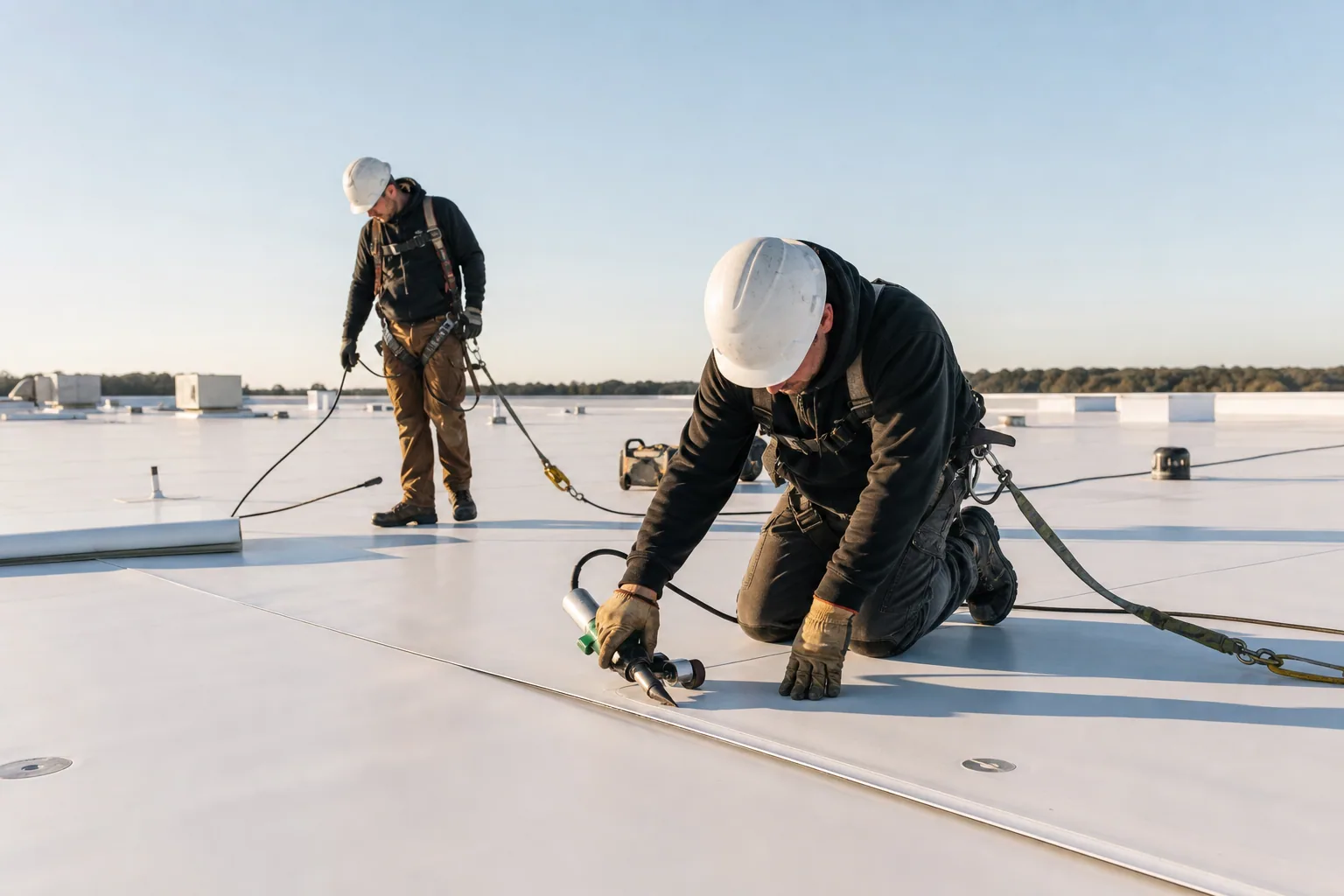
Commercial Roof Replacement in Thornton, CO
Plan Thornton commercial roof replacement around condition, operations, hail findings and winter close-in. Compare the work scope and window before budgeting.
A replacement decision gets harder when an active leak lands beside a capital deadline. NWS reports that its May 30, 2024 storm track moved through Thornton and Northglenn, where hail between one and two inches caused roof damage. That report calls for inspection, not automatic replacement. We map affected roof zones, check seams and penetrations, and separate repairable damage from widespread failure. A hands-on roof inspection ties the capital discussion to the membrane and details on the building.
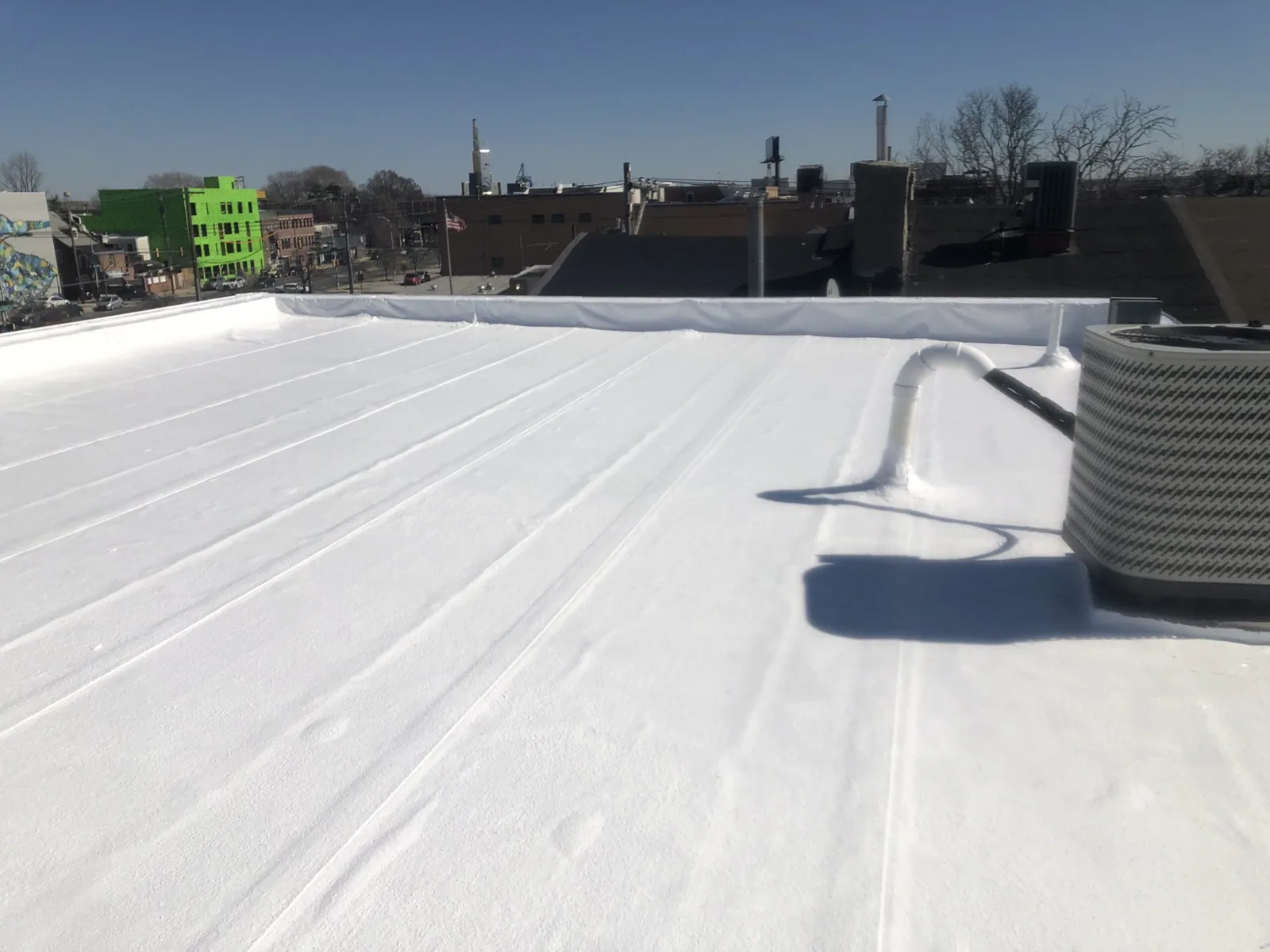
Capital window: set the replacement threshold
Age alone does not decide whether a roof belongs in this year’s budget. We look for repeated repairs, wet insulation, split membrane, failing seams, loose edge details and drainage problems. One puncture may stay in a repair reserve. Moisture across several zones can change the threshold. We document visible conditions, needed tests and the next inspection point.
A facility director may need one scope or a portfolio priority. We separate urgent protection from full replacement. 25 Commerce Park includes warehouse, distribution, showroom, flex and manufacturing uses. Those operations affect equipment access and work sequencing. We verify each building’s system and loading constraints before recommending materials.
Roof zones: confirm what the hail report means
We inspect the membrane and details without treating a hail report as a repair map. We check the field, seams, perimeter, curbs, skylights, penetrations, drains and interior ceilings. Impact evidence differs across single-ply, metal and built-up systems. We photograph each finding by location. Localized damage may need a targeted repair; a pattern across zones may call for moisture testing or replacement planning.
The storm record documents an event across Thornton and Northglenn. Denver climate records show regional snowfall, not conditions on an individual Thornton roof. We plan access around the season and confirm the forecast for the work date. For an active claim, we prepare a photo-supported condition and repair scope that separates observed damage from concealed conditions still untested.
Repair or replacement: compare both scopes
A repair can work when damage is localized, nearby membrane remains serviceable and the substrate is dry. We explain the repair boundary and what could change it. If wet insulation extends past a patchable area, a surface repair may leave the underlying problem in place. Test cuts or selective removal can confirm whether broader replacement is needed.
We also test whether a recover overlay fits. Code, existing layers, moisture and structural capacity control that choice. An overlay does not correct concealed moisture or unsuitable attachment. Our recover assessment lays out those checks beside a tear-off option. For replacement, we compare TPO and modified bitumen against the building’s use and details.
Work sequence: protect operations and the building
We plan around access, deliveries, occupied areas, rooftop equipment and drainage. Roof zones limit how much membrane is open at once. At loading facilities, staging and truck movement must fit daily operations. At occupied medical or office buildings, we coordinate entrances, sensitive rooms, exhaust locations and interior protection. The schedule sets updates and a response if tear-off reveals a deck condition that changes the next step.
Thornton’s north employment corridor includes Crossroads 25, an industrial project at I-25 and E-470. That location makes loading access and phasing useful questions, but it does not identify a tenant’s roof system. We verify the assembly during inspection. The work plan covers temporary water protection, waste routes, equipment coordination and close-in expectations. For active tenants, occupied-building sequencing belongs in the scope.
Weather and cost: protect the close-in window
Cost changes with removal depth, deck repairs, insulation, roof height, edge and curb details, equipment congestion, access, disposal and assembly. We mark known quantities and identify allowances for conditions concealed until tear-off. That lets an owner compare equivalent scopes. A proposal that excludes wet insulation or equipment coordination may describe less work. We show verified conditions and where a documented change may be needed.
Winter snow makes close-in planning important. NWS records for Denver show substantial January and February snowfall, and the November 2024 storm brought heavy snow to parts of metro Denver. These are regional records, so we confirm the forecast and roof conditions for the work date. A winter schedule needs limits on exposure, temporary protection and restart criteria. A hail claim or tenant calendar may further constrain access.
Decision record: set the next action
The condition record identifies failing zones, serviceable areas, needed tests and work that can wait. It compares immediate repairs, selective replacement, an eligible recover and full tear-off, with access and weather constraints. For a portfolio, these findings support capital planning by roof priority.
Share the roof inventory, active leak reports, hail documentation, access calendar and budget deadline. We photograph the findings and prepare a verified scope. If water entry is affecting operations, we address that exposure first, then return to the capital decision.
Commercial Roofing Questions
What finding makes full replacement more sensible than another repair?
Repeated failures across separate roof zones, widespread wet insulation, or a membrane that no longer accepts durable repairs can move the replacement threshold. We inspect the system and document how far each condition extends. If the evidence is limited, we can price a targeted repair and identify what follow-up test would change that recommendation. The decision record should distinguish confirmed conditions from areas still concealed.
Does the May 2024 hail report prove our Thornton roof was damaged?
No. The National Weather Service documented one to two inch hail and roof damage along a storm track that included Thornton and Northglenn. We still need to inspect your building. We check the roof surface, seams, edges, curbs and interior conditions, then photograph what we find. The storm date can help organize the inspection and claim file, while the field evidence determines the scope.
Can the existing roof stay in place under a new system?
An overlay can work when the current layers, moisture condition, code requirements and structural capacity support it. We verify those conditions first. Wet insulation, too many existing layers, incompatible materials or attachment limits can require tear-off instead. We will show which checks are complete and where a test cut or structural review is still needed before including a recover in the budget.
How should we plan a replacement before winter?
Start with inspection and access planning early enough to reserve a workable close-in window. We identify roof zones, staging areas, occupied spaces and temporary protection. Denver’s snowfall record is regional context, not a property forecast, so we confirm weather conditions as the project approaches. If the building cannot be completed in one work window, the sequence must show how each area will be protected between shifts.
What information helps compare replacement proposals?
Use the same roof plan, removal boundary, insulation approach, edge and curb details, equipment coordination, disposal assumptions and interior protection requirements for each proposal. We can note confirmed quantities and identify concealed conditions that may affect the work after tear-off. The comparison should also include the work sequence, access plan, temporary protection and close-in limits, not only the membrane name.
Set a replacement scope around the building
Share the roof inventory, access calendar, capital deadline and any active leak. We will inspect the roof zones, record verified conditions and separate immediate protection from replacement work.
Call 555-555-5555 or send the form and we will set up a visit.