
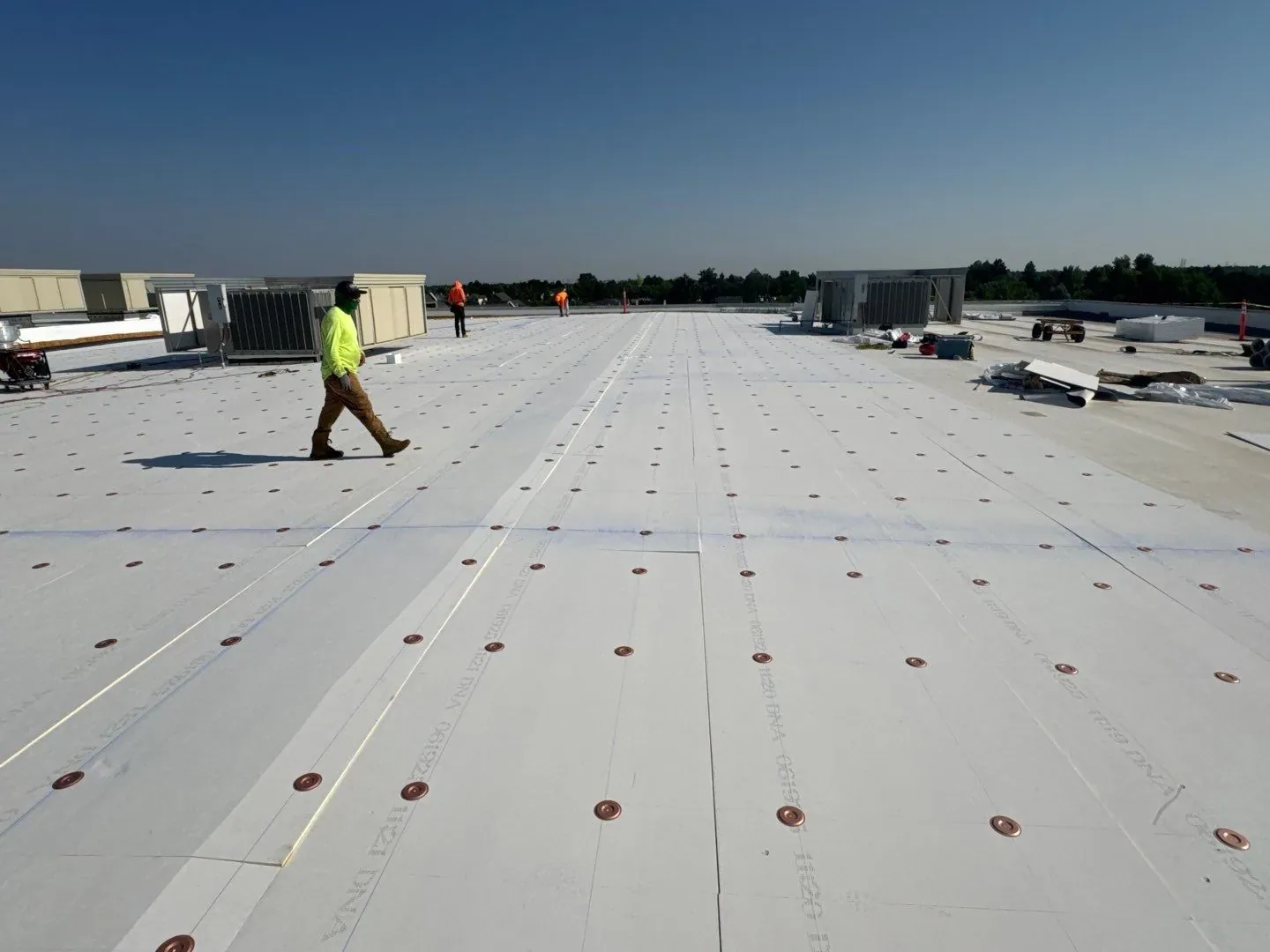
Emergency Commercial Roof Repair in Thornton, CO
Get 24/7 commercial roof response in Thornton for active leaks, hail or wind damage. Protect occupied areas, arrange dry-in and document permanent repairs.
A roof opening during a storm changes the work order. People and equipment below need protection before a permanent repair can be scoped. We provide emergency commercial roofing response in Thornton around the clock, all week and on holidays. The first visit focuses on safe access, water entry and temporary dry-in. We document the roof condition and the limits of work possible under the current weather. After the building is protected, we plan the permanent repair and follow-up inspection. One documented local weather event helps explain the need for prompt checks: NWS traced damaging one to two inch hail through Thornton and Northglenn on May 30, 2024. A storm report starts the review; it does not establish what happened at a given property.
Dispatch: share the conditions that matter
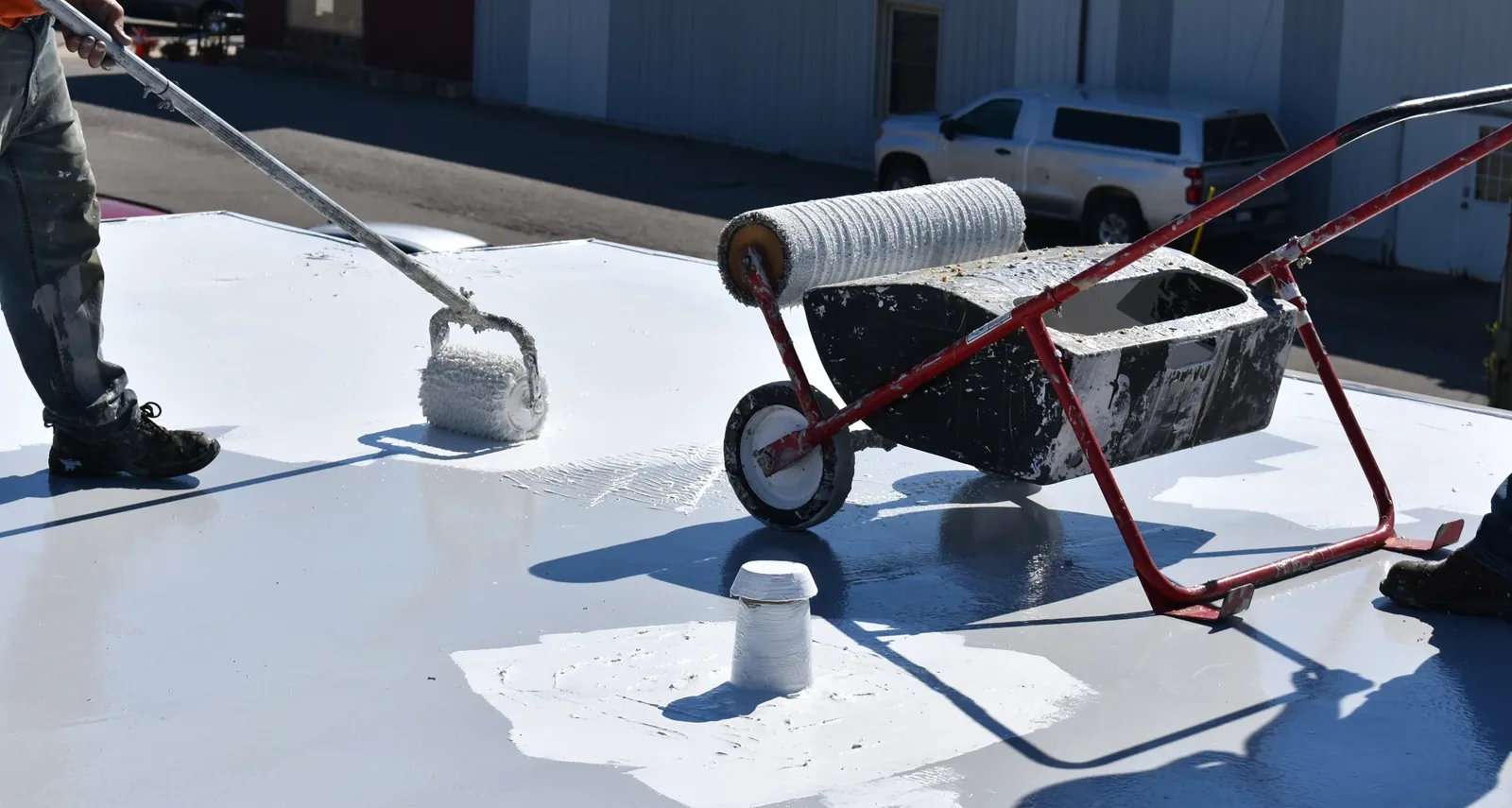
Call with the building address, point of entry, interior photos, active drip locations, roof access and a contact who can meet the crew. Tell us about electrical equipment, production lines, medical rooms, tenant restrictions or hazardous conditions below. If the leak changes with wind direction or continues after rainfall, include that detail. The information helps us prepare the right access equipment and coordinate the first safe steps. We confirm what the response can cover before arriving.
Thornton has several kinds of commercial properties. North Suburban Medical Center is in the South Thornton Healthcare District, while Crossroads 25 and other developments serve industrial and logistics users near I-25 and E-470. Those sites do not share one emergency plan. An occupied clinic may need room-level coordination; a distribution building may need dock access and product protection. We ask about the operation before choosing where to stage, which areas to isolate and how to reach the roof.
Triage: protect people, contents and operations
The facility contact should keep people away from unstable ceilings, active electrical hazards and falling materials. We assess access from the ground, roof hatch or lift and establish a safe route. Inside, we identify areas where water threatens equipment, inventory or occupied space. Temporary containment, moved contents or restricted access may be needed before roof work begins. We coordinate those steps with the person responsible for the building and keep the affected area clear.
On the roof, we locate the opening or failed detail, check how water is moving and assess whether the surface is safe to work. We may apply a temporary cover, secure loose material or create a dry-in that limits further entry. A temporary measure has a defined purpose and limit. It does not establish that all damage has been found, nor does it replace a permanent repair. We document its location, visible conditions and the next inspection requirement.
Weather window: choose safe protection
Wind, hail, lightning, snow, ice and wet surfaces can make roof access unsafe or prevent materials from bonding. We set the response based on current conditions rather than forcing a permanent repair during an unsafe window. Thornton’s seasonal weather includes hail and winter snow exposure. Denver climate records and the November 2024 Front Range storm help frame regional planning, but the live forecast and roof conditions determine what the crew can safely complete. If the roof cannot be reached, we explain interior protection and the next safe inspection time.
When conditions permit, we secure temporary materials against wind and check nearby seams, edges, curbs and rooftop equipment. We do not leave loose cover material or an open work area without an agreed protection plan. If the building is in a high-traffic logistics area, we coordinate equipment placement and deliveries with site staff. For sites near 25 Commerce Park or North Washington Commerce Center, the local industrial context makes access planning relevant, while the specific facility controls all staging decisions.
Permanent scope: move from dry-in to repair
After the immediate risk is reduced, we inspect the full affected roof zone and adjacent details. We determine whether the cause is a puncture, seam opening, flashing failure, displaced edge, drain problem or broader membrane damage. If moisture has spread beneath the surface, testing may be needed before removal limits are set. The permanent scope identifies the assembly, repair area, preparation method and any insulation or deck work that cannot be confirmed until opened.
We can prepare leak repair for a defined entry point or a broader storm-damage scope when inspection supports it. Hail-related conditions are photographed separately from preexisting wear or unrelated details. If repeated failures indicate a replacement threshold, we outline that capital option after protection and repair needs are clear. Emergency work should reduce immediate exposure and leave the owner with a next action, not rush a long-term assembly choice.
Records: keep response and claim facts distinct
Our closeout notes the call time, access conditions, observed damage, temporary work completed and any restrictions that remain. Photos should show the opening, roof zone, nearby details and temporary protection. We state whether the area was dry at closeout, whether the roof needs a return visit and which parts could not be inspected. This record supports maintenance decisions and gives the owner a consistent starting point if the issue returns.
If insurance documentation is requested, we separate observed conditions from conclusions about cause or coverage. A storm date may be relevant, but the building’s condition and policy determine the next review. Our claim support can organize photos, repair scope and property records. A later roof inspection can evaluate adjacent zones that were not safely accessible during the emergency response.
Next step: restore normal roof service
Permanent restoration may require a dry surface, a safe work window, material lead time or coordination with tenants and equipment operators. We set the follow-up around those constraints. Before closing the response, we identify who will approve additional work, what temporary protection needs monitoring and when the next update is due. If the building has multiple roof areas, we mark which were inspected and which remain outside the emergency boundary.
Send the address, visible interior damage, roof access details, active conditions and any recent repair or storm records. We will coordinate immediate protection, document the verified condition and prepare the repair scope. If water entry is still active, tell us when it began and what areas are affected so we can prioritize the response.
Commercial Roofing Questions
Is emergency roof service available overnight and on holidays?
Yes. Commercial emergency response runs around the clock, every day of the week, including holidays. Safe access, road conditions and weather can affect arrival and roof work. We will confirm the response plan and identify any interior protection that should begin while the crew is traveling.
Will the emergency visit include a permanent repair?
It can when roof access is safe, the surface is suitable and the repair materials can be installed correctly. Wind, snow, ice or continued rain may require a temporary dry-in instead. We record what was completed and what remains, then schedule the permanent scope for the next workable window.
What information should our security desk or facility team provide?
Provide the address, access point, roof hatch or ladder rules, building contact, leak location and any safety restriction. Note whether occupants, equipment or inventory are exposed below. At a medical or production facility, identify sensitive rooms and shutdown procedures before the crew arrives.
Can you tarp a large commercial roof?
Temporary covers can be useful when the damaged area and safe attachment points are clear. Roof height, wind, drainage and the amount of damaged material control what protection is appropriate. We assess those conditions and explain the cover’s limits. A tarp does not replace a permanent membrane or flashing repair.
Will your report confirm that hail caused every roof issue?
We document visible conditions and the storm information supplied, but we do not label unrelated or concealed damage as hail without evidence. The May 2024 storm crossed Thornton and Northglenn and caused documented roof damage. We inspect each property, separate findings by roof zone and identify what further testing may be needed.
Put a safe response in motion
Call with the building address, leak locations, access rules and areas at risk. We will coordinate temporary protection, document the condition and set the next repair step.
Call 555-555-5555 or send the form and we will set up a visit.