
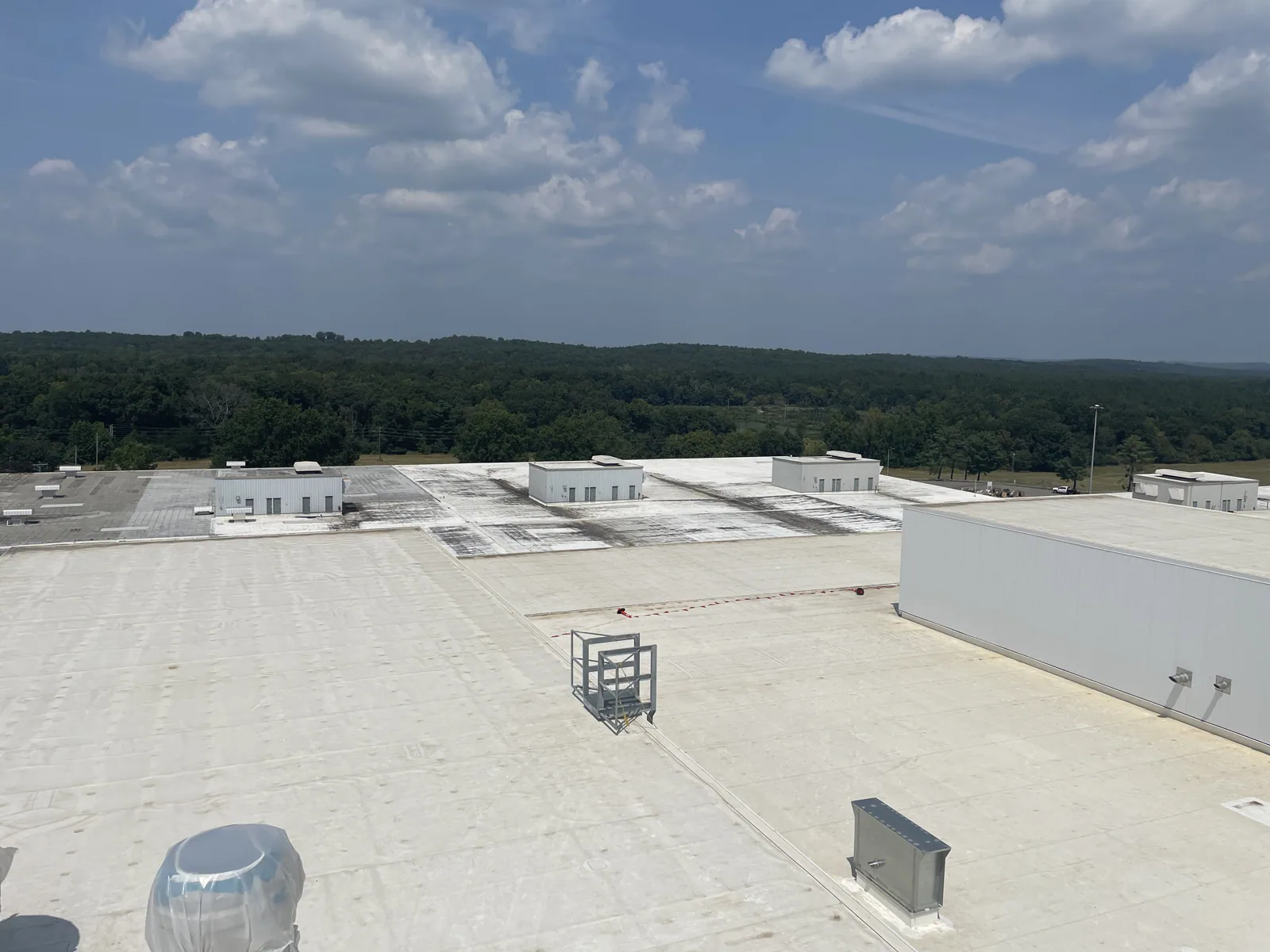
Commercial PVC Roofing in Thornton, CO
Install or repair commercial PVC roofing in Thornton. Review welded seams, rooftop exhaust exposure, insulation and drainage before setting the scope.
A rooftop exhaust line can expose a PVC roof to conditions that a simple leak check will miss. We review the membrane around vents, curbs and service paths, then compare the material with the building’s use and known discharge. PVC may suit some commercial assemblies, but product compatibility, seams and substrate condition still control the recommendation. The report separates current damage from exposure that needs monitoring.
Exposure review: map vents and discharge
PVC is a thermoplastic single-ply membrane with heat-welded seams. Its formulation can be selected for certain chemical exposures, but no generic label replaces a product-specific compatibility review. We identify kitchen exhaust, process discharge, condensate, oils and cleaning agents that may reach the roof. The facility team can provide safety data or equipment notes where the discharge is uncertain. We inspect for softening, discoloration, cracking or changes around the affected area, then document the limits of the observation.
Near 25 North Business Park, planned users include food production, manufacturing, distribution and showroom operations. That range makes actual exhaust, cleaning agents and service routes useful items to confirm before a membrane choice. We ask for the building’s process and ventilation details, then map vents and equipment on the roof plan.
Weld quality: check laps, corners and repairs
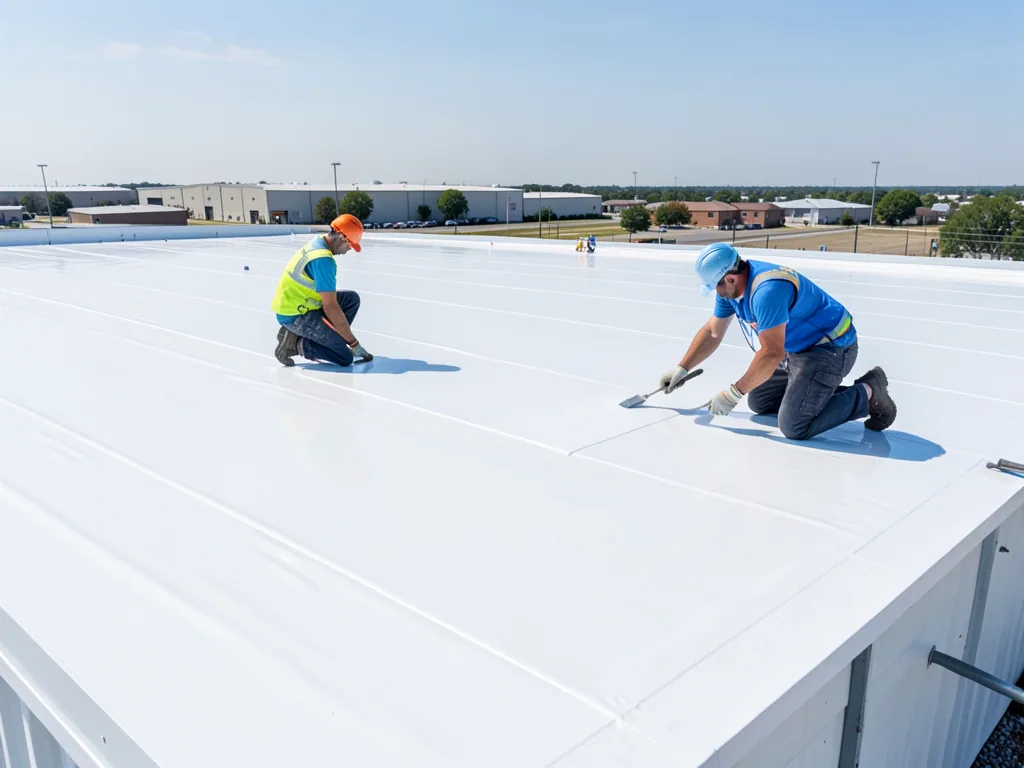
PVC seams are joined with controlled heat, and the finished weld needs sound material on both sides. We inspect lap continuity, probe representative welds and review corner patches, penetrations and terminations. A contaminated or overheated surface can affect the bond. A repair also needs membrane and accessory materials compatible with the existing system. We remove loose or degraded material as required, prepare the surface and record the repair boundary so later inspections can locate the same detail.
Field seams are only part of the assembly. At walls, drains and equipment bases, flashing ties the membrane into a change in plane or material. We examine attachment, movement, sealant and the condition beneath the visible edge. Penetration flashing can address pipe and curb transitions, while perimeter metal work can restore the termination where the membrane meets the edge. A field patch will not correct a loose termination outside its boundary.
Substrate condition: test before covering
Moisture below a PVC membrane can change a localized repair into a removal scope. We review prior leaks, repair records and suspected wet areas. Infrared mapping can locate temperature patterns for follow-up, while core cuts confirm layers only where sampled. We show what was tested and where the result should not be generalized. If insulation is wet, we identify removal limits and protect the roof during the opening. If it is dry and secure, a broader replacement may not be necessary.
At Creekside Innovation Park, planned uses span light manufacturing, aerospace, distribution and research. PVC compatibility depends on what reaches the roof, so we review process notes, discharge paths and observed surface condition for the actual building before selecting a repair material.
System selection: compare PVC with nearby options
A PVC proposal should identify membrane thickness and reinforcement, attachment, insulation, cover board, edge securement and detail accessories. Project specifications, deck type, roof geometry and wind design affect the assembly. We compare repair or replacement based on condition and compatibility, not a broad claim that one material fits every building. For example, TPO and KEE membrane are other thermoplastic options, while an existing PVC roof may be best served by a compatible repair if the surrounding field remains sound.
Denver’s July heat record offers regional context for roof planning, not a temperature reading from Thornton. Surface color, insulation and ventilation influence the building response. We review the complete assembly and the owner’s operating data before discussing a reflective option. If moisture or low areas remain, those issues need resolution before a new membrane covers the roof.
Work window: control odor, access and close-in
Removal and installation can affect roof access, exhaust routing and activity inside the building. We identify the work zone, material delivery route, occupied rooms and any equipment that needs protection. The daily limit accounts for tear-off, deck inspection and a secure membrane tie-in. If the forecast or substrate changes, we revise the sequence rather than leave a roof section open without a protection plan. The facility contact receives the access needs and expected close-in point.
Thornton’s industrial and employment districts sit near I-25 and E-470, and business-park uses can include transport and warehouse operations. Those corridors may affect delivery timing; the individual site sets staging and traffic controls. We confirm loading hours and roof routes before mobilization. If active leakage needs attention during scheduling, our leak response can protect the interior while the permanent PVC detail is scoped.
Capital decision: compare repair boundaries
Cost drivers include tear-off depth, insulation quantity, deck repair, access, equipment density, perimeter details and whether exposure requires testing or replacement. We separate confirmed work from allowances for concealed damage. The owner can compare a localized repair with broader renewal and see which condition sets the threshold. If a new system is being considered, the scope should include maintenance access and any anticipated equipment work.
After installation, we retain seam and detail photos by roof zone and record material, preparation and close-in conditions. That makes future repair decisions more direct. A condition report can be paired with drainage work when water collects near seams or low points. Send the roof plan, leak record, known discharge, access calendar and capital deadline. We will inspect the membrane and return a PVC scope with documented conditions and open questions.
Commercial Roofing Questions
Does PVC handle every kitchen or industrial exhaust?
No universal membrane claim covers every discharge. We identify what reaches the roof, review product-specific compatibility and inspect the surrounding surface. Where the emission is unclear, the owner can supply process or safety information before the material is selected.
Can a damaged PVC seam be heat-welded again?
Often, when the sheet remains sound and the surface can be properly prepared. We probe the weld, check contamination and inspect the substrate. Brittle or chemically affected material may need a wider replacement detail rather than a new weld over the same surface.
How do you find moisture beneath PVC?
We combine leak history, visual inspection and targeted moisture testing. Infrared results indicate areas for confirmation, and core cuts show the sampled assembly. The report distinguishes test locations from areas that remain untested so the owner can choose the next investigation.
Can PVC be repaired with a TPO patch?
The repair materials must be compatible with the existing membrane. We identify the product and system before choosing a patch or accessory. A visually similar thermoplastic material is not enough to establish a proper bond or detail.
What would move a PVC roof from repair to replacement?
Repeated weld failure, widespread moisture, compromised attachment or incompatible exposure can change the decision. We map those findings by zone and compare the cost and scope of a repair with full renewal. Concealed layers may require testing before the threshold is clear.
Verify PVC compatibility before selecting a repair
Send the roof plan, leak history, discharge information, repair records, access calendar and budget date. We will inspect seams and details, then compare repair and replacement scope.
Call 555-555-5555 or send the form and we will set up a visit.