
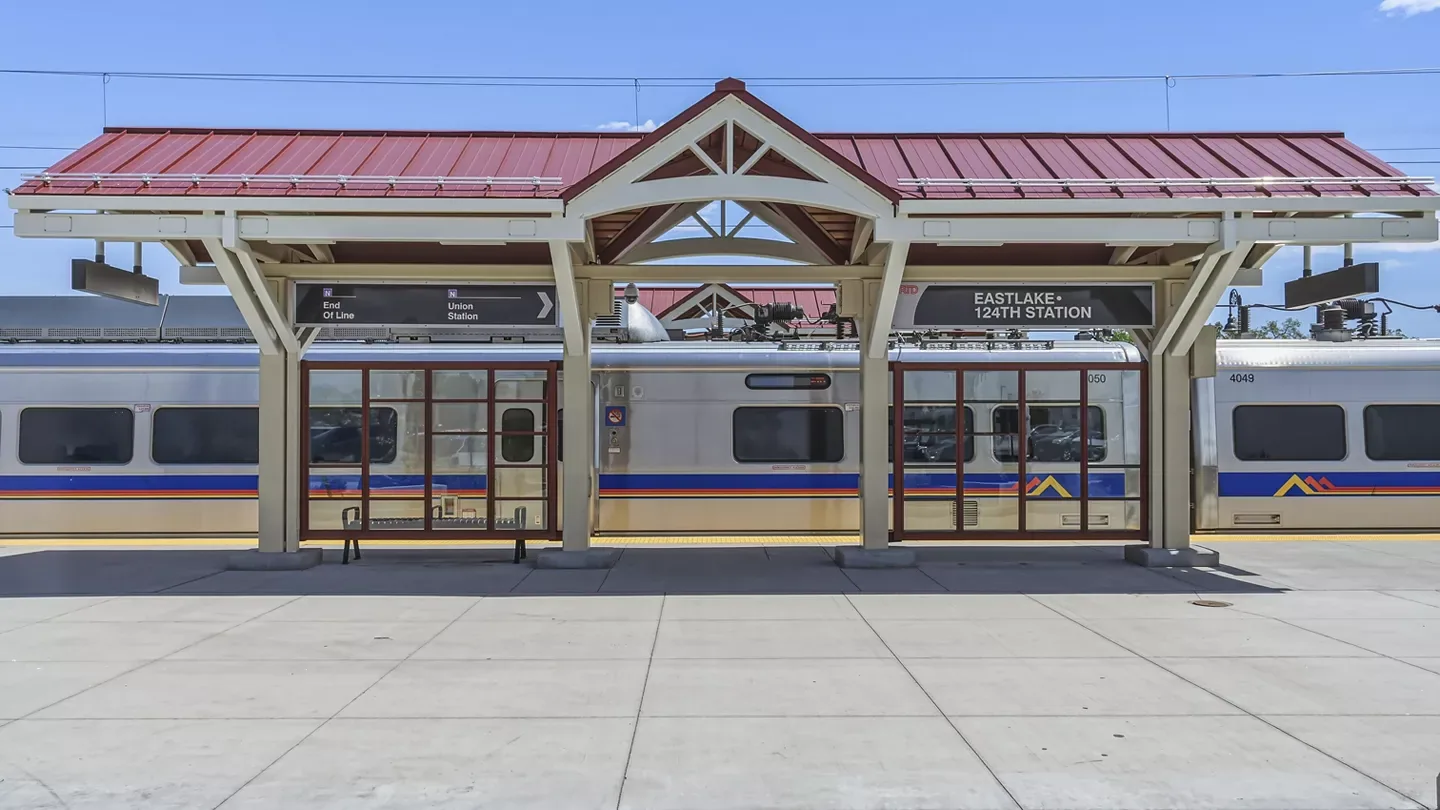
Commercial Roofing at Eastlake at 124th Station Area, Thornton, CO
Plan commercial roof access, repair and replacement near Eastlake at 124th Station in Thornton, CO, with work coordinated to each property’s use.
Retail, office, residential, employment and specialty commercial uses are allowed in Thornton’s Eastlake transit-oriented district near the North Metro N Line station. The station-area plan builds on Eastlake’s existing main street and small-lot grid. Those land-use facts point to varied access and occupancy needs, not the roof type of any individual building. We confirm the property address, roof plan, operating hours and access route before setting an inspection or work phase.
Thornton described Eastlake at 124th as a temporary end-of-line station when the plan was prepared. That transit context can matter to how property teams coordinate staff, deliveries and site access. The roofing scope still depends on the building’s actual boundaries, assembly and evidence.
Station access: confirm the property route
A small-lot grid and established main street can put entrances, neighboring uses and deliveries close together. We do not assume a particular storefront, loading bay or roof hatch. The site contact confirms crew entry, tenant notices, sidewalk or parking controls, lift position and where materials can be staged. If a route changes during work, the plan identifies who approves the detour and when the area returns to use.
Old Town Eastlake has a separate streetscape plan focused on Lake Avenue, part of First Street and York Avenue. The North Washington Subarea Plan also guides land use along a different corridor. Old Town Eastlake and North Washington Subarea help distinguish nearby planning areas without implying that one property's access rules apply to the next.
Before the roof walk, we review repair tickets, drawings and equipment changes. Diligence Notes record seams, drains, edges, penetrations and known leaks by roof zone. Any section that could not be reached is identified. A commercial roof inspection can establish the visible condition and testing limits before pricing work.
Roof condition: keep varied assemblies separate
Properties within one district can have different roofs and repair histories. We identify the membrane or surfacing where confirmed, then record flashing, attachment indicators, drainage, curbs, perimeter transitions and previous patches. We compare the roof with interior leak reports but do not assume that the visible stain marks the point of entry. If moisture below the surface could change a repair boundary, we describe a test area and restoration detail.
Thornton’s May 30, 2024 hail event crossed Thornton and Northglenn, with roof impacts in the NWS summary. That record can prompt a timely review after reported exposure. It does not establish hail damage at a property near Eastlake Station. We photograph observed conditions, note inaccessible sections and distinguish storm history from confirmed effects. A hail review can capture those findings for the building file.
A localized seam, penetration or flashing issue may support repair when the surrounding material is sound. Recurring leaks, wet insulation or broader edge concerns may require testing or renewal. We set the replacement threshold from the evidence and describe what new test result could change the choice.
Phased work: maintain service through the roof sequence
With a mix of permitted uses near the station, property managers may coordinate several operating calendars. We ask each building contact for hours, deliveries, restricted rooms and equipment shutdown rules. The work map shows roof zones, access points and any area below that needs protection. When a phase ends, we note whether the membrane is secure, the route restored and another inspection due.
Cost and time depend on roof dimensions, tear-off depth, deck condition, insulation, edge metal, penetration count, staging and tenant coordination. Estimates identify measured quantities and assumptions separately. A recover should not be priced as the default until the existing layers, moisture, attachment and permit requirements have been reviewed. Replacement scope can be compared with a defined repair when both options are supported by the inspection.
If the site remains occupied, phased reroofing can set daily access and close-in limits. The plan also identifies noise periods, deliveries, barriers and the person who can release a section. Work is adjusted when conditions or property rules change, with the affected zone and revised schedule recorded.
Permit and weather: set the work window from current conditions
Covered permit applications in Thornton use the 2024 building and existing-building codes. The updated energy requirements took effect July 1, 2026. If replacement changes insulation or assembly, we verify which provisions apply to the actual scope and filing date. Station-area planning does not establish permit needs for a particular parcel.
Regional Denver climate data can inform the season, but not the condition of a roof near Eastlake. We check the forecast, substrate and system requirements for the actual date. The shift plan defines how much surface may be opened and the material available to secure it. If snow, wind or heat limits the work, the crew stops at a safe boundary and the facility receives the next step.
Adams County emergency guidance puts the region’s tornado season between mid-May and mid-August. The property contact and crew lead should know who receives alerts and who can halt a lift. A seasonal calendar supports readiness; current site conditions determine whether roofing proceeds.
Property record: keep access and repair history together
Closeout identifies the inspected building, roof-zone map, materials, repairs, dated photographs, test limits and remaining actions. If a maintenance team changes or a tenant moves, the property file should retain the access plan and prior work boundaries. Manufacturer-specific inspection and warranty documents are confirmed for the completed assembly; no term or approval is assumed.
A future leak call can be checked against earlier repair photos and the original roof-zone label. A roof asset register can preserve those distinctions, while condition reporting keeps observation dates and access limits visible. That record is useful when a manager compares properties in the station district without treating them as one roof system.
Send the address, current occupancy and access rules, roof records, leak history and capital date. We will inspect the agreed zones and identify the repair, testing or renewal decision supported by the evidence.
Commercial Roofing Questions
Does the Eastlake transit district define the roof systems on nearby properties?
No. The district allows several uses near the station, but it does not describe any building’s roof. We confirm the property-specific assembly through plans and inspection.
What should a property manager provide before an inspection?
Send the exact address, access contact, tenant hours, roof drawings, known leaks, prior repairs and equipment changes. We then confirm the route, limitations and any test that may be needed.
Can several small properties be inspected during one route?
Visits can be scheduled together, but each property receives a separate roof map, condition record and follow-up list. We confirm access and contact details for each location before combining the route.
How does transit access affect roofing work?
Transit context may influence how staff or deliveries reach an area, but the property team controls gates, staging, lifts and tenant routes. We document those site rules before work begins.
What determines whether a roof is repaired or replaced?
We review the defect, prior repairs, adjacent material, moisture evidence, attachment, drainage and access. A contained issue can support repair; recurring or widespread conditions may warrant testing or renewal.
Coordinate roof access at Eastlake at 124th
Provide the building address, tenant calendar, roof plan, leak history and access contact. We will inspect the defined roof zones and return a scope that respects the property’s operating rules.
Call 555-555-5555 or send the form and we will set up a visit.