
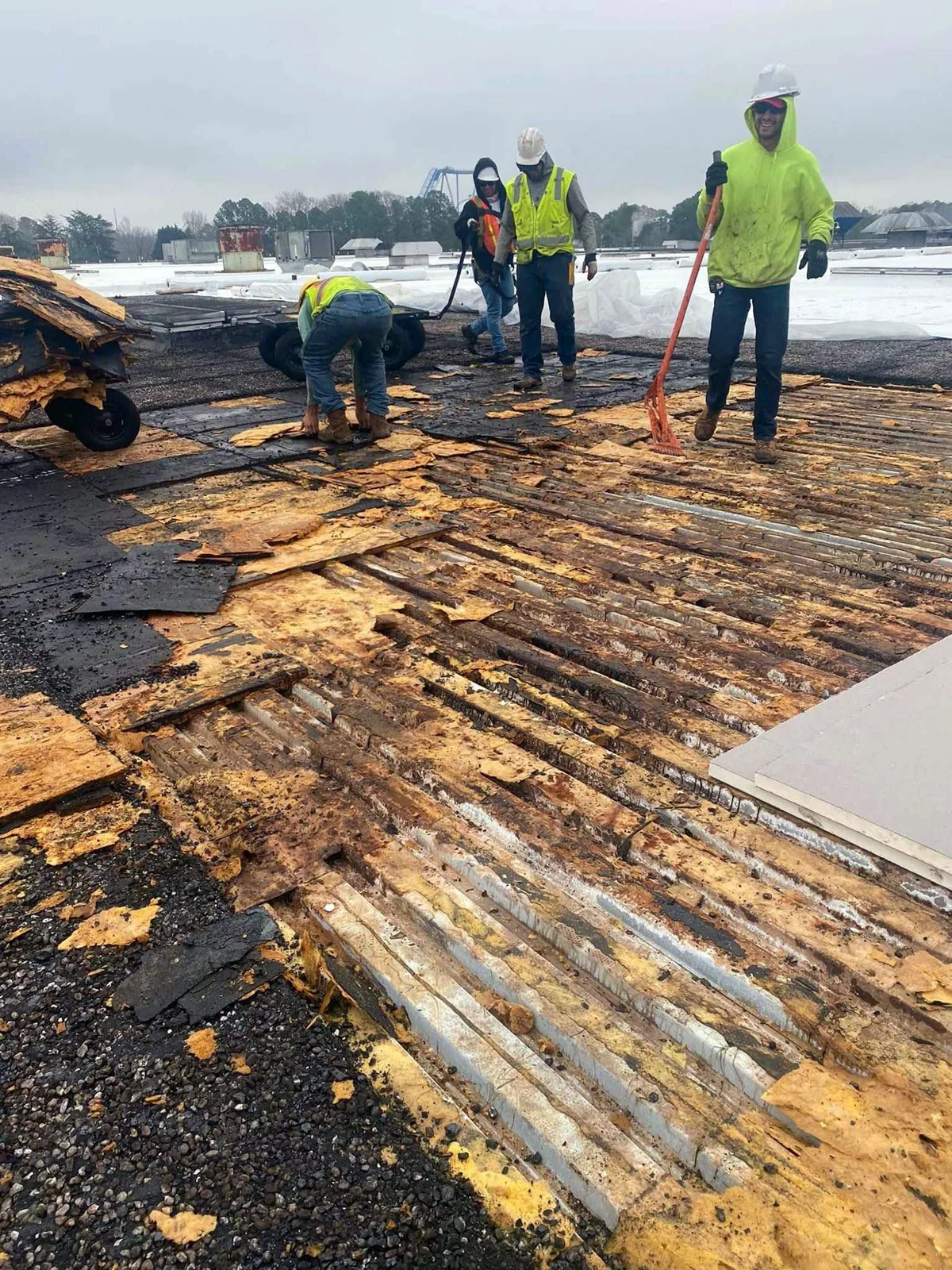
Commercial Roof Repair in Thornton, CO
Repair commercial roof seams, flashings and drainage details in Thornton. Get a documented scope for active damage, planned work and the next inspection point.
A loose flashing detail at a loading dock can turn a routine maintenance item into a dock interruption. At an office, one failed seam can send water across several ceiling bays before anyone sees the entry point. We inspect the roof system, trace the condition to its boundary and make repairs that fit the assembly. The May 30, 2024 hailstorm crossed Thornton and Northglenn, with the National Weather Service recording roof damage along its path. That history makes a current condition check useful, but our scope comes from the roof in front of us. We record the affected zones, active leaks and details that need follow-up.
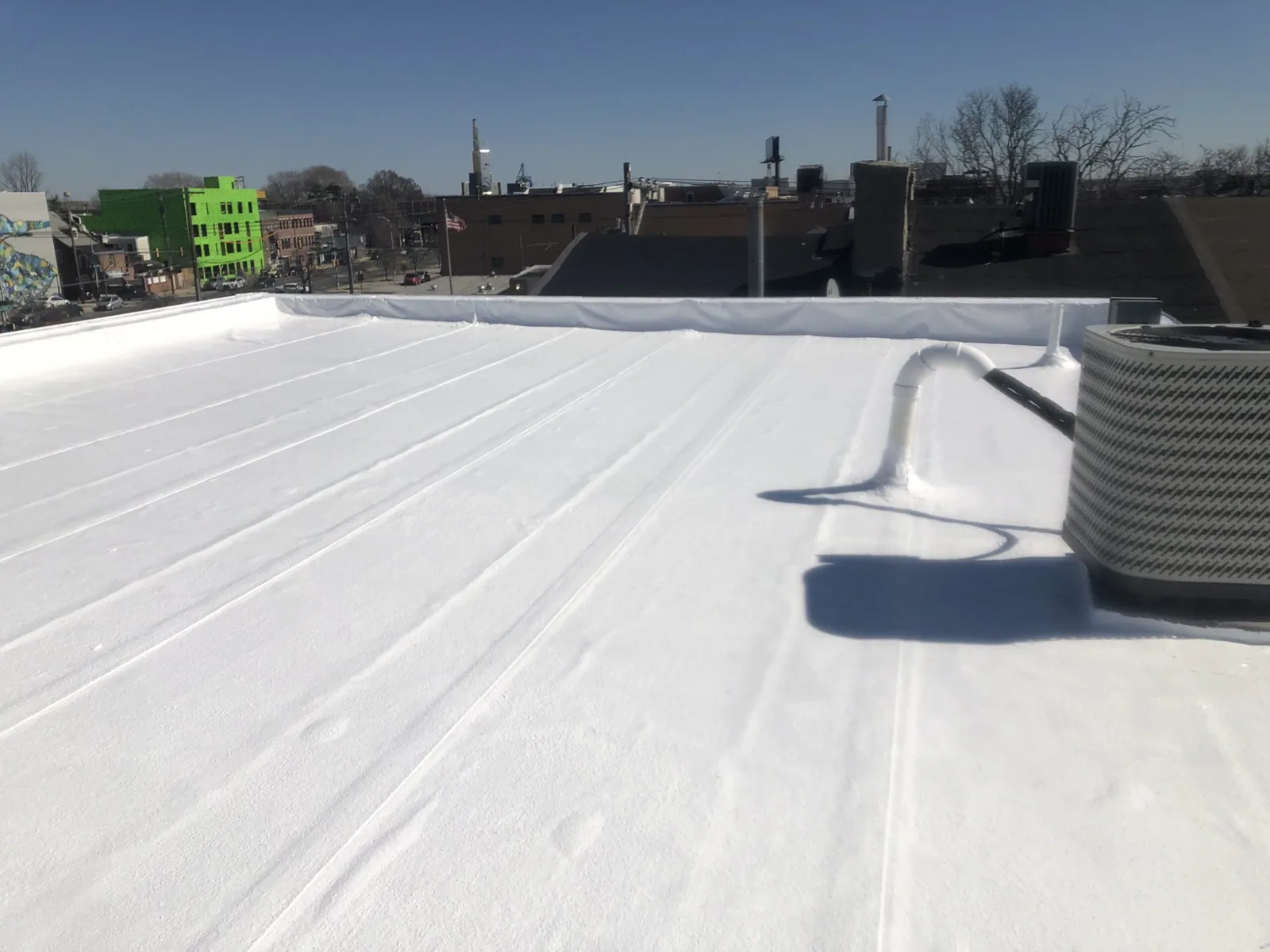
Failure pattern: separate the symptom from the cause
Water inside a building does not always enter directly above the stain. It can move along a deck, insulation joint or structural member before it appears indoors. We inspect seams, laps, penetrations, curbs, perimeter edges, drains and nearby transitions. The repair scope names the likely entry point and any uncertainty that remains. If rain is still entering, we prioritize temporary protection and a lasting repair that can be completed safely under current conditions.
On single-ply roofs, we look for open laps, fishmouths, punctures, shrinkage and failed patches. On metal roofs, we inspect fasteners, panel laps, transitions and flashing. Built-up and modified bitumen surfaces need attention to splits, blisters and exposed reinforcement. The repair method must match the material. We will not apply a generic patch over a detail that needs a compatible membrane, reinforcement or flashing treatment. An EPDM roof needs compatible seam and flashing work; standing-seam metal repairs address panel laps, fasteners and closures.
Inspection record: map the repair boundary
We photograph the damaged area and enough surrounding roof to show its context. The notes identify the roof zone, surface condition, drainage path and nearby equipment. We check inside for staining, active drips, ceiling damage and signs that water has traveled. When a repair is part of a larger capital question, we record whether the surrounding membrane remains serviceable or whether moisture testing could change the scope.
Thornton’s Business Park zoning places higher intensity warehouse uses in limited areas along I-25 and E-470. Industrial sites in that corridor can have extensive rooftop equipment and active loading schedules, but zoning does not tell us the building’s roof material or failure mode. We confirm both on site. A Crossroads 25 service-area visit or work near another logistics property begins with access rules, roof safety and facility coordination, followed by a clear condition record instead of assumptions about similar buildings.
Repair scope: match the material and detail
A durable repair depends on clean, dry surfaces and compatible materials. We remove loose material, prepare the repair area and restore the detail with the required membrane, flashing, reinforcement or fastener treatment. At penetrations and curbs, we address the transition rather than sealing only the visible crack. At drains and scuppers, we verify that the repair does not obstruct water flow. For an edge repair, we check the termination and adjacent metal so the fix connects to a stable assembly.
We mark each repair as immediate, planned or monitoring. Immediate work reduces water exposure. Planned work can be grouped by roof zone to limit repeated mobilizations. Monitoring applies when a condition is stable but needs a later check. Our drain and scupper work, edge details and penetration flashing each require their own preparation and closeout. The record tells the facility team what was repaired and what remains outside the scope.
Work window: coordinate access and operations
Repair timing depends on weather, roof access, material cure requirements and building operations. We confirm ladder or hatch access, escort needs, rooftop restrictions, equipment shutdowns and interior protection before scheduling. If the work is above an occupied area, we coordinate notice and use of the space below. At distribution or manufacturing facilities, staging and truck routes need to fit shift changes and dock activity. We can divide work into zones and complete the highest-risk detail first.
Snow and freeze-thaw can limit safe access and surface preparation during winter. Regional Denver climate records inform the seasonal plan, but current roof temperature, moisture and forecast govern the day’s work. A repair that requires a dry substrate should not be rushed onto a wet surface. If conditions prevent a permanent repair, we document the temporary protection, identify the next workable window and schedule a return. That distinction keeps a temporary measure from being mistaken for a completed roof repair.
Repair reserve: understand what changes the scope
Repair cost varies with roof height, access, material, detail complexity, number of locations, equipment congestion, interior protection and whether the substrate must be removed. A single accessible seam is different from a failed curb with wet insulation below. We separate the unit of work and note the condition that could add removal or replacement. If the roof is beyond reliable spot repairs, we can compare the repair reserve with a replacement scope or a qualified recover option.
The condition record also helps assign work across buildings. A small leak near a tenant entrance may deserve prompt attention even if another roof has a larger but stable surface defect. We note active water entry, safety concerns and recurring repairs so the manager can sequence work by operational risk. For multiple facilities, multi-site roof coordination can group inspections, photos and repair priorities without blending one building’s evidence into another’s file.
Closeout: show what changed
After repair, we document the completed location, materials and any conditions found during preparation. The closeout record notes whether the repair boundary matched the estimate, whether additional work was approved and what should be monitored. If the roof has a larger failure pattern, we identify the next test or capital review rather than presenting repeated patches as a permanent solution. That gives the facility team a usable decision point for the next budget cycle.
Share leak locations, photos, roof plans, access restrictions and any prior repair notes. We can inspect the affected system, prioritize water protection and provide a written scope for the work. If a storm or hail report is involved, include its date and the buildings you want reviewed. We will keep observed damage, completed repairs and remaining questions distinct in the condition record.
Commercial Roofing Questions
Can you repair a roof while the building stays open?
Often, yes, with a work sequence that protects occupied spaces and active operations. We coordinate access, deliveries, noise, equipment shutdowns and interior protection before the crew begins. A repair requiring disruptive removal or a long cure window may need a different schedule. We will identify the affected area and timing needs so the facility can plan tenant notices or temporary room changes.
What should we send before a repair visit?
Send the leak location, photos, roof plan if available, access instructions, operating hours and notes from prior repairs. Mark the time water appeared and whether it continues during dry weather. That information helps us choose the right access route and inspection equipment. It does not replace a roof inspection, but it gives us a starting point and can prevent avoidable delays.
Can a small patch stop a recurring leak?
It can if the leak comes from a localized defect and the surrounding membrane is sound. Recurring entry may point to a larger seam, flashing or drainage condition, or water traveling beneath the surface. We inspect around the stain and trace the assembly before setting the repair boundary. If moisture extends beyond the visible defect, we discuss testing or a broader repair.
How do you handle repairs after hail?
We inspect the roof and document visible conditions by zone. The May 2024 storm crossed Thornton and Northglenn, but that event does not establish what happened to a particular property. We photograph damage, identify urgent water risks and separate repairable details from conditions that may need testing. If a claim is active, we can prepare a photo-supported scope for review.
When should a repair budget shift toward replacement?
Repeated failures, widespread wet insulation or a membrane that no longer supports reliable repairs can move the replacement threshold. We compare repair frequency and condition against the cost and disruption of continued patching. If the evidence is mixed, we identify what test would settle the question. The written record should explain why a repair remains reasonable or what finding changes the recommendation.
Put the repair reserve against verified conditions
Share leak locations, repair history, roof plans and access limits. We will inspect the assembly, map the repair boundary and document what the building needs next.
Call 555-555-5555 or send the form and we will set up a visit.