
Commercial Ponding Water Roof Repair in Thornton, CO
Trace standing water to drains, slope and roof condition, then compare repair options for commercial buildings in Thornton, Colorado.
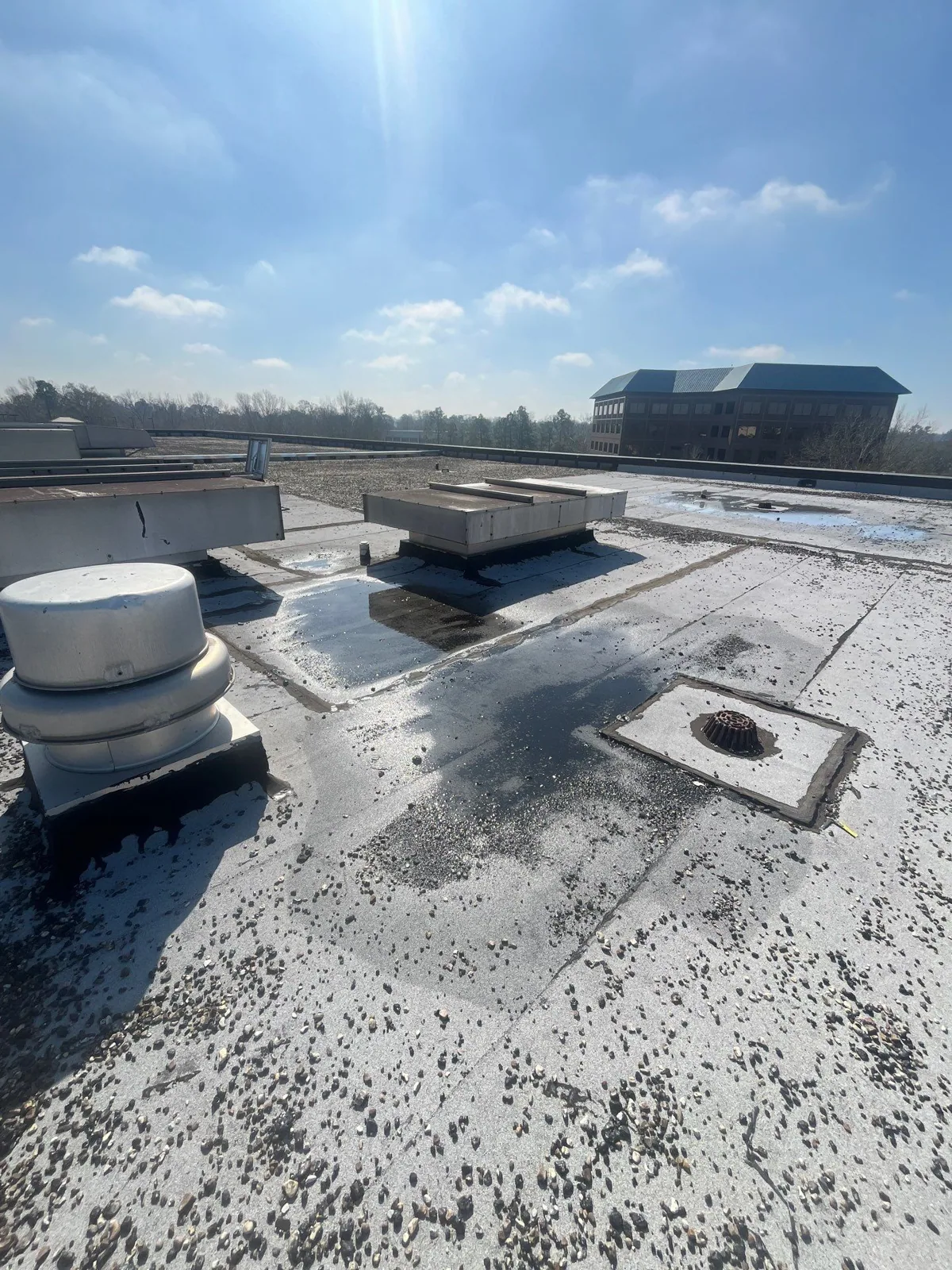
A dark water mark that remains after the roof has dried can point to a drainage issue or a low area that needs review. We locate the pond, check the path to nearby drains and scuppers, and document what the roof does after rainfall. The repair depends on whether the cause is obstruction, settlement, damaged membrane or a detail that traps water. We do not set a slope remedy from one photograph.
Drainage path: follow the low point to its outlet
We map the water boundary, roof plane, drain bowl, strainers, scuppers and overflow route. Leaves, packaging or construction debris can obstruct an outlet; a depressed area can remain after the outlet is cleared. We record how much standing water remains and when the observation was made. If the roof is dry at inspection, the owner’s photographs and timing notes help compare the next wet-weather visit.
Thornton’s Business Park zoning allows warehouse and distribution uses in specified portions along I-25 and E-470. Those corridors bring different delivery and service constraints to roof access. Before testing or drain work, we confirm the site’s loading hours, lift location and route for removed debris. At 5280 Logistics Park, direct I-25 and E-470 access is part of the industrial development context; it does not establish the roof slope or drain design at a particular building. 5280 Logistics Park provides a local corridor reference.
Water source: separate ponding from a leak path
Standing water and interior leakage can occur together, but one does not prove the other. We inspect seams, flashing, penetrations, drain connections and nearby patches. A ceiling report is mapped to the roof area above it, then compared with the observed water boundary. If the source remains uncertain, we identify a test area rather than extending the repair across the whole low spot.
Water can also enter at a curb or wall transition and travel before appearing below. We look for displaced flashing, open seams or membrane damage near the reported room. Flashing repair addresses a failed transition, while seam repair applies when the sheet joint is the observed defect. The work order keeps those conditions distinct from a drainage correction.
System condition: check what repeated exposure has changed
Longer ponding can leave dirt lines, loosen repair edges, stress seams and make small defects harder to identify. We inspect the membrane surface and test suspect areas when access and authorization allow. If insulation is wet or the deck condition is uncertain, a small opening may be needed. The report states the test boundary and what remains outside it. A drain correction alone will not resolve wet materials already inside the assembly.
Thornton’s North Washington Subarea guides land use beside major employment activity, while the North Washington Commerce Center is one industrial development with multiple I-25 access points. These facts help frame property access and operating coordination, not roof construction. For an occupied facility, we arrange inspection around receiving and equipment use before accessing drains or making an opening. North Washington Commerce Center is another local reference for planning access to a busy commercial property.
Remedy options: correct the cause before resurfacing
When debris blocks an outlet, clearing and confirming the drainage route may be the first step. If the drain assembly or leader is damaged, repair may require coordination below the roof. A localized depression may call for an engineered correction, but the slope, insulation, existing layers and structural conditions need review before adding tapered material. Coating over standing water without addressing its path can conceal rather than resolve the cause.
We compare a defined drain repair, localized membrane work and broader slope correction as separate scopes. Each option lists the roof area, adjacent details, interior protection, test limits and close-in sequence. Drain and scupper work can be paired with a roof inspection to record the surrounding field. If evidence supports a larger renewal, the owner can compare it with a bounded repair plan.
Seasonal access: time the inspection to the weather
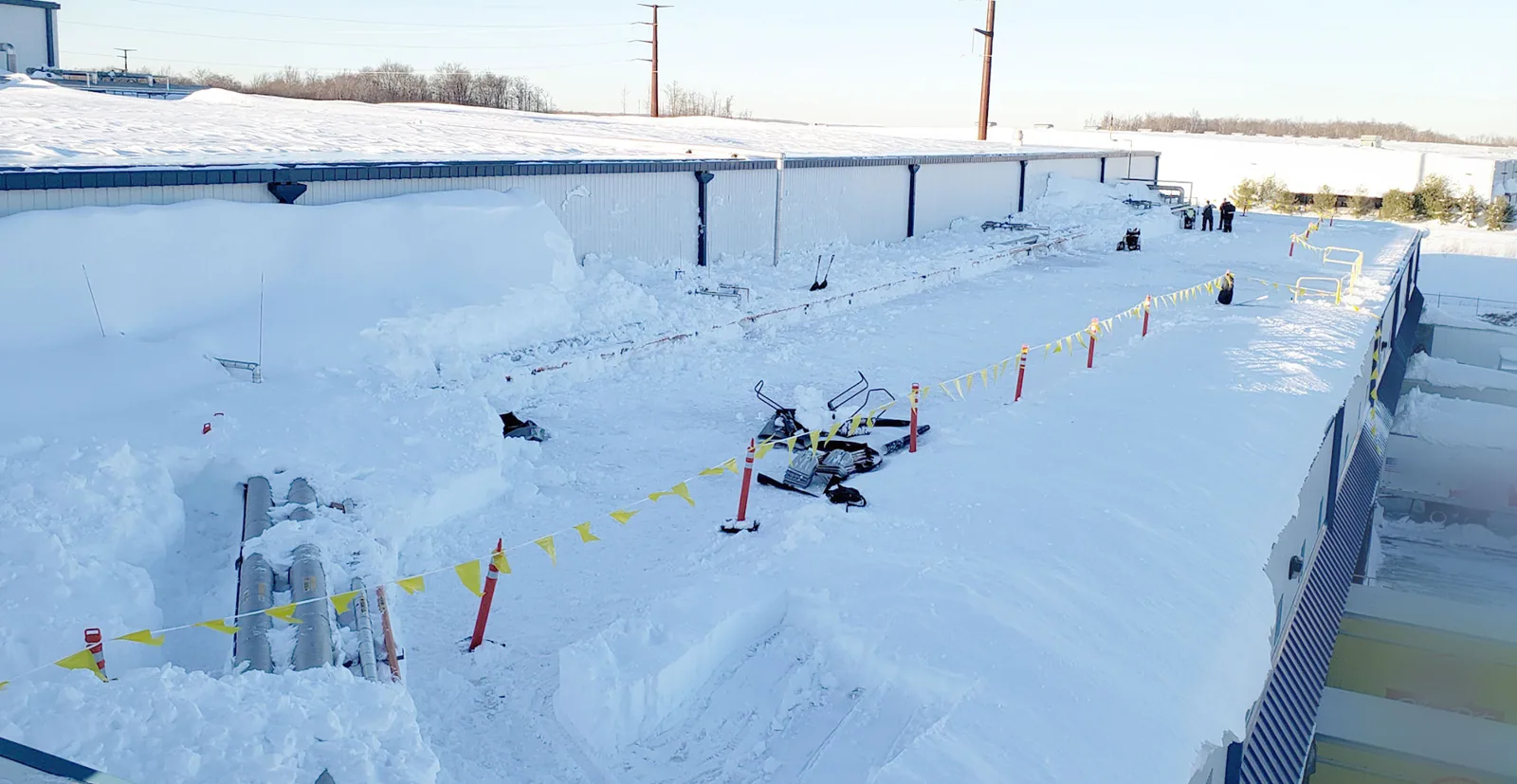
Denver’s NOAA record averages 6.5 inches of snow in January and 7.8 inches in February, with wide winter extremes. The Denver figures provide regional context. We record actual site conditions in Thornton. Snow or freeze conditions can obscure a low point and restrict safe access. We note what could be inspected, return when conditions permit and check the current forecast before opening a roof area.
Water that remains after a storm can complicate inspection timing. The facility should record when rainfall ended, where water remained and whether drains were clear. We can compare those observations across visits without assuming one event represents the entire season. A maintenance log should also note whether the drain was cleaned, whether a temporary hose or pump was used and whether the interior report changed after the water receded. That history helps separate a recurring low point from a maintenance event or a blocked outlet. A condition record preserves photographs and test results so the next budget review can distinguish a recurring drainage issue from a one-time obstruction.
Closeout: record the outlet and the remaining question
After the repair, we document the drain or scupper condition, corrected membrane details, photos and any test performed. If water remains in another area, that finding stays open with a next step and an assigned contact. We note whether the owner should monitor the next rainfall or arrange a separate plumbing review. A completed drain service is not reported as a roof-wide correction unless the full drainage path has been evaluated.
Send the roof plan, leak notes, dated photographs, drain locations and access calendar. We will return the observed water boundary, likely causes to verify and repair choices by zone. The scope can identify immediate protection separately from a permanent slope or membrane project.
Commercial Roofing Questions
How long can standing water remain before it needs attention?
We document the depth, location and observation time, then compare it with the roof’s drainage design and condition. The next step depends on whether an outlet is blocked, a low area persists or the membrane shows damage.
Does ponding water prove that the roof is leaking?
No. Water can remain without reaching the interior, and a leak can enter elsewhere. We compare the pond boundary with interior reports, seams, drains and transitions before assigning a source.
Can a coating fix a low area on a commercial roof?
A coating does not change the slope or clear an obstructed drain. We identify the cause first and determine whether the membrane, drain, insulation or roof plane needs correction.
What should we record after rain?
Note the time rain stopped, water locations, drain condition, interior reports and any equipment or access limits. Dated photos from the same roof zones make repeat observations more useful.
Will adding a drain solve the problem?
That requires a review of the roof plan, existing drainage path, structure and discharge route. We document whether an added outlet is feasible and what design or plumbing review remains.
Trace the water before choosing the repair
Share roof plans, drain locations, dated water photos, leak reports and access limits. We will map the drainage path and identify which cause needs confirmation.
Call 555-555-5555 or send the form and we will set up a visit.