
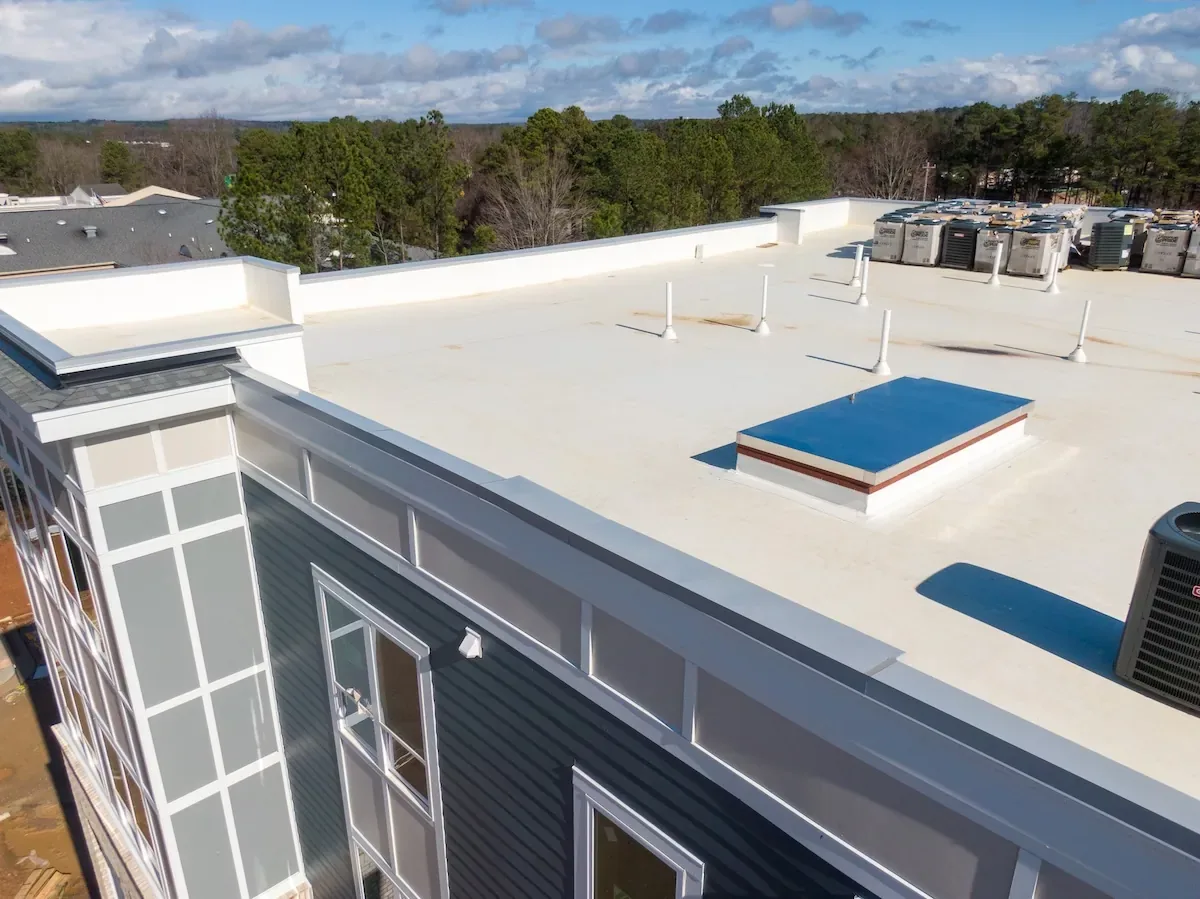
Commercial TPO Roofing in Thornton, CO
Install, repair or replace commercial TPO roofing in Thornton. We inspect seams, attachment and insulation, then scope work by roof zone and schedule.
A TPO seam that opens near a curb can shift a repair decision into the next capital review. We inspect the membrane, heat-welded seams, edge details and insulation before recommending a patch, broader repair or replacement. The scope identifies what is visible and what still needs a test or opening. In Thornton, hail and winter access affect scheduling, but the building’s actual assembly sets the roofing choice.
Membrane behavior: inspect welds and transitions
TPO is a single-ply thermoplastic membrane with seams joined by heat welding. A sound weld fuses the sheets; contamination, poor preparation, movement or incompatible repair material can compromise that joint. We probe representative seams, inspect patches and check terminations at walls, drains, curbs and penetrations. We also look for shrinkage, punctures, surface wear and loose perimeter details. The inspection record marks each condition by roof zone rather than calling the entire field defective from one failed seam.
Field seams receive a probe check after welding, but a probe is only one part of quality control. We also review lap width, terminations, corner patches and the condition of the sheet on both sides. At a repair, the old surface may need cleaning or removal before a new patch can bond. A detail with layers of incompatible material may need a larger cutback. The repair record names the limits so a future inspection can compare the same location instead of treating a patch as a permanent answer.
Heat welding has to match the membrane condition and installation requirements. For a repair, we prepare the affected area, confirm the substrate and restore the seam or detail with compatible material. A patch over wet insulation does not correct the trapped moisture. If the assembly’s condition is uncertain, moisture mapping can help target confirmation, while hands-on inspection records the surrounding details and access limits.
Attachment choice: match the system to the building
TPO can be mechanically attached, adhered or installed in a ballasted assembly when the design and conditions allow. The deck, insulation, wind design, perimeter geometry and project documents guide that choice. We review what can be verified at the roof and coordinate attachment questions with the design professional. A membrane color or sample alone does not establish suitability. The proposal should identify substrate preparation, insulation layers, fasteners, edge securement and transitions that control the finished assembly.
At 25 Commerce Park, warehouse, distribution, showroom, flex and manufacturing uses sit within one Thornton business park. That mix can affect delivery timing and roof access, though it does not tell us which membrane a specific building has. We inspect the property and plan staging with the facility contact. A new roof near a loading area also needs a clear sequence for material movement and daily close-in.
Storm review: separate impact from seam wear
Hail can mark exposed metal, damage vulnerable details or puncture a membrane, while an old seam defect may have developed before the event. We photograph suspected impact and compare it with repair history, interior leaks and nearby details. The May 30, 2024 storm crossed Thornton and Northglenn, with NWS reporting hail and roof damage. That event is a reason to inspect affected properties, not proof that every TPO roof was damaged.
Denver snowfall records also show seasonal extremes that can narrow roof access. Those figures are regional; current site conditions govern a Thornton inspection. We plan a safe visit and note areas obscured by snow or equipment. If the issue is an active opening, hail-related repair can be scoped from observed damage, and claim documentation can distinguish storm findings from preexisting wear.
Replacement threshold: weigh repairs against assembly condition
A localized repair may be reasonable when the membrane remains secure, the insulation is dry and failures are limited to a few details. Repeated seam separation, widespread wet layers, poor attachment or deteriorated edges can move the decision toward replacement. We inspect by zone, record test results and identify what would change the recommendation. The owner can compare a repair reserve with a full assembly scope using the same evidence.
Drainage, equipment and penetration work can affect the membrane decision. We coordinate curbs and bases before replacing a field around them. Drainage work may need to precede new membrane if low areas remain. If the roof can retain dry, stable layers, a recover review can compare that option with tear-off. We explain the boundary for each alternative and the conditions that would make it unsuitable. For a membrane comparison, PVC roofing and EPDM roofing can be evaluated against the same deck, insulation, drainage and service requirements. Neither comparison should rely on color or product name alone.
Work sequence: secure one zone at a time
TPO installation needs prepared surfaces, secure attachment, completed details and a protected close-in. We set daily work limits based on tear-off, deck review, weather and the facility schedule. If concealed damage appears, we photograph the area and confirm the revised scope before covering it. Roof access, rooftop equipment and tenant operations can influence the work sequence. The plan identifies who protects an open zone if weather interrupts the shift.
Near Eastlake at 124th Station, transit access and nearby commercial uses can shape material delivery and site planning. We verify the property’s rules and roof routes before setting the schedule. For a larger capital project, capital planning can place high-priority zones ahead of work that can wait. Send the roof plan, leak notes, access calendar and capital date so we can return a verified TPO scope.
Commercial Roofing Questions
How can we tell if a TPO seam can be repaired?
We inspect the weld, membrane condition, contamination, movement and nearby substrate. A localized seam defect may be repairable when surrounding material remains sound. If separation repeats across several zones or insulation is wet, the scope may need testing or a broader assembly decision.
Can a TPO roof be installed over the existing membrane?
A recover depends on the existing roof’s dryness, attachment, condition, code scope and compatibility with the proposed system. We verify those items and identify where removal is necessary. The recover decision should include drainage and perimeter details, not only the visible field.
Does hail damage always require replacing TPO?
No. We map impact evidence, inspect seams and details, and test suspect areas when needed. Localized damage may support repair, while widespread failures or wet insulation can change the recommendation. The May 2024 storm record does not replace a building-specific inspection.
What affects the cost of a TPO replacement?
Removal depth, insulation, deck repairs, attachment, edge metal, penetrations, equipment access and disposal all affect the scope. We separate known quantities from allowances for concealed conditions. The proposal should state which tests or tear-off findings can change the work.
Can the facility stay open during TPO work?
We phase work by roof zone and coordinate access, noise, deliveries and interior protection with the facility manager. Some operations may need a temporary limit or shutdown. The daily close-in plan sets how much roof can be opened safely for each shift.
Set the TPO scope by roof zone
Share the roof plan, leak history, repair records, access calendar and capital deadline. We will inspect welds, edges and insulation, then compare repair and replacement options.
Call 555-555-5555 or send the form and we will set up a visit.