

About Commercial Roofing Thornton
An owner comparing repair with replacement needs current roof evidence, a workable sequence and a scope that respects the building’s use. Commercial Roofing Thornton provides commercial roof repair, replacement, recovery, restoration, inspection and maintenance for facilities in Thornton and nearby markets. We begin with the property’s records and access rules, then inspect the agreed roof zones. The written recommendation distinguishes immediate water protection from testing, repair and longer-term renewal. That gives the facility team a basis for setting a capital window without treating an event report or old invoice as a condition assessment.
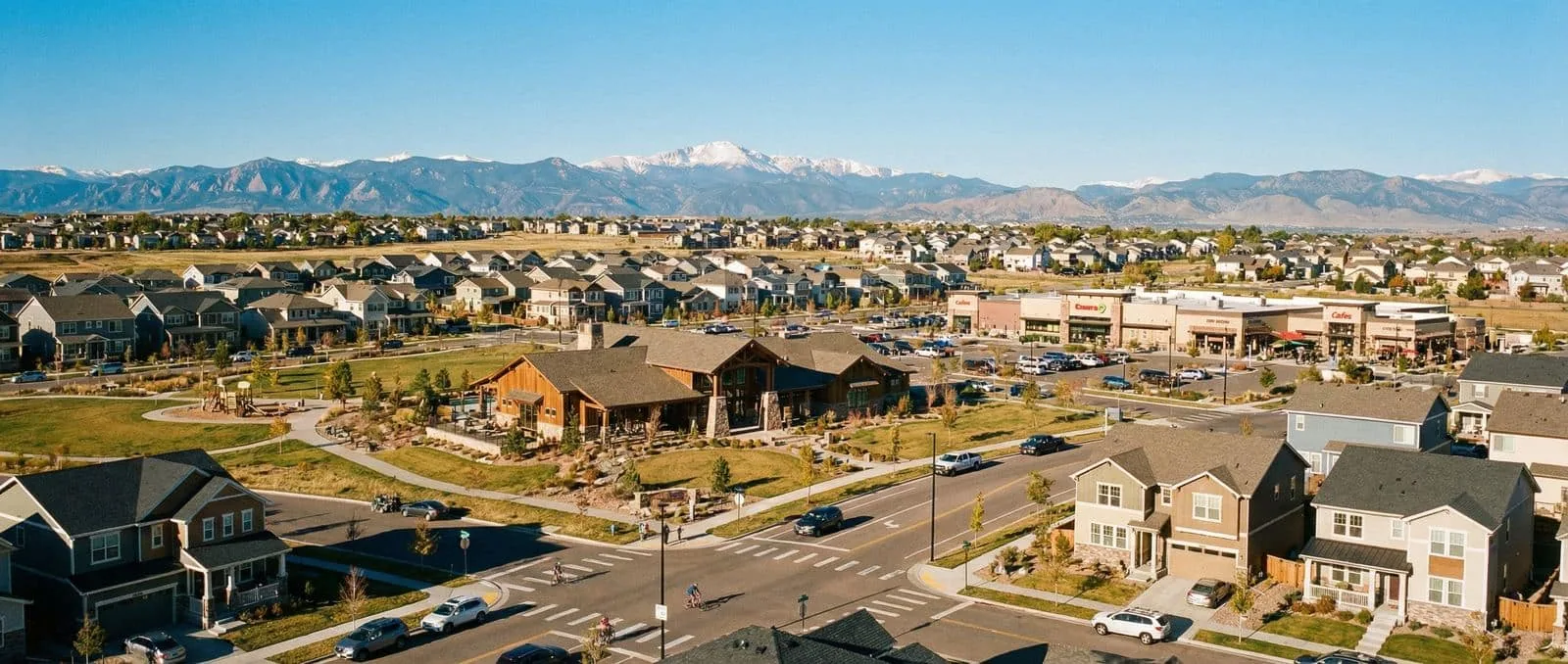
Thornton’s business and industrial areas include I-25 and E-470 employment geography, office and healthcare settings, distribution sites, retail properties and municipal facilities. At 25 Commerce Park, published uses include warehouse, distribution, showroom, flex, manufacturing and food production. That mix illustrates the operating questions that can affect roof work, including equipment, deliveries and staging. It does not tell us the assembly or condition of any roof there. Each visit starts by confirming the address and building contact.
Inspection first: establish the roof record
Before the field visit, we review available roof plans, repair tickets, prior reports, warranty documents and known leak locations. We ask about equipment changes, interior impacts, access limits and the date of any capital review. During inspection, we identify membrane or metal where confirmed, then examine seams, penetrations, flashings, edges, drains and visible insulation conditions. Photos are tied to roof zones and observations are dated. Areas that cannot be reached are listed as limitations rather than described as inspected.
Some concerns require additional testing. If moisture below the membrane could change a repair boundary, we may recommend infrared mapping or selective test cuts. The report explains why the test matters and what a result could change. A commercial roof inspection creates the baseline. A drone survey can help document areas where roof access or geometry limits a direct view, while a drone image does not substitute for hands-on checks at accessible details. The method follows the question the building team needs answered.
Available work: match the scope to the evidence
For active water entry, we can provide emergency response at any hour, every day of the week, including holidays. We locate accessible roof areas, protect the interior where appropriate and record what remains uncertain. A temporary measure may reduce exposure while a permanent repair is prepared. Permanent work can address seams, flashing, membrane punctures, drains, edge metal, curbs and other roof details, based on the confirmed defect and compatible materials.
When a roof has broader deterioration, we compare targeted repair with replacement, recover or restoration. A repair may fit where the defect is contained and surrounding material can support a durable tie-in. Replacement may be considered when recurring failures, widespread moisture or failing details cross the replacement threshold. An overlay needs checks for existing layers, moisture, attachment, code and structural capacity. A coating restoration depends on a sound, compatible substrate and prepared details. We present supported options, not a preferred assembly detached from the building’s condition.
Roof systems: repair and renew commercial assemblies
Our work includes TPO, PVC, EPDM, KEE, modified bitumen, built-up roofing, standing-seam metal, retrofit metal, spray foam, silicone and acrylic coating systems. The existing assembly, deck, slope, drainage, equipment, penetrations and prior repairs influence the work. We inspect and identify products where records or field evidence support that identification. When the system is uncertain, the scope describes what can be confirmed and what additional inspection is needed.
System selection accounts for details as much as the field membrane. Edge attachment, wall transitions, curb flashings and drains can control water entry and future repair access. We review insulation and cover board needs, removal depth, fastening or adhesive requirements, material staging and disposal. Thornton’s covered permit applications currently use the 2024 International Building Code and International Existing Building Code. Updated energy provisions took effect July 1, 2026. We confirm which requirements apply to the specific project and filing date before finalizing scope. No code label by itself determines which roof assembly suits the property.
Occupied properties: plan people, access and close-in
Many commercial facilities continue operating while roof work proceeds. We ask for tenant hours, deliveries, loading access, sensitive rooms, rooftop equipment rules, approved shutdowns and areas where noise or odors need special planning. The access plan identifies the crew route, lift position, material storage, barriers and contact who can approve a change. If a building has several roof zones, work can be phased so each daily opening has a defined close-in point. The schedule notes how the area is protected if weather or a concealed condition changes the shift.
For healthcare or public-use settings, facilities staff set patient, staff and visitor routes and identify rooms affected by air intake or interior protection. At South Thornton Healthcare District, local planning context does not replace site-specific instructions. We confirm the building contact, room limitations and service windows before work. At an industrial property such as Crossroads 25, property staff confirm truck movement, gate control and the available staging area. These details become part of the work sequence, rather than assumptions based on a location name.
Thornton conditions: use local context with care
Weather changes when crews can open, repair and secure a roof. The May 30, 2024 hailstorm crossed Thornton and Northglenn; the National Weather Service reported hail and roof damage. A storm record can bring inspection forward, but it does not establish damage on a particular roof. We document observed marks, seams, edge details and interior reports, then distinguish confirmed impact from older conditions or areas that need testing.
County guidance marks the Front Range tornado window from mid-May to mid-August. A site plan should identify alert contacts, lift procedures and who can stop work. Winter also affects material handling, access and close-in. Denver climate records show seasonal snowfall, but they are regional context, not a measurement of snow or load at an individual Thornton building. We verify the forecast and roof conditions for each scheduled shift. If conditions do not support the planned work, the sequence must leave a secure boundary and a clear restart criterion.
Scope and follow-through: make the next decision usable
A proposal identifies measured work, repair limits, material assumptions, access needs, disposal, protection and timing. It also describes what is concealed and how a test or selective opening could change the quantity. Cost depends on the roof area and detail count, removal depth, insulation, deck condition, equipment congestion, edge work, staging, tenant coordination and weather window. We separate confirmed quantities from allowances so owners can compare scopes on equivalent terms. A schedule calls out delivery, work hours, daily close-in and how the team will communicate a field change.
After the work, the closeout record lists completed roof zones, materials, photographs, test results, remaining observations and maintenance needs. For a portfolio, condition reporting preserves building-level differences, while capital planning can compare immediate protection, repair reserve and renewal timing. Owners may include facilities, asset management, property management, general contracting, insurance restoration and public-agency teams. We identify when another trade, engineer or authority must address a separate issue.
Commercial Roofing Questions
What should we send before asking for a roof proposal?
Provide the property address, available roof plan, prior repair records, active leak reports, operating hours, access limits and target budget date. We will confirm the inspection route, records that matter and any test needed before a reliable scope can be priced.
Do you handle an urgent commercial roof leak after hours?
Yes. Emergency response is available around the clock, including weekends and holidays. We coordinate access, inspect the reachable roof area, protect the interior where appropriate and document the temporary action and permanent repair still required.
Can you work while tenants or staff remain in the building?
The facility contact identifies routes, rooms, deliveries, equipment limits and work hours. We then define zones, barriers, communication and a daily close-in limit. If a shutdown or restricted area needs approval, the schedule names that dependency before the crew reaches it.
How do you decide between repairing and replacing a roof?
We compare the defect boundary, surrounding material, moisture evidence, repair history, drainage, attachment and cost drivers. A contained problem may support repair; repeated or widespread conditions can call for testing or replacement planning. The report states what evidence supports the choice and what result could change it.
Do you provide reports for buildings in different Thornton districts?
Yes. We can coordinate inspections across several addresses and use consistent reporting fields. Each building keeps its own roof map, photographs, access limits and quantities, so the portfolio review does not treat separate conditions as one shared system.
Start with the building and its decision date
Send the property roster, roof plans, active leak reports, access calendar and capital deadline. We will inspect the defined areas and return a condition record and work sequence for review.
Call 555-555-5555 or email [email protected].