Commercial KEE Roofing in Thornton, CO
Compare KEE roofing for Thornton commercial buildings. We verify membrane formulation, seams, exposure and substrate before repairing or replacing the system.
Repeated maintenance at the same curb can prompt a closer look at the membrane, not just another patch. KEE roofing is a reinforced thermoplastic membrane formulated with a ketone ethylene ester modifier. The exact product and system matter. We inspect the sheet, welds, attachment and substrate, then confirm whether the existing assembly can be repaired or whether a broader replacement belongs in the capital plan.
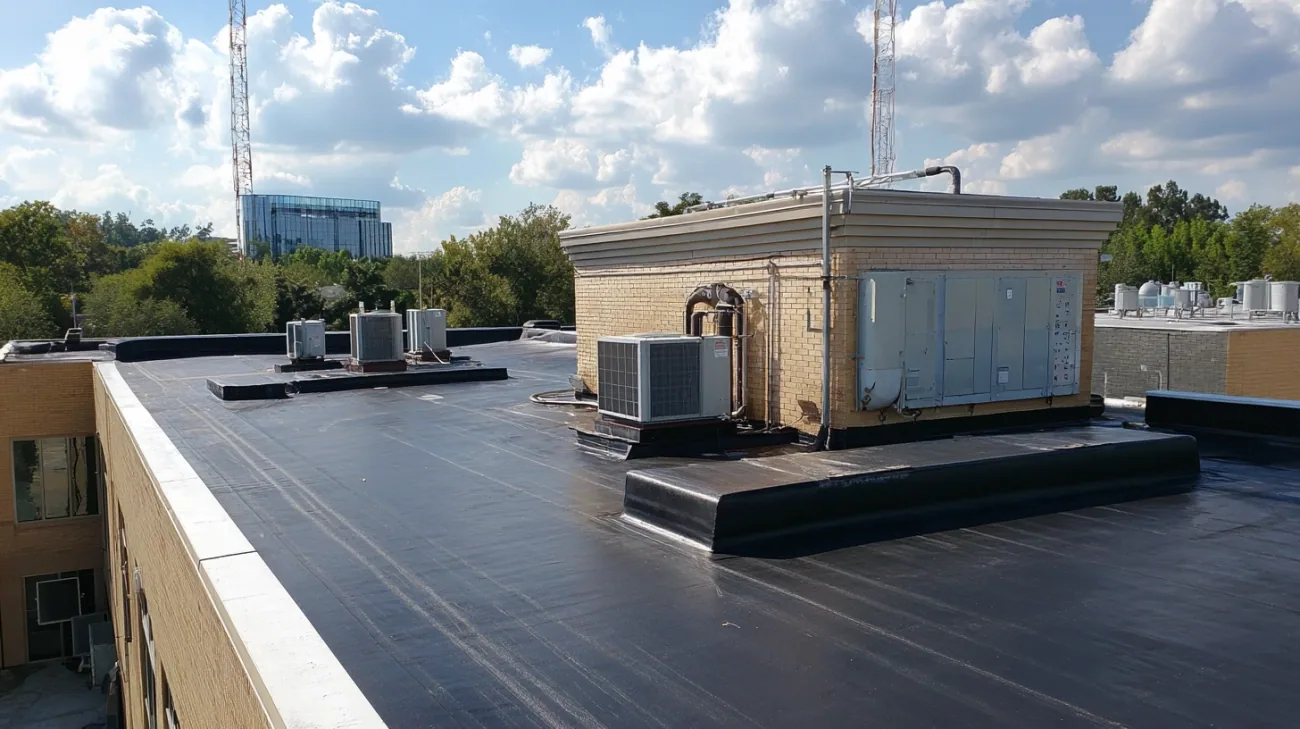
Product identity: confirm the specified membrane
KEE is often described as a PVC alloy, but product formulations and accessory requirements vary. We review the manufacturer’s product data, project specification and records from prior work before selecting repair materials. The membrane’s reinforcement, thickness, attachment and seam method shape the assembly. A generic label does not confirm chemical compatibility, expected service life or warranty terms. The proposal names the material information available and lists any item that needs confirmation before procurement.
Where cleaning agents, exhaust or process discharge may contact the roof, we ask what substance is present and how it reaches the membrane. Product-specific compatibility must be confirmed against the exposure. Thornton’s business-park inventory includes manufacturing and food-production possibilities, but a zoning or leasing description cannot establish a particular building’s process. At Creekside Innovation Park, the developer lists aerospace, light manufacturing, distribution and research uses. We verify each roof and operating condition before recommending KEE.
Weld review: inspect field and perimeter details
KEE seams are heat-welded, so a repair starts with the condition of both sheets and the weld. We check surface contamination, lap width, corner patches, end laps and transitions at drains, walls, curbs and equipment. A probe can locate a missed or open edge, but the inspection also needs to review the membrane around that point. A sound field seam does not establish that the perimeter is secure.
During repair, we prepare the surface to the product requirements and weld compatible membrane into the damaged area. If prior coatings, mastics or incompatible patches interfere with bonding, a larger cutback may be necessary. We document the preparation and repair boundary. For related detail work, coping and edge transitions can be addressed with the membrane termination, while drain details should be coordinated with the same assembly and drainage plan.
Substrate check: find what the membrane covers
A membrane can hide wet insulation, loose cover board or deck deterioration. We use the leak history and visual review to mark suspect roof zones, then recommend testing or a targeted opening when the decision requires direct evidence. Moisture mapping can guide that sampling, but it does not expose every layer. The report identifies tested areas and states where more verification is needed. The repair scope should not promise a durable weld over a substrate that has not been checked.
At North Washington Commerce Center, the first phase includes an e-commerce fulfillment building with dock positions and drive-in doors. That fact can help with delivery and staging discussions, not with assumptions about the roof assembly. We coordinate access with the specific property and map each repair to a roof zone. If insulation is wet, insulation replacement can be included where testing confirms it.
System fit: compare KEE with adjacent options
KEE may be considered where the specification calls for a reinforced thermoplastic membrane and where its documented formulation fits the project needs. We compare the assembly, not only the resin description. Attachment, deck, insulation, wind design, rooftop traffic and maintenance access all affect the choice. A different PVC product or TPO system may also meet the project basis. We identify what the owner is comparing and keep the material requirements visible in the estimate.
For comparison, PVC roofing and TPO roofing also use heat-welded seams, but their compositions and product data are not interchangeable. We verify compatibility at every interface and use the specified accessory. If a roof section is already serviceable, a repair can preserve it while other zones enter the replacement plan. A replacement assessment can compare those boundaries without treating every area alike.
Thornton conditions: plan access around hail and snow
The May 2024 hailstorm crossed Thornton and Northglenn, and NWS reported roof damage with hail between one and two inches. A dated event supports a targeted inspection after the storm. It does not show whether KEE was punctured or whether an older seam has opened. We photograph the affected field and details, then separate visible impact from wear and test locations that remain uncertain.
Snow and ice can obscure laps and restrict safe access. Denver’s monthly climate record is useful for seasonal planning, but current Thornton roof conditions and the forecast determine whether inspection or welding can proceed. We prepare the surface only when it is suitable and confirm a secure close-in. If a leak is active, temporary protection can be arranged at any hour; permanent membrane work follows a safe access and weather plan.
Scope and capital: price the verified work
Cost changes with tear-off depth, membrane quantity, seams, accessories, edge metal, insulation, deck repairs, equipment access and staging. We separate inspection, testing, repair and replacement work. If product records are unavailable, we list the verification needed before confirming material compatibility. If tear-off may reveal concealed damage, we describe how added quantities will be reviewed. That lets a facility manager compare a repair reserve with planned renewal.
After installation or repair, we preserve product information, weld and detail photographs, test results and roof-zone labels. Those files support maintenance and future repairs. For a multi-building owner, condition reporting can keep each KEE area tied to its address. Send the roof plan, system records, leak history, known exposure and capital deadline. We will inspect the assembly and provide a verified scope for the next decision.
Commercial Roofing Questions
Is KEE roofing the same as standard PVC?
KEE refers to PVC membrane formulated with a ketone ethylene ester modifier. Product construction and accessories still vary by manufacturer. We check the exact product data and specification before selecting a repair or replacement material.
Can KEE be used where exhaust reaches the roof?
The project team needs to identify the discharge and confirm compatibility against the selected membrane’s product information. We inspect the affected location and ask for process details when exposure is unclear. A broad material category does not establish chemical resistance to every substance.
How do you test KEE seams?
We visually inspect and probe representative welds, corners and terminations. If a seam is open, we evaluate the surrounding sheet and substrate before preparing a compatible repair. Testing results and access limits are recorded by roof zone.
Can a KEE roof be repaired with another PVC membrane?
Compatibility must be confirmed for the exact materials and details. Product family names alone are not enough. We review manufacturer guidance and the existing system record, then specify the repair material and preparation needed for the tie-in.
What findings could move a KEE roof to replacement?
Widespread moisture, recurring weld failure, poor attachment, compromised deck or unsupported material compatibility can change the scope. We map those conditions, test where needed and compare a localized repair with broader renewal. The report states what remains unverified.
Confirm the KEE product and repair basis
Share the membrane records, roof plan, repair history, known discharge and access calendar. We will verify the assembly and return a scope that separates tested findings from open questions.
Call 555-555-5555 or send the form and we will set up a visit.