
Commercial Roof Coating Restoration in Thornton, CO
Evaluate a Thornton roof coating after checking moisture, adhesion and details. Compare restoration with repair or replacement using verified findings.
A coating option starts with a question about the roof beneath it. We inspect the existing assembly, confirm that it is dry and stable, and determine whether a coating can restore a sound surface. A liquid layer cannot correct wet insulation, failed attachment or an open seam that still admits water. In Thornton, regional climate records show summer heat as well as winter snow exposure. Those conditions inform product and scheduling decisions, but the roof’s material, drainage and current condition decide whether coating belongs in the scope.
Roof condition: confirm a sound substrate
We check the membrane or metal surface, seams, penetrations, curbs, drains, edges and prior repairs. Loose material, active leaks, wet insulation and unstable flashing need correction before restoration is considered. We identify areas that require removal, repair or moisture testing. The proposed coating system also needs to be compatible with the existing substrate. If a test patch or adhesion check is appropriate, we record the location and result before pricing the full surface.
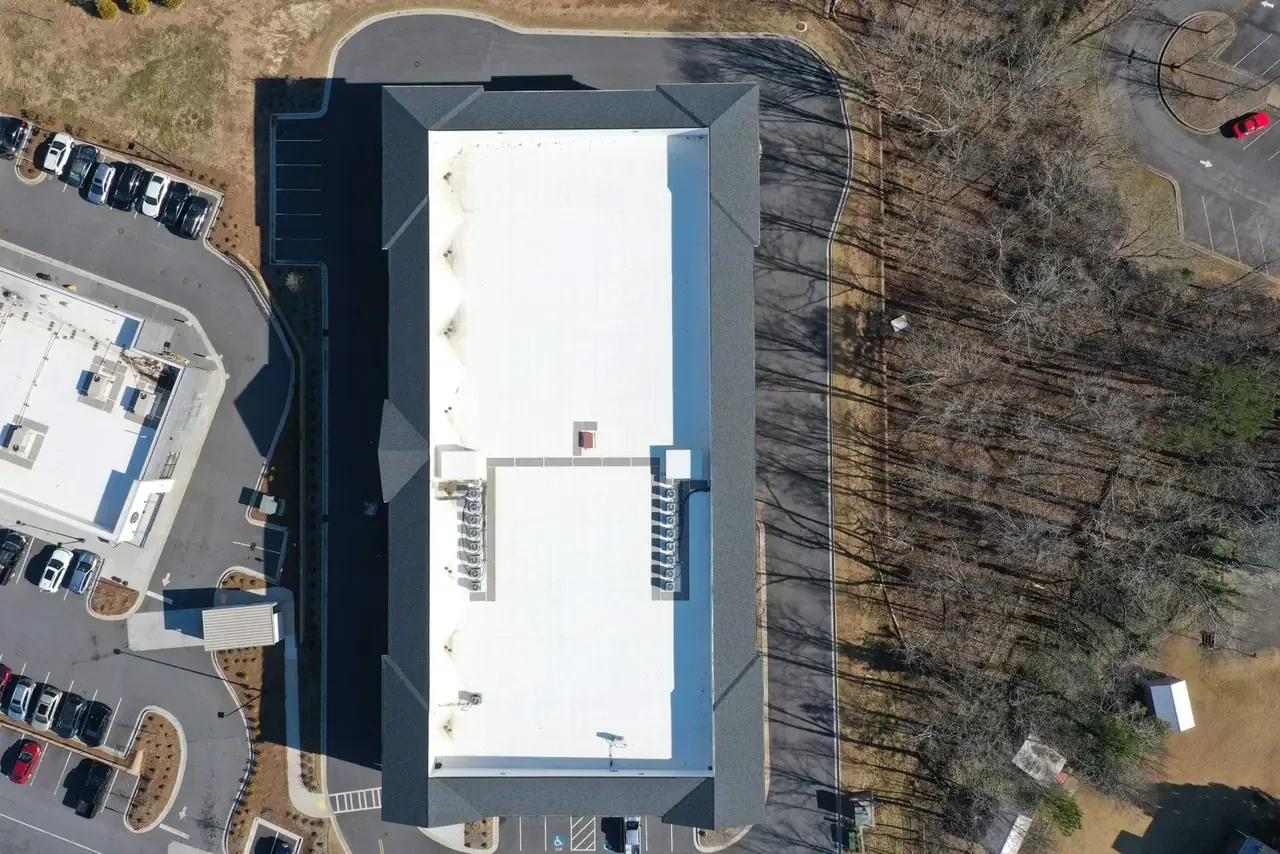
Thornton’s industrial inventory includes properties such as 25 Commerce Park, where warehouse, distribution, showroom, flex and manufacturing uses share the business park. That does not tell us which roof assembly a particular building has or whether it is eligible for coating. We verify the actual surface and roof history. A roof with many incompatible repairs may need a different restoration path than a stable membrane with isolated detail work.
Surface preparation: repair before applying
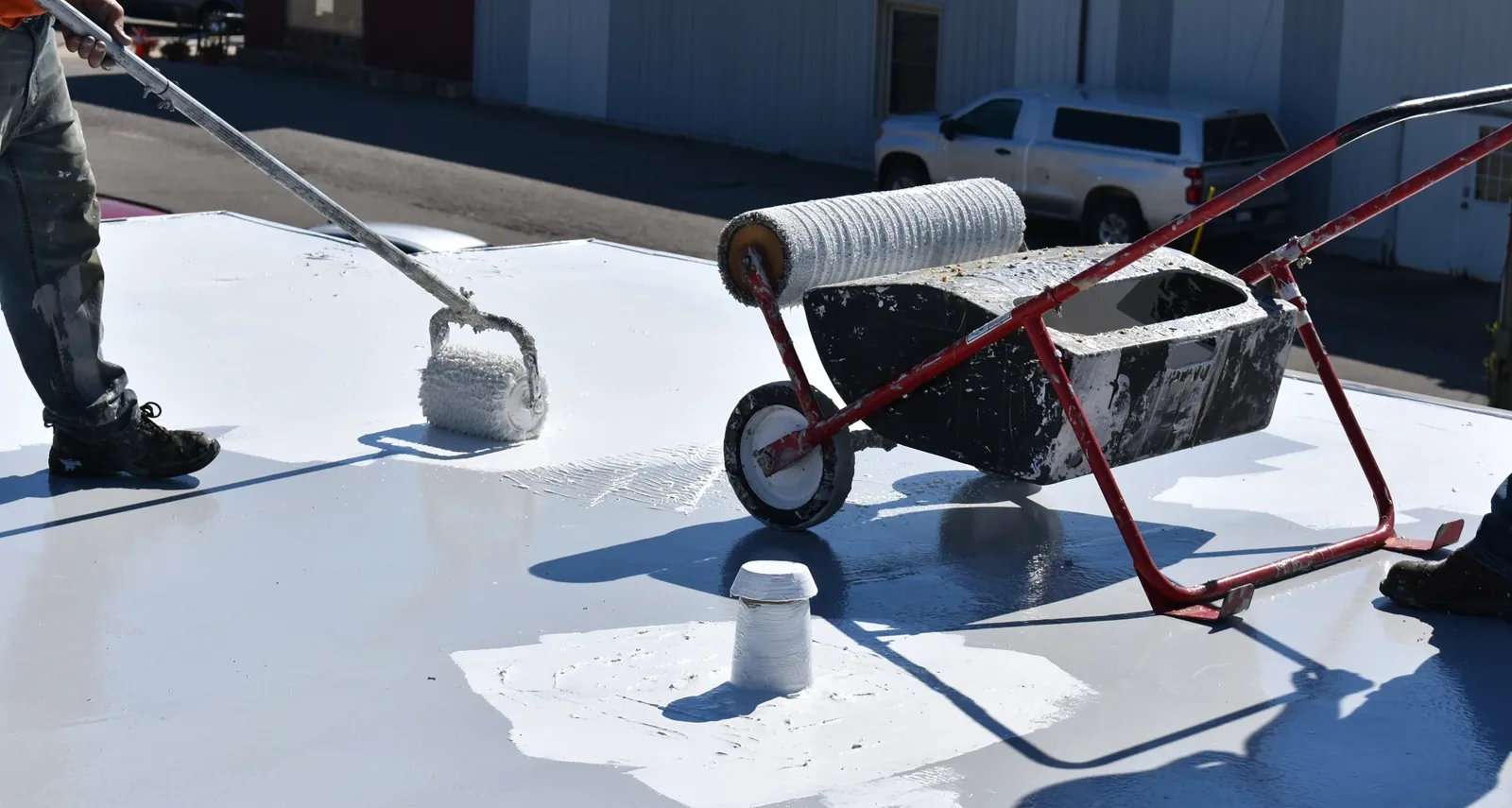
Preparation controls coating performance. We remove dirt and loose material, address rust where relevant, repair seams and flashings, and confirm that the surface can accept the selected coating. Drains and scuppers must stay open. Ponding areas need evaluation because persistent water can challenge coating systems and may reflect a slope problem. We define the preparation and repairs by roof zone so the coating is not priced as a substitute for corrective work.
At penetrations and curbs, the assembly may need reinforced flashing or a compatible liquid-applied detail before the field receives coating. The edge termination must remain secure, and the coating must not block drainage paths or cover components that need service. Our penetration flashing work and drain corrections can be scoped as separate steps. If repair boundaries are extensive, we compare restoration with replacement before selecting a system.
Coating system: match the roof and exposure
Silicone and acrylic coatings have different strengths and limitations. We compare substrate compatibility, surface preparation, water exposure, cure conditions and the roof’s drainage. The product selection follows the roof conditions and manufacturer’s current system requirements. We do not apply a coating based only on color, a broad weather claim or the promise of avoiding removal. We compare silicone and acrylic systems with the substrate and water exposure. The scope identifies preparation, reinforcement, dry film requirements and details included.
Thornton’s July temperature records for Denver provide regional heat context, while the building’s surface temperatures and forecast govern the workday. A coating may need a dry substrate and a temperature window for application and cure. We confirm those conditions before starting. If winter snow or storms constrain close-in, we may set the work for another season. The schedule accounts for rooftop equipment, tenant operations and the time required to keep traffic off coated areas.
Restoration decision: compare the full scope
Coating cost depends on roof area, surface preparation, repairs, reinforcing details, access, equipment congestion and the number of coats required by the system. We identify what is included and where removal or deck work remains an allowance. This helps compare a coating proposal with a replacement scope on equal terms. If moisture testing is needed, it should happen before restoration is selected; a coating can cover the surface without removing the source of failure below it.
For a facility with a capital deadline, we can compare immediate repairs, coating restoration and replacement against documented condition and expected disruption. A stable substrate may make restoration worth reviewing. Widespread moisture, repeated leaks or failed attachment can shift the decision toward removal. The record states the findings that support each option and what test would change the recommendation. It also sets a later inspection point for the treated surface.
Application window: protect cure and operations
We plan access, staging, exhaust controls, rooftop shutdowns and tenant notices before bringing materials to the roof. Application needs suitable temperature, dry surfaces and time for cure. Wind can affect safe handling; rain can compromise work that has not cured. We divide the roof into zones and set boundaries that keep foot traffic and service work away from fresh coating. For an occupied building, the access plan includes how staff will reach rooftop equipment during the work.
The Thornton Urban Center is the city’s original commercial core, with planning focused on a broader mix of uses and transportation. That district’s operating context differs from an industrial park or regional retail property. We check the actual tenant schedule and site access before setting application hours. If the surface cannot be prepared or coated during the planned window, we stop and reschedule rather than leave a partially completed area exposed without a protection plan.
Closeout: record what the coating can do
The closeout report lists substrate preparation, completed repairs, coating system and areas treated. Photos show field and detail work, including locations excluded from the scope. We note cure conditions and access restrictions. If an area remains untreated because of moisture, incompatible material or poor adhesion, the record identifies the reason and next action. Later inspections can compare the same roof zones and determine whether the surface remains serviceable.
Share the roof plan, repair history, leak log, access calendar and budget deadline. We will inspect the assembly, test uncertain areas and compare an eligible coating system with repair or replacement. If the building needs emergency protection, that work comes first. A restoration scope should begin with a verified surface condition and end with a clear record of what was applied and what remains outside the project.
Commercial Roofing Questions
Can a roof coating stop active leaks?
A coating is not a substitute for finding and repairing an active leak. We trace entry points, inspect seams and details, and check for moisture below the membrane. Repairs and surface preparation come before field coating. If wet insulation or failed attachment is present, removal or replacement may be more appropriate than covering the surface.
How do you decide if our roof can be coated?
We verify the existing material, moisture condition, surface stability, drainage and repair history. The substrate must be compatible with the selected system and able to accept preparation and adhesion. A test patch or targeted moisture check may help answer an open question. The report states whether restoration is supported and what findings could change that decision.
Will a coating correct standing water?
Not by itself. We inspect the drainage path and determine whether debris, a blocked outlet, low area or roof geometry is involved. Cleaning can resolve some restrictions; a persistent low area may need tapered insulation or another correction. We account for ponding when selecting a coating system and avoid treating the liquid layer as a slope repair.
Can coating work happen while tenants remain in the building?
Often, with a site-specific schedule. We coordinate access, odors or exhaust concerns, rooftop equipment and foot traffic during cure. Some operations may need temporary limits or equipment shutdowns. We identify those restrictions before pricing so the facility can plan around the application window.
How does Thornton weather affect the application date?
Surface temperature, moisture, wind and forecast control preparation and cure. Denver climate records show regional heat and snow exposure, but the current roof conditions determine whether work can proceed. We confirm the conditions close to the start date and identify a restart plan if weather interrupts an open zone.
Test restoration against the roof condition
Send the roof plans, repair history, leak reports, access calendar and budget date. We will inspect the surface, verify moisture and compare coating, repair and replacement scopes.
Call 555-555-5555 or send the form and we will set up a visit.