
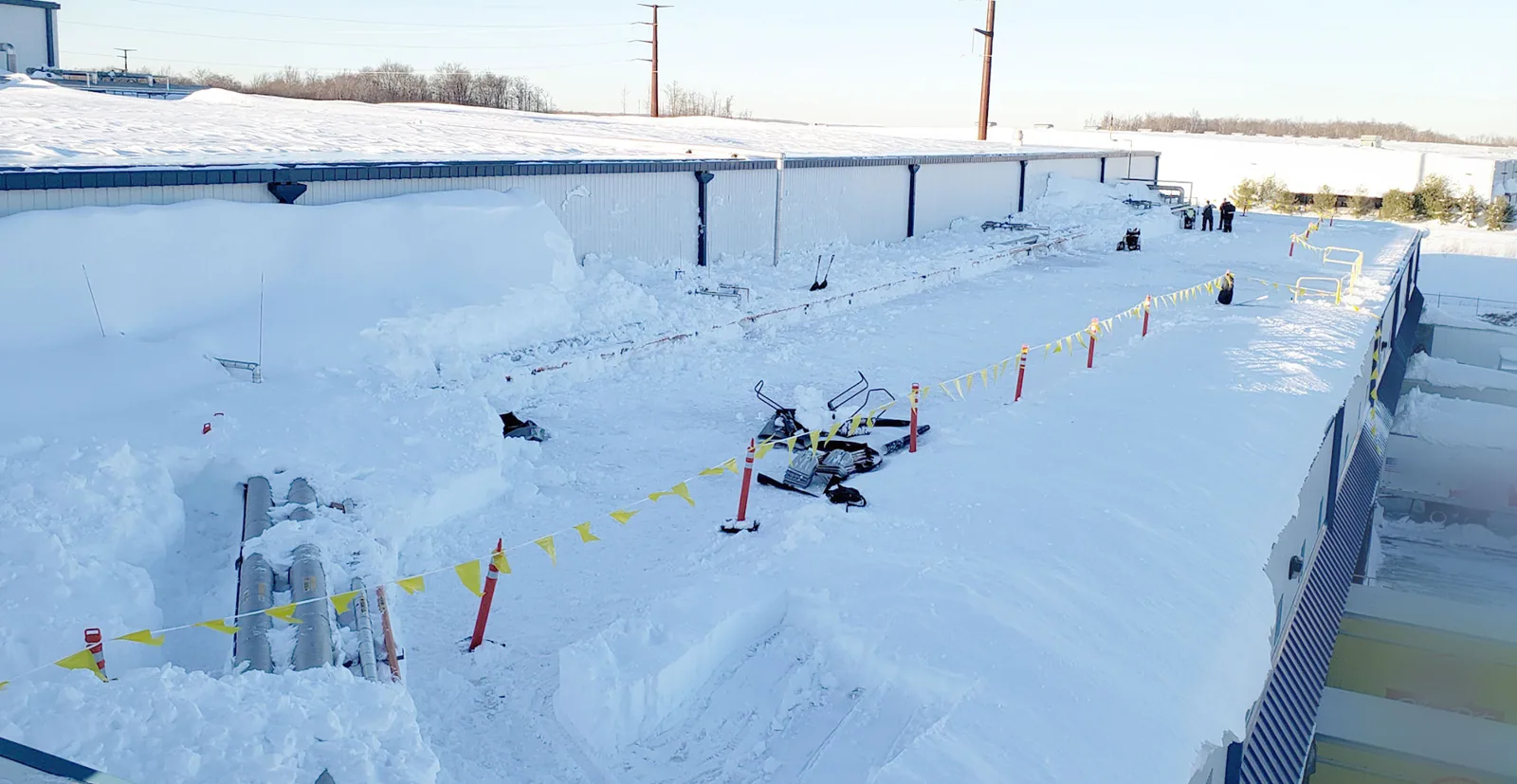
Commercial Snow and Ice Roof Damage Repair in Thornton, CO
Review snow and ice effects on commercial roof drains, edges and membrane, then plan safe access and repair for Thornton facilities.
A freeze-thaw cycle can leave a drain clear at midday and blocked again by evening. We inspect water paths, edges, membrane and interior reports after safe access is available. The repair record identifies what the winter condition changed and what remains hidden by snow or ice. Denver snowfall history helps frame seasonal planning, while the Thornton building’s measured condition controls the scope.
Weather record: separate regional snowfall from site conditions
The Denver NWS annual summary records storm snowfall ranging from 18 to 36 inches at some metro locations during November 2024. That regional event is useful for planning a post-storm inspection, not as a Thornton roof accumulation or structural-load reading. We use the building’s available design information, safe-access limits and conditions observed at the site before recommending work. A single snowfall report cannot set a structural load assessment or determine whether snow should be removed. We review the available roof plans and observed conditions, then identify if the owner needs a separate structural opinion before repair proceeds.
Thornton’s Business Park district includes employment uses along I-25 and E-470, where deliveries and facility access may continue during winter operations. At Eagle 25 Logistics Center, the planned buildings sit near the southeast corner of those highways. The project listing is a local logistics reference, not evidence about an individual roof’s snow conditions. A facility manager confirms gate status, access route and equipment restrictions before inspection. Eagle 25 Logistics Center is one named local area for coordination.
Drain check: locate ice, blockage and overflow
We identify which drains, scuppers and overflow paths can be inspected and whether snow obscures the water route. Ice near an outlet can result from blocked flow, repeated thawing or runoff from another roof section. We note the location and visible boundary, then compare it with interior reports. The site log should include any overnight thaw or renewed freeze before a return visit. A frozen surface should not be treated as a confirmed membrane failure.
The North Washington Subarea includes industrial and employment development near multiple I-25 access points. For a building in that corridor, winter inspections may need coordination with loading shifts and snow clearing at grade. Roof access and ground access are separate checks. North Washington Subarea gives a local planning reference, while drain and scupper work can address a confirmed outlet condition.
Leak path: trace the interior report after thaw
A ceiling stain may appear after ice has moved or snow has melted. We record the affected room, report time, weather and any equipment changes, then compare that information with roof transitions above. Water may travel beneath the membrane before it becomes visible inside. If the path cannot be confirmed by observation, we identify a test location and state how the roof will be restored.
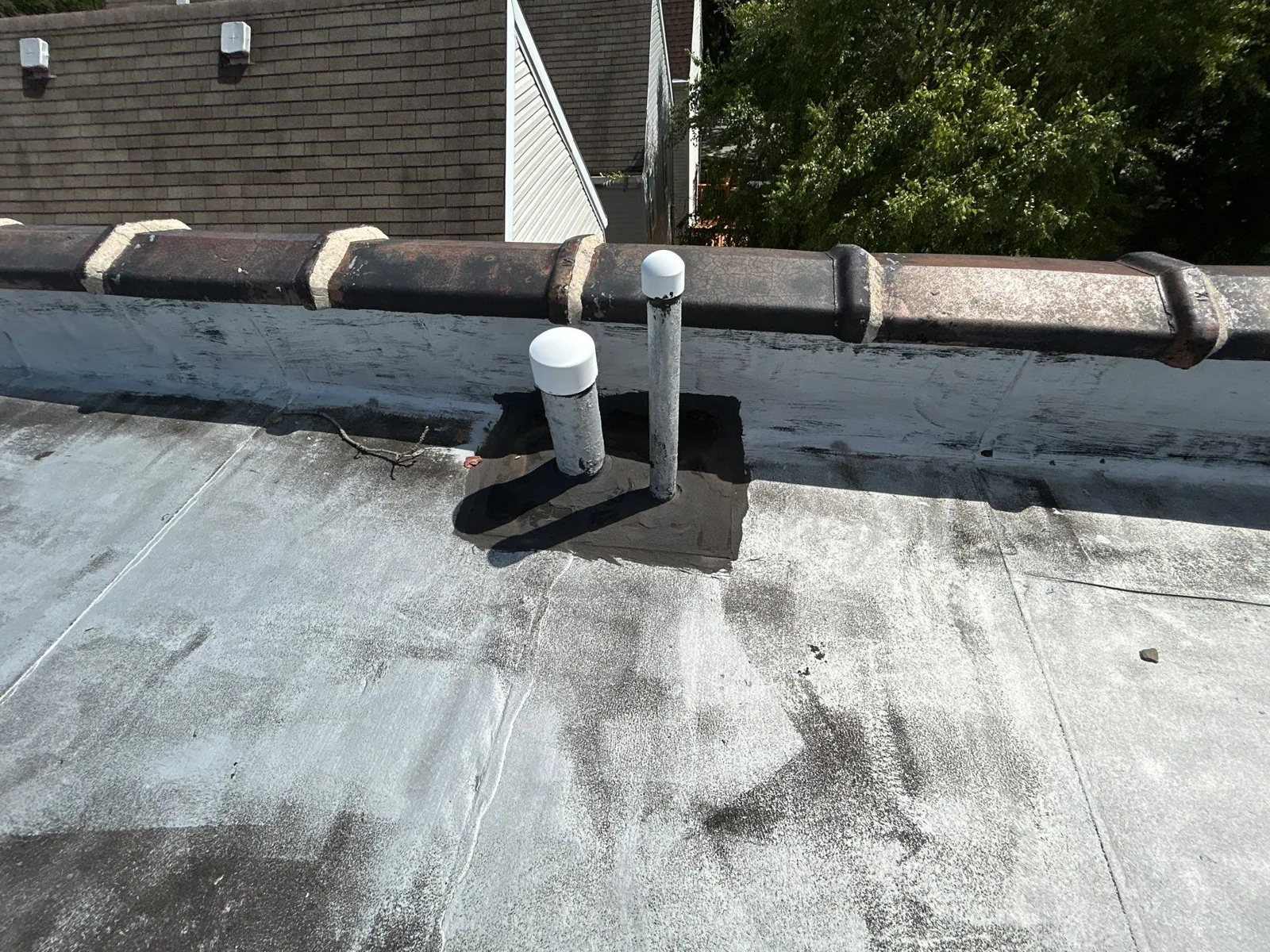
Edges, curb flashings, seams and penetrations can be stressed by movement or trapped water. Ponding-water review documents a recurring low area; flashing repair addresses a failed transition when inspection confirms it. These findings remain separate even if they appear during the same winter call. We mark each detail on the roof plan, compare prior repair locations and note whether a second observation is needed after thaw.
Safe inspection: wait for access and document limits
Ice, snow cover and wind can make roof access unsafe or hide the detail under review. We schedule the walk after the site contact releases access and record what remains obscured. A drone view or ground-level inspection may document visible context, but it does not confirm concealed assembly conditions. We return to inaccessible areas when conditions allow.
Snow removal, temporary cover and interior protection may involve separate personnel and approvals. We coordinate roof inspection timing with the facility plan and do not ask staff to enter a restricted roof area. A roof inspection can map accessible conditions; emergency protection can secure a verified opening after the site is cleared for work.
Repair threshold: match winter damage to the assembly
A local flashing tear or puncture may call for a defined repair if adjacent membrane and insulation remain serviceable. Repeated water entry, wet materials, displaced edges or an affected drain system can expand the scope. We state the roof zones checked, the conditions confirmed and any test still required. If ice cover prevents a complete review, the owner receives an interim finding rather than an unsupported full-roof quantity.
Cost and timing depend on access, thaw conditions, material compatibility, protection, removal depth and the ability to close the roof in one shift. A test opening may reveal wet insulation or deck damage, requiring a new decision. Material delivery, roof hatch condition, lift placement and daytime temperature can also affect sequencing. The written work window should show these constraints before the crew mobilizes, especially when the facility needs space for deliveries or snow clearing at grade. A defined repair scope can be compared with a larger replacement only when the condition record supports it. The inspection record preserves what was visible before and after the work.
Closeout: record the winter condition and follow-up
We document the drain path, affected details, test results, temporary measures, materials and remaining limits. If a second visit is needed after thaw, the report names the area and reason. The building team can then compare the next observation with the same roof-zone label. This record also helps schedule work outside a period when access is restricted.
Send roof plans, dated photos, room reports, drain history and access rules. We will identify the winter condition, state what remains hidden and return a repair sequence with a safe inspection window. A follow-up date is set for any area that could not be reviewed. The facility contact receives the roof-zone list and required access condition for return visits and logs.
Commercial Roofing Questions
Do Denver snowfall totals show how much snow is on our Thornton roof?
No. The climate record is regional. We inspect the actual building when access is safe and use its conditions and available design information to assess the roof.
Can ice at a drain mean the membrane has failed?
Not by itself. We check outlet condition, water path, nearby seams and interior reports. A test may be needed before linking an ice location to a membrane opening.
What if snow hides the area where a leak may start?
We record the inaccessible zone and any visible evidence, then schedule a return when conditions permit. The interim record does not treat a hidden detail as cleared.
How should a winter roof repair be scheduled?
Set the access window, surface condition, temperature and close-in limit with the facility lead. We identify materials and protection before opening the roof and pause if the planned boundary cannot be secured.
When does snow or ice damage require a broader scope?
Repeated leaks, wet insulation, damaged deck or failed edges can expand the work beyond a local patch. We document the test boundary and show which finding changes the repair decision.
Plan a safe winter roof review
Share the site access rules, roof plan, dated photos, drain history and interior reports. We will document visible conditions and set a follow-up for obscured areas.
Call 555-555-5555 or send the form and we will set up a visit.