
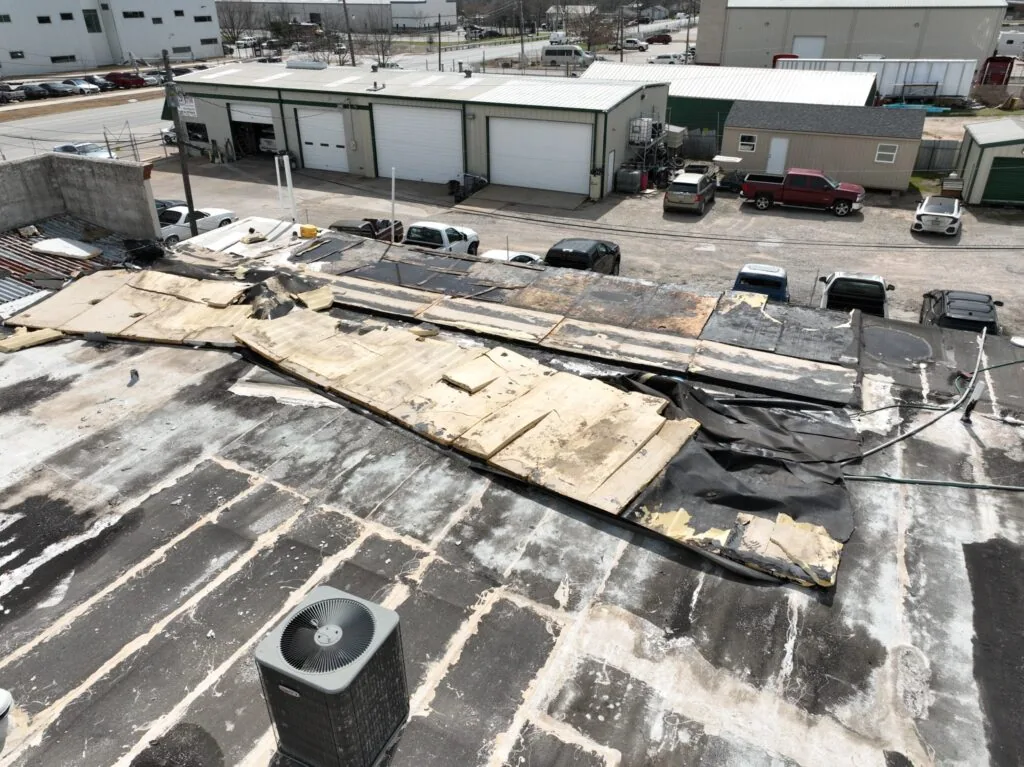
Commercial Hail Damage Roof Repair in Thornton, CO
Inspect hail impacts on membranes, metal details and rooftop equipment, then document a property-specific commercial roof repair in Thornton.
A hail report can move an inspection ahead of the next capital review, but it does not set the repair area. We inspect exposed surfaces, seams, edges and rooftop equipment, then map each finding to a roof zone. The May 30, 2024 event crossed Thornton and Northglenn; the building still needs its own condition record. We distinguish visible impact from existing wear and identify what needs closer testing. Limited access is recorded by zone before repair choices by zone.
Event context: use the hail report as a trigger
The National Weather Service event record describes hailstones from one to two inches during the May 30 storm across Thornton and Northglenn, with roof impacts reported. That history helps facilities decide which exposed properties to review. It does not prove impact at every address or assign a cause to an older seam or leak. We record the building, inspection date and affected areas separately from the regional event.
Northglenn Marketplace contains both attached and freestanding commercial structures north of East 104th Avenue. Its range of tenant-space sizes makes roof boundaries and property contacts worth confirming before inspection. We identify the actual building, owner and roof section rather than assuming that one center-wide address reflects a single assembly. Northglenn Marketplace is one nearby commercial reference.
Impact map: inspect membrane, metal and accessories
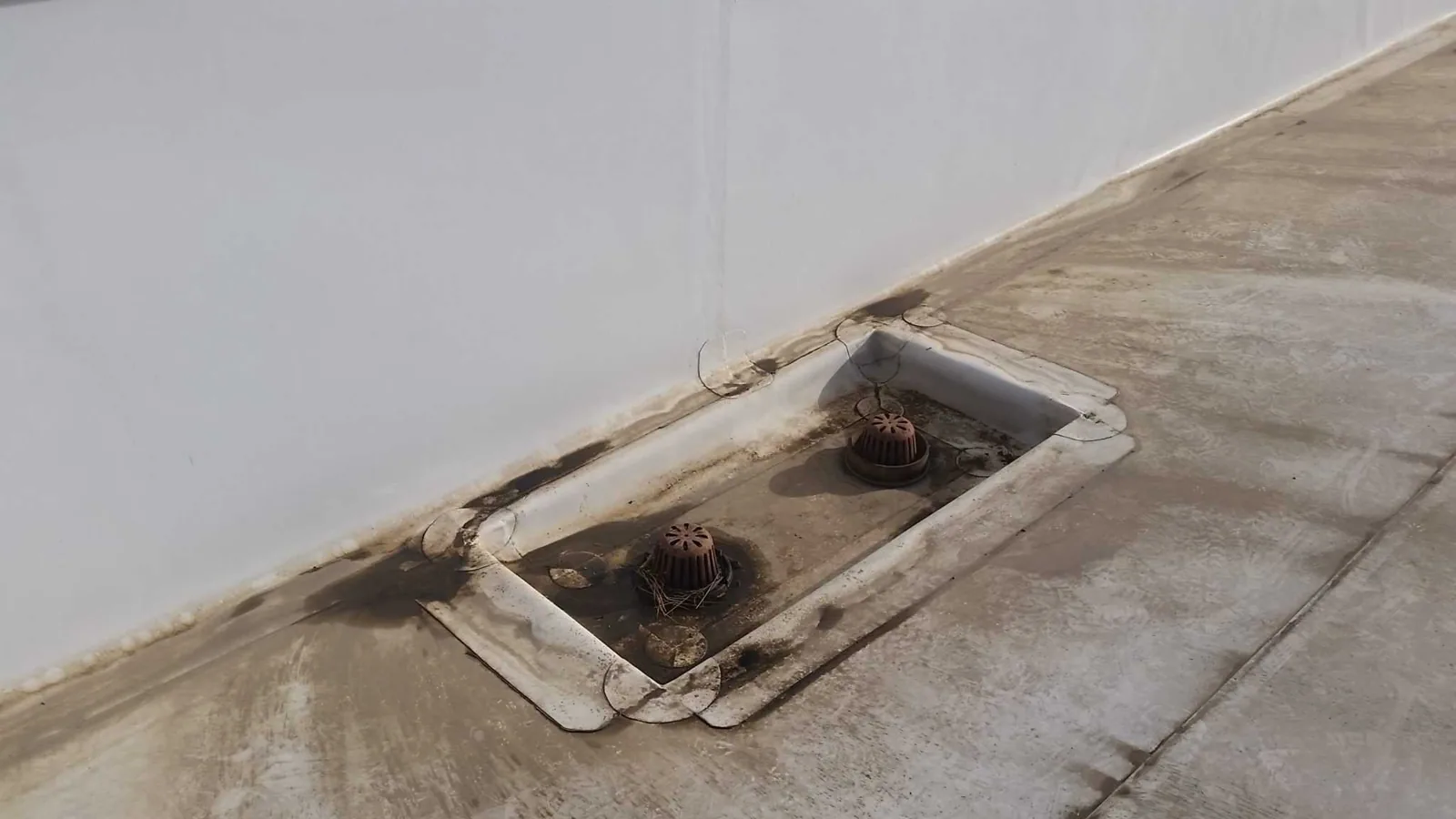
We check the membrane for cuts, punctures, displaced patches or other visible changes. Metal coping, edge flashing, rooftop equipment and exposed accessories receive separate notes. A surface mark can have more than one explanation. We compare the pattern with repair history and examine vulnerable transitions without assuming every mark was caused by hail. Photos identify the roof zone and show both close detail and surrounding context.
On a low-slope assembly, damage may be limited to one detail or may require testing for moisture beneath the sheet. We select a test location only when it can answer a scope question. A single test does not represent the whole roof. Puncture repair is appropriate when an opening is confirmed; wind-related movement is documented separately when edge or attachment details shifted.
Interior review: connect reports to a roof zone
Facilities staff can log room, time, weather, equipment status and any water entry after the event. We use those details to prioritize roof zones and compare the interior path with visible exterior conditions. A stain may appear later than the opening, so the reported time is not necessarily when the roof was damaged. If the source remains uncertain, the report names the test or follow-up needed.
At 25 Commerce Park, published routes use Grant Street and 144th Avenue from I-25, with another approach via East 152nd Parkway and E-470. A roof review still requires the facility to confirm its actual gate, hatch and staging rules. 25 Commerce Park is one local industrial access reference. For a multi-tenant center, the claim file should identify who controls each roof section, which entrances stay open and who can authorize access. We record the owner contact and tenant report separately so the repair scope does not cross an unconfirmed lease or maintenance boundary.
Repair decision: compare local work with broad renewal
A localized membrane or metal repair may address a confirmed defect when nearby materials remain serviceable. If testing shows wet insulation, loose attachment or repeated impact-related openings, the work area may need to expand. We identify the quantity, repair method, access, disposal, protection and any test allowance. The estimate separates known work from concealed conditions and lists who can approve added scope. It also identifies whether the proposed repair restores one detail or a larger field area, and whether existing insulation, attachment or edge metal will be tested. Access, lift placement, disposal and interior protection affect schedule and cost. We show those drivers beside the quantities so the owner can compare an immediate repair with a planned renewal without treating storm history as a scope calculation.
Coating, recover and replacement are different choices. A coating cannot correct a puncture or failed attachment without suitable preparation, and a recover depends on the existing roof’s moisture, layer count, drainage and perimeter. Commercial roof repair can be compared with a replacement scope when both are supported by findings. Claim documentation should show the observed condition without treating a weather report as a coverage decision.
Inspection window: set access and testing limits
After a hail event, safe access and facility operations determine the first inspection window. We coordinate roof hatch access, lift placement, parking or loading controls and any area below the work. If debris, wet conditions or electrical equipment restricts a zone, we note that limit and return when access is released. The inspection schedule should also consider a roof that remains open to weather during any test.
A roof inspection can document visible impact and nearby details. Where broader moisture review could change removal quantities, infrared survey work may help select confirmation locations. We explain that a scan is a screening tool and pair it with physical verification where needed.
Claim record: preserve the evidence by date
Keep the event notice, inspection photographs, roof plan, repair history, work authorization and closeout together. The file should separate the first observation from later repair activity. Each image needs a location and date. If temporary cover was installed, record its boundary and removal. The owner and insurer can then review the same factual record while handling their separate claim responsibilities. Keep every revision of the estimate with its date and the condition that prompted a change. If a second inspection finds a new area, label it separately from the original finding. That makes the decision trail readable after temporary protection is removed and the facility returns to routine maintenance.
Send the date of the report, facility address, leak calls, roof drawing and access rules. We will return a finding by zone, identify uncertainty and price the repair options supported by the inspection. Claim documentation can preserve the roofing scope; a condition record keeps the building’s longer maintenance history available.
Commercial Roofing Questions
Does regional hail information set our repair scope?
The NWS record documents a regional event. We inspect the specific property and separate observed impact from prior wear, repair history and conditions that need testing.
Which roof details should be checked after hail?
We review membrane, edges, metal, equipment supports, curbs, seams and any reported interior locations. The inspection record maps findings and limits by roof zone.
Does hail always require a full roof replacement?
No. A confirmed local defect may support repair, while wet insulation, broad damage or poor attachment can change the scope. We compare those options with evidence and stated assumptions.
What should we collect before the inspection?
Provide the event date, roof plan, dated photos, prior repairs, water reports, access rules and current occupancy limits. Those details help connect observations to the correct building and zone.
Can a moisture scan establish the repair quantity?
A scan can help select areas for confirmation, but it does not by itself define all material to remove. We state the scan boundary and verify conditions before setting final quantities.
Prioritize the roofs that need a direct hail review
Share the storm date, building list, roof plans, leak reports, repair records and access limits. We will map visible findings and return repair choices by zone.
Call 555-555-5555 or send the form and we will set up a visit.