
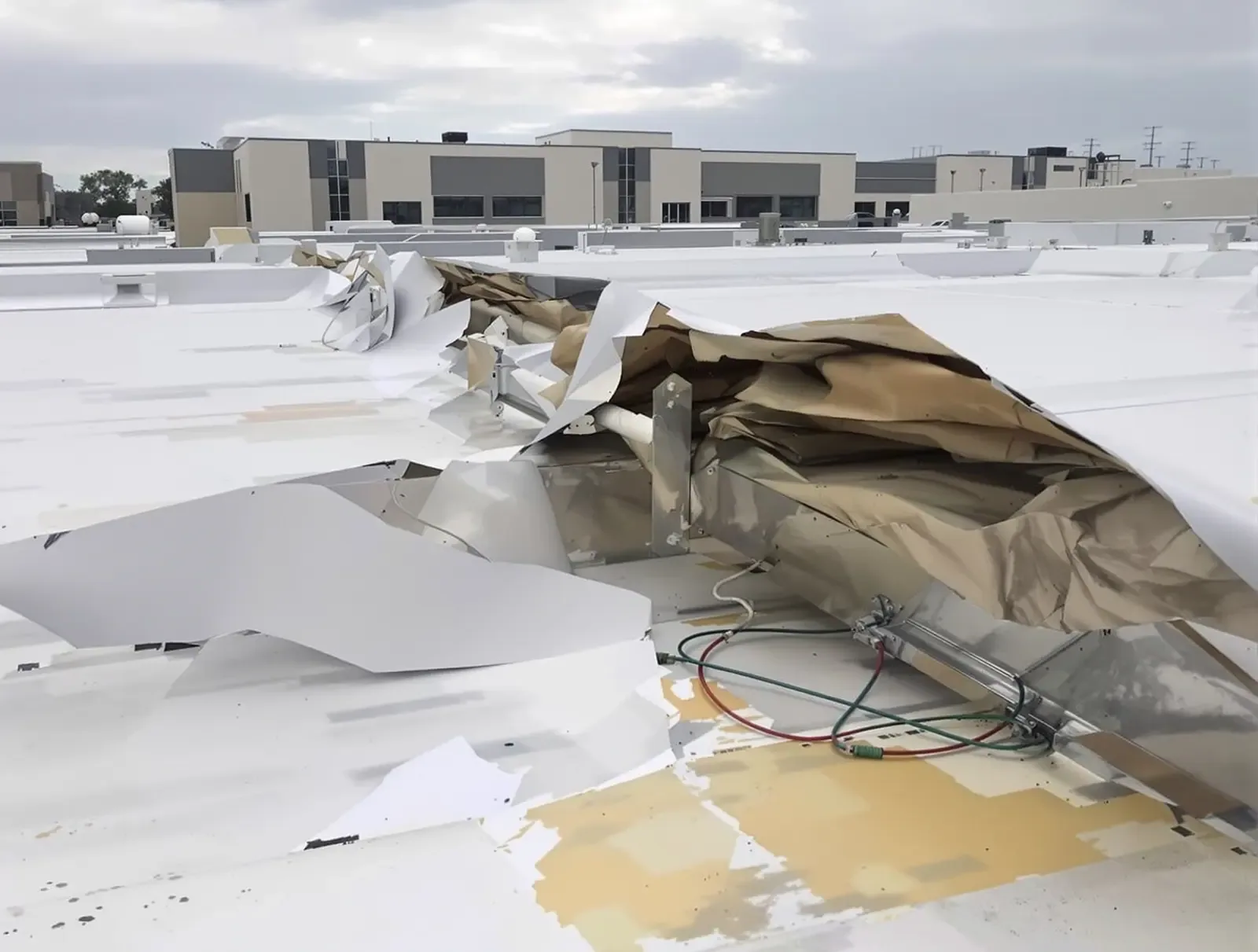
Storm Damage Roof Repair in Thornton, CO
Assess hail, wind and snow damage on commercial roofs in Thornton. Document roof zones, protect active leaks and set a repair scope around verified conditions.
The loading schedule after a storm can determine which roof zones need access first. We inspect exposed details, record active leaks and separate urgent protection from planned restoration. NWS places Thornton and Northglenn beneath the May 30, 2024 storm track and notes roof damage where hailstones measured one to two inches. The dated event supports an inspection request, but cannot diagnose every property. We assess each building, photograph visible conditions and define what needs testing before a repair scope is final.

First review: protect the active building
We begin with life safety, interior exposure and access. The facility contact identifies wet rooms, sensitive equipment, inventory, ceiling damage and areas that must stay open. We then check the roof for loose materials, punctures, open seams, damaged flashing, blocked drains and compromised edges. If water is entering, temporary protection may need to precede a full inspection. We document that protection separately from permanent work and set a return visit when weather allows.
A distribution operation near I-25 may need dock access preserved, while a medical building may require room-by-room coordination. Thornton’s South Thornton Healthcare District includes North Suburban Medical Center near Thornton Parkway and Grant Street. Crossroads 25 occupies an industrial and logistics location at the I-25 and E-470 junction. These named places describe different operating contexts; we confirm the affected property’s access rules before planning work.
Storm evidence: distinguish impact from wear
Hail, wind and snow leave different evidence. Hail may mark soft metal, split brittle flashing or puncture a vulnerable membrane, while displaced edge components can point to wind exposure. Snow and ice can load drainage details or hide damage until conditions clear. We photograph the surface and details, note the roof material where it can be verified, and compare the findings with repair history. A storm date can guide the inspection; it cannot show what is beneath an intact membrane.
Adams County identifies tornadoes as a local hazard, with the Front Range season concentrated from mid-May through mid-August. That regional hazard context supports a readiness plan, but it does not prove tornado damage at a specific Thornton building. If the event produced visible openings or water entry, we prioritize dry-in and a hands-on review. For a storm-specific record, our roof inspection maps findings by zone and identifies limits where access was not safe.
Roof zones: trace the damage boundary
We inspect the field, seams, perimeter, curbs, skylights, penetrations, equipment supports and drainage. Water can travel below a membrane before appearing inside, so we compare interior reports with the roof’s drainage path. A suspected wet area may need infrared review or core cuts. A damaged seam can require a compatible membrane repair, while a loose edge needs the termination and adjacent metal checked together. The work follows the failure, not a generic storm checklist.
On a large industrial roof, we define the affected area and adjacent details before mobilizing. The 25 Commerce Park development serves warehouse, distribution, showroom, flex and manufacturing uses. That mix helps explain why loading access and equipment coordination belong in the work plan; it does not determine the roof assembly or damage. We verify both at the building. If moisture extends beyond the visible opening, a targeted moisture survey can refine the removal boundary.
Repair options: stabilize, restore or replace
Localized damage with a serviceable surrounding roof may support a targeted repair. Broader membrane damage, wet insulation or repeated failure can require selective removal or a replacement evaluation. We identify the confirmed boundary and note concealed areas that could change the scope once opened. If an emergency dry-in is still in place, we list its limit and schedule permanent work separately. This prevents temporary protection from being recorded as the completed repair.
Storm work can include flashing replacement, seam restoration, edge metal correction, insulation removal or drainage repair. We price each work area and identify access, material and interior protection needs. When replacement is warranted, our replacement scope will state the tear-off boundary. For a limited defect, planned repair may preserve the existing system. The condition record explains which finding supports the selected option.
Documentation: support the repair decision
We record the inspection date, weather information supplied, roof zones reviewed, observed damage, temporary measures and repairs completed. Photos show the condition before work and the repaired detail afterward. We separate storm findings from preexisting wear and areas that could not be inspected. If an insurance claim is involved, the owner can use this record alongside policy and adjuster documents. We do not make a coverage decision; we provide a clear scope tied to roof evidence.
For a claim file, the record should identify the inspected building and the roof zone where each condition appeared. A regional weather summary cannot substitute for a property survey. Our claim documentation can organize photos, repair boundaries and the work completed. If the roof system or material is unclear, we note that gap and recommend a test instead of assigning a cause without support.
Work window: coordinate the return
Storm repairs depend on safe access, dry surfaces, material cure and tenant operations. We identify equipment shutdowns, staging, delivery routes and areas that need protection below. Denver climate records show winter snowfall, while the active forecast and roof condition determine the daily work window. A storm response may begin under poor conditions, but permanent restoration should use a suitable surface and clear close-in plan. If weather delays the work, we state what temporary protection needs monitoring.
Send the building list, event date, leak locations, roof plans, access rules and any prior repair notes. We will prioritize active exposure, document storm-related findings and identify the next decision for each roof. For several properties, portfolio coordination can keep the record and work order attached to the correct address. The follow-up plan should show which zones were checked and which need another visit.
Commercial Roofing Questions
Does the May 2024 hail report mean our building needs repairs?
It means a damaging storm crossed Thornton and Northglenn, but it does not establish what happened at each property. We inspect the roof, note visible impact or openings and review interior reports. If a concealed area remains uncertain, we recommend targeted testing. The repair scope follows the property evidence rather than the storm report alone.
What should we do before the roof is safe to inspect?
Protect people and contents below, restrict access near damaged ceiling or electrical areas and report active water entry. Share the building access point and a site contact. We can arrange temporary protection when roof conditions permit. If access is unsafe, we explain the interior measures and return when conditions allow a proper review.
Can storm repairs happen before an insurance adjuster visits?
Immediate protection may be needed to limit further damage. We document the condition and temporary work with photos and dates, then coordinate permanent repairs based on the verified scope and owner direction. Coverage and claim requirements depend on the policy. We keep observed roof conditions separate from conclusions about payment or cause.
How do you separate new damage from existing wear?
We inspect each roof zone, review repair records and compare the condition with the storm information available. Photos show what was observed and where. If the assembly conceals moisture or prior repairs, we say so and identify the test that could clarify the boundary. A written scope keeps storm-related work distinct from unrelated maintenance.
Can hail damage lead to replacement?
It can when damage is widespread, the membrane is no longer serviceable or moisture extends through several zones. Localized impact may remain repairable. We inspect material, seams, details, insulation and deck conditions, then compare repair and replacement boundaries. Any uncertainty that requires opening the assembly is stated before the scope is finalized.
Document the storm condition and repair path
Share the event date, property list, leak locations, roof plans, access calendar and claim timeline. We will inspect each building, protect active openings and prepare a scope tied to verified findings.
Call 555-555-5555 or send the form and we will set up a visit.