
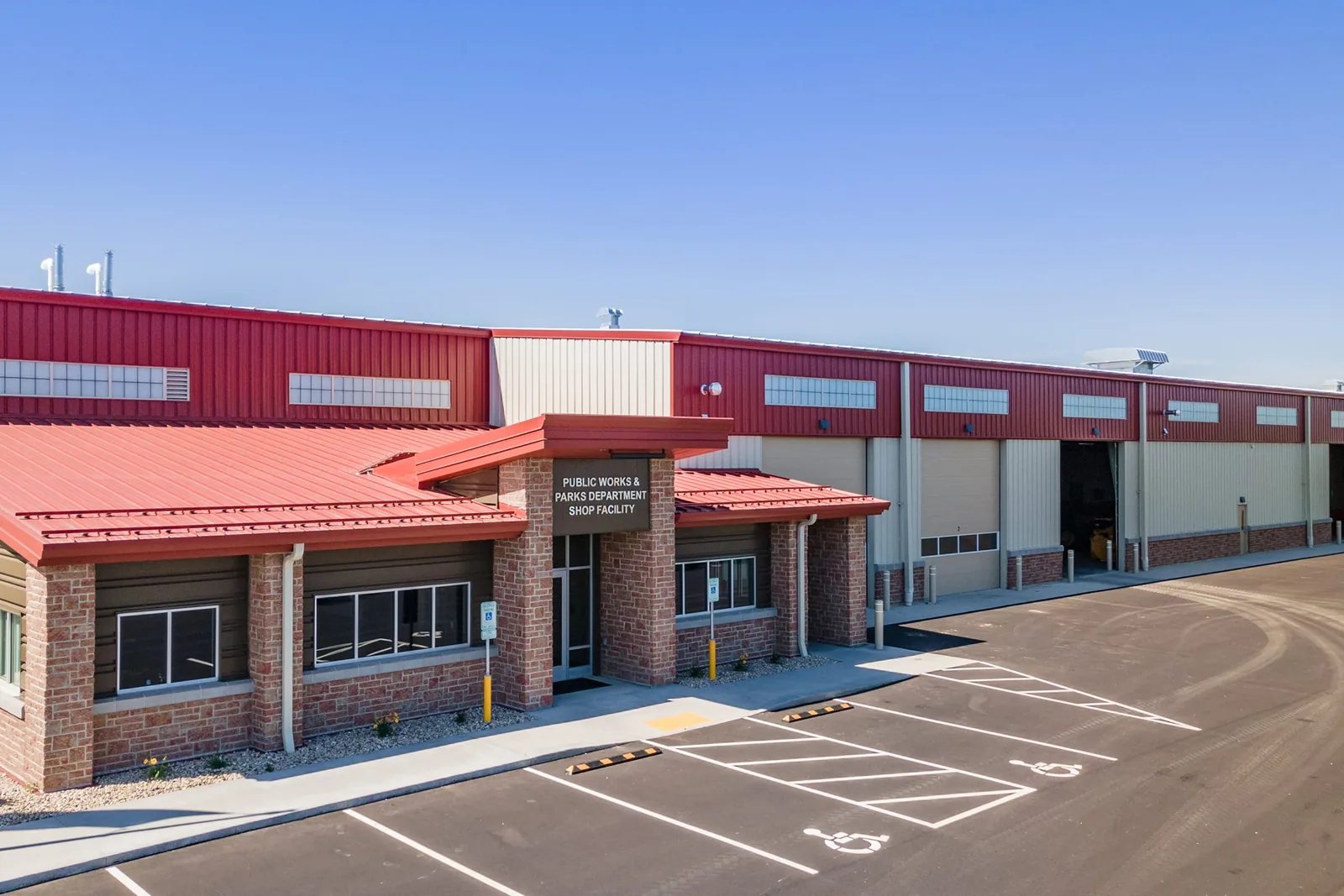
Commercial Roofing for Public Agencies in Thornton, CO
Document public-facility roof scopes, code assumptions, procurement, access and capital phases for Thornton agencies in Colorado facilities.
A public roof project needs a record that can survive review. We connect visible conditions, access limits, quantities and approval points to the facility that needs the work. That gives public works, procurement and finance a common basis for deciding whether to inspect further, repair a defined area or budget a larger phase. The scope states what is known, what remains uncertain and who must approve a change.
Asset register: tie each observation to a facility
We begin with the agency’s building list, roof plans, work orders, leak history and planned use. Each roof receives a location label and condition record. Photos identify the area and detail observed. We separate active water entry from staining, prior patching and suspected concealed moisture. If a test is needed, the report names its purpose and the decision it can support. That discipline helps an agency avoid treating every old roof as an emergency or assuming a quiet roof needs no review.
Thornton’s public-service geography includes Eastlake at 124th, a station area planned around an existing main street and smaller blocks, and the North Washington planning area, where industrial and employment uses meet major access routes. Those land-use plans do not identify roof conditions in government facilities. They do help explain why agencies should verify each site’s entrance, loading restriction and neighboring activity before setting inspection logistics. Eastlake at 124th Station Area and North Washington Subarea illustrate distinct local planning contexts.
Procurement file: make assumptions visible
A bid package can be difficult to compare when bidders price different quantities or silently assume different assemblies. We state the measured roof area, perimeter conditions, penetrations, drains, test limits and access assumptions. Alternates should identify a specific change in material or work area. If existing layers, deck condition or attachment cannot be confirmed without opening the roof, the package should describe the investigation and name who can authorize the added work.
We can separate immediate leak control from a permanent scope and show how each option affects the remainder of the roof. A public owner can then compare an interim measure with a defined renewal phase. The estimate should keep allowances visible and bounded. It should also identify exclusions, temporary protection, disposal, interior safeguards and the closeout records expected at completion. Condition reports give evaluators a shared evidence base; capital planning can align findings with funding cycles.
Permit review: confirm the applicable code path
For covered permit applications, Thornton references the 2024 editions of the International Building Code and Existing Building Code. The city’s 2024 energy package, including Colorado Model Electric Ready and Solar Ready provisions, became effective on July 1, 2026. The project team should confirm the rules that apply to the actual scope and permit date before locking insulation, attachment, edge and documentation assumptions. A roof replacement, recover or repair may follow different review steps depending on existing construction and proposed work.
We record the permit assumptions in the scope and coordinate submittal timing with the agency’s procurement calendar. The bid should state who prepares product data, assembly details, test information and any required revisions. If plan review changes the scope, the owner should receive a written explanation before work proceeds. We do not treat a code reference as a substitute for permit review or an approved design.
Public access: protect the services around the roof
Government buildings may host employees, residents, maintenance crews, contractors and scheduled public services at the same time. Before staging, we identify accessible entrances, emergency routes, deliveries, public counters and spaces that cannot close. The agency confirms which areas remain occupied and who can authorize temporary restrictions. Roof access and lifting plans stay separate from public circulation wherever possible.
The work sequence names daily boundaries, noise windows, debris controls and the person who accepts each released area. If interior protection is necessary, the scope identifies rooms, contents and the process for moving or covering them. At the end of a shift, the foreperson documents secure access, temporary conditions and any restriction that continues. These controls matter for a civic office as much as for an agency warehouse, although the operating schedules differ.
For facilities with active occupants, occupied-building reroofing describes phased access and handoffs. An agency coordinating several properties can also use multi-building roof records to keep work orders connected to individual facilities.
Regional risk: use events to trigger inspection
A county hazard brief places Front Range tornado activity in the mid-May to mid-August period. That window can coincide with summer work and severe-weather calls. A warning or regional event is a reason to check exposed roofs, not proof that a particular public building has damage. We inspect the membrane, edges, rooftop equipment and interior reports before defining a repair.
The Denver NWS office annual review records snowfall of roughly 1.5 to 3 feet at some metro locations during November 2024. Those figures describe regional reports, not an individual Thornton facility. They do support planning for access and post-event review after significant snow. Any current inspection must follow safe access conditions and the agency’s site rules. A separate wind review should document the affected roof directly.
Alternatives: match the remedy to the evidence
A targeted repair can be appropriate when a defect is localized and surrounding materials remain serviceable. Repeated leaks, wet insulation, widespread seam issues or deteriorated edges may justify a broader investigation. We map each observation by roof zone, then explain why the proposed work addresses it. If a recover is considered, existing layers, drainage, edge height and permit requirements need review first.
A phased replacement can divide a large portfolio by condition, access and funding date. The report shows which area is included now, which is deferred and what event would change that order. A life-cycle comparison should use stated assumptions about inspection, maintenance and future work. We state the assumptions behind any service-life comparison. Replacement planning can be paired with roofing coordination for general contractors where the evidence supports different decisions across the portfolio.
Closeout: preserve the public record
At completion, the agency should receive permit and inspection records, product information, quantities, roof-zone photographs, repaired details, test results and any limitation that remains. We note whether an area was opened, what was found and how it was restored. If a temporary repair remains, it stays on the action list with an owner and follow-up date rather than disappearing into a general closeout note.
Separate facility labels let a future project team connect a call, budget request or warranty question to the correct roof. The closeout should also list remaining work and the next recommended review. Multi-site roof programs can use those records to assign inspection intervals based on actual roof conditions and use.
Share the facility inventory, drawings, work orders, site rules, procurement dates and available funding. We will return a documented order of work with open questions and decision points visible for the agency’s review.
Commercial Roofing Questions
What should a public roofing bid package include?
Include roof-zone quantities, assembly assumptions, access limits, test boundaries, alternates, temporary protection and closeout requirements. State how concealed conditions will be documented and who can approve a change.
How do we handle a roof issue before a funding cycle opens?
First establish whether active water entry or a safety concern needs immediate action. Then document the affected zone, interim protection, remaining risk and evidence required for a permanent scope.
Does a regional storm report establish damage at our building?
No. Regional reports can prompt an inspection, but the facility requires direct review. We distinguish observed damage from suspected conditions and identify any area that could not be accessed.
Which building codes apply to Thornton roof permits?
Thornton identifies the 2024 building and existing-building codes for covered permit applications, and its updated energy provisions took effect July 1, 2026. Confirm the requirements for the project and permit date with the city.
Can a public facility remain open during roof work?
Often the sequence can be phased, but the agency must identify occupied rooms, public routes, emergency access and restricted hours. The work plan sets boundaries and a daily release process around those conditions.
Prepare a roof scope that is ready for review
Send the facility list, available drawings, leak history, access rules, procurement dates and funding limits. We will return a condition record and scope options for agency review.
Call 555-555-5555 or send the form and we will set up a visit.