
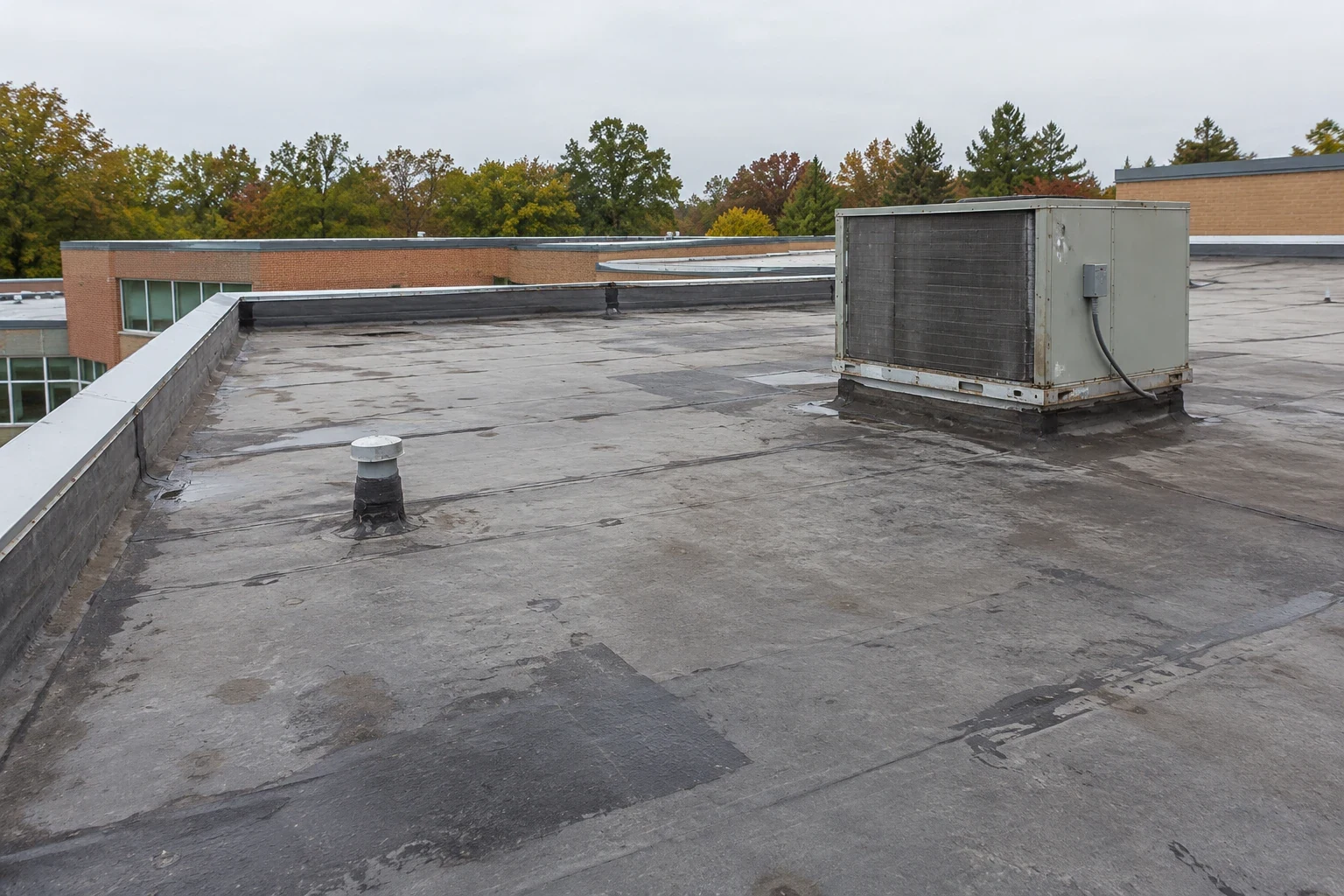
School Roofing in Thornton, CO
Schedule school roof repairs and replacement around classes, safety routes, weather exposure, and capital windows in Thornton, Colorado.
A roof opening over a classroom can put the repair schedule against the school calendar. We inspect the affected zone, document what sits below it and set a close-in plan before work begins. For a K-12 building, access, student routes, deliveries and occupied hours change the sequence. The condition record helps the district choose what needs action now and what belongs in a planned capital window.
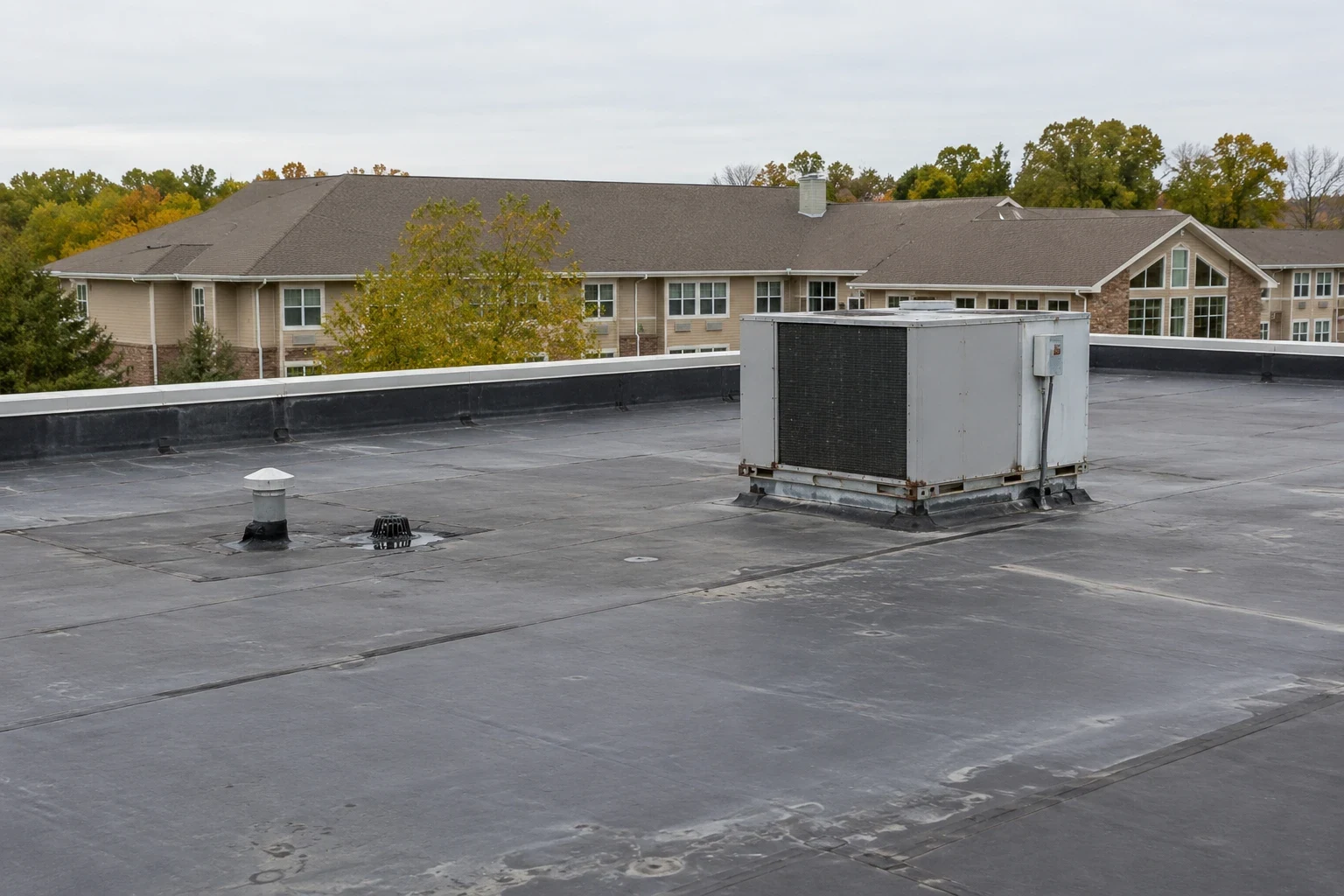
School calendar: set work zones before the bell
We start by mapping roof access, classroom use, playgrounds, loading areas and the interior space below the repair. The building contact identifies check-in rules and any hours when student or staff movement is restricted. Work can be divided by wing or roof section when each open area can be made watertight at day’s end. A small patch may fit during a school day, while tear-off and deliveries may need a break or a defined after-hours window.
The Eastlake at 124th Station Area includes a mix of retail, office, residential and employment uses near its transit stop. That nearby mix can shape traffic and delivery conditions, but it does not describe a school’s roof. We confirm the campus access plan at the address. Eastlake at 124th provides a local reference point when coordinating routes and staging with district operations.
Student safety: separate the work path from daily use
Roof ladders, lifts, dumpsters and material pallets should not cross student paths without an approved control. We identify where a crew enters, where supplies arrive and which doors or sidewalks need protection. The district sets its own escort and check-in procedures. Our work sequence states the boundary, warning controls, delivery timing and the person who confirms the area is clear before a task starts.
Noise and vibration can matter during testing, exams, assemblies or summer programs. We list noisy removal separately from quieter inspection and detail work. If an indoor area needs protection from dust or falling debris, the facility contact approves the control before the roof is opened. Daily cleanup and a secured roof edge are part of the handoff, not an assumption left to the next shift.
Leak path: connect the ceiling report to the roof zone
A stain in a classroom may be offset from the failed seam, curb or drain above it. We compare the report with roof transitions, penetrations, perimeter details and prior repairs. Photos record both the interior mark and the roof condition. Where the source remains uncertain, we identify a test area and explain whether a selective opening would change the repair limits. The district can then approve investigation before a larger scope is priced.
A hands-on roof inspection records the visible assembly and defects. If moisture may extend beyond the stain, infrared mapping can help prioritize confirmation points. We label test limits so one reading does not stand in for an entire classroom wing. For recurring water entry, the condition record should also note roof age only when the district has reliable documents.
Weather close-in: account for hail and winter access
NWS recorded one to two inch hail and roof damage in its May 2024 summary for the storm path through Thornton and Northglenn. For a school, that record can justify checking exposed wings before the next funding meeting. It cannot identify a damaged campus. We inspect the membrane, edge metal, rooftop units and penetrations, then give the district photos tied to each roof zone.
Winter narrows the safe work calendar. Denver climate records show substantial January and February snowfall, but they are regional data, not a school-site measurement. We check the current forecast and surface before opening a section. The plan sets a daily limit, temporary cover and stop point. Hail-damage review can document observed conditions before a repair choice is set.
Repair threshold: protect the learning space first
A localized seam, flashing or puncture may be repaired when adjacent insulation and attachment remain serviceable. Several wet areas, loose edges or repeated interior reports can justify broader testing. We tag observations to individual roof zones and mark where the district still needs confirmation. That lets staff compare the urgent classroom condition with other sections without assigning one building-wide label.
Replacement planning needs quantities for removal, insulation, perimeter work and interior protection. College and university buildings may share some campus access questions, while K-12 schedules have different student-safety controls. A commercial office scope may offer useful sequencing comparisons, but it does not set the school’s rules. We verify assemblies before considering a recover and state what condition would rule it out.
Permit and capital timing: make the scope reviewable
A school bid can lose its summer window if test cuts, insulation depth or interior protection stay unresolved until award. We identify these open items during inspection and list who must approve them. The district can route submittals before ordering materials, then reserve time for review and delivery. When students return on a fixed date, the bid schedule should show the last day for roof opening and the required closeout checks.
Thornton studied redevelopment potential across 30 parcels in South Thornton. That city planning work provides context for institutional property decisions, but does not describe a school roof or campus condition. A campus near South Thornton Healthcare District still needs its own drawings and access review. We document bid assumptions, alternates, open conditions and decision dates before the calendar closes.
Closeout record: return the building to its schedule
After repair or replacement, we record the material installed, repaired details, roof zones opened, photos and any conditions left for follow-up. The closeout also notes where testing was limited and who received the handoff. That record supports the next inspection and helps district staff connect a future ceiling report to earlier work. When one project includes several wings, separate zone labels keep later budgeting tied to the right building area.
Share the campus roof plan, leak log, school calendar, restricted routes, interior reports and capital deadline. We will prioritize by consequence and return a work sequence with daily close-in requirements. For an active leak that cannot wait for a recess window, emergency roof protection can limit interior exposure while permanent work is scheduled. Occupied-building phasing can also set the controls needed when a portion of the school remains in use.
Commercial Roofing Questions
Which school breaks work best for a full reroof?
Summer break can provide broader access, but material lead times, permit review, weather and district scheduling still control the usable window. We compare the planned start with ordering and close-in dates, then identify work that can happen safely before or after students return.
How do you protect classrooms below an active repair?
We identify the roof zone and occupied space below it before opening the assembly. The plan sets interior protection, noise controls, access restrictions and the daily close-in point. A change in hidden conditions is reported before the work area expands.
Does a hail report mean the school roof needs replacement?
No. A storm record can prompt an inspection, but we document the specific roof condition first. The recommendation depends on observed impact, moisture, attachment and the condition of surrounding materials.
Can the district repair one wing while another stays open?
A phased sequence may work when access, student routes, noise and interior protection can be controlled. The district approves the boundaries and operating rules. We define each roof zone and daily handoff before materials are staged.
What documents help price a school roof project?
Roof drawings, prior repair records, leak locations, campus access rules, calendar constraints and any permit information help set a verified scope. We flag missing quantities and explain how concealed conditions would be handled.
Set a school roof scope against the academic calendar
Send the campus roof plan, leak reports, access limits and next capital deadline. We will map the affected zones and return a work sequence the district can review.
Call 555-555-5555 or send the form and we will set up a visit.