
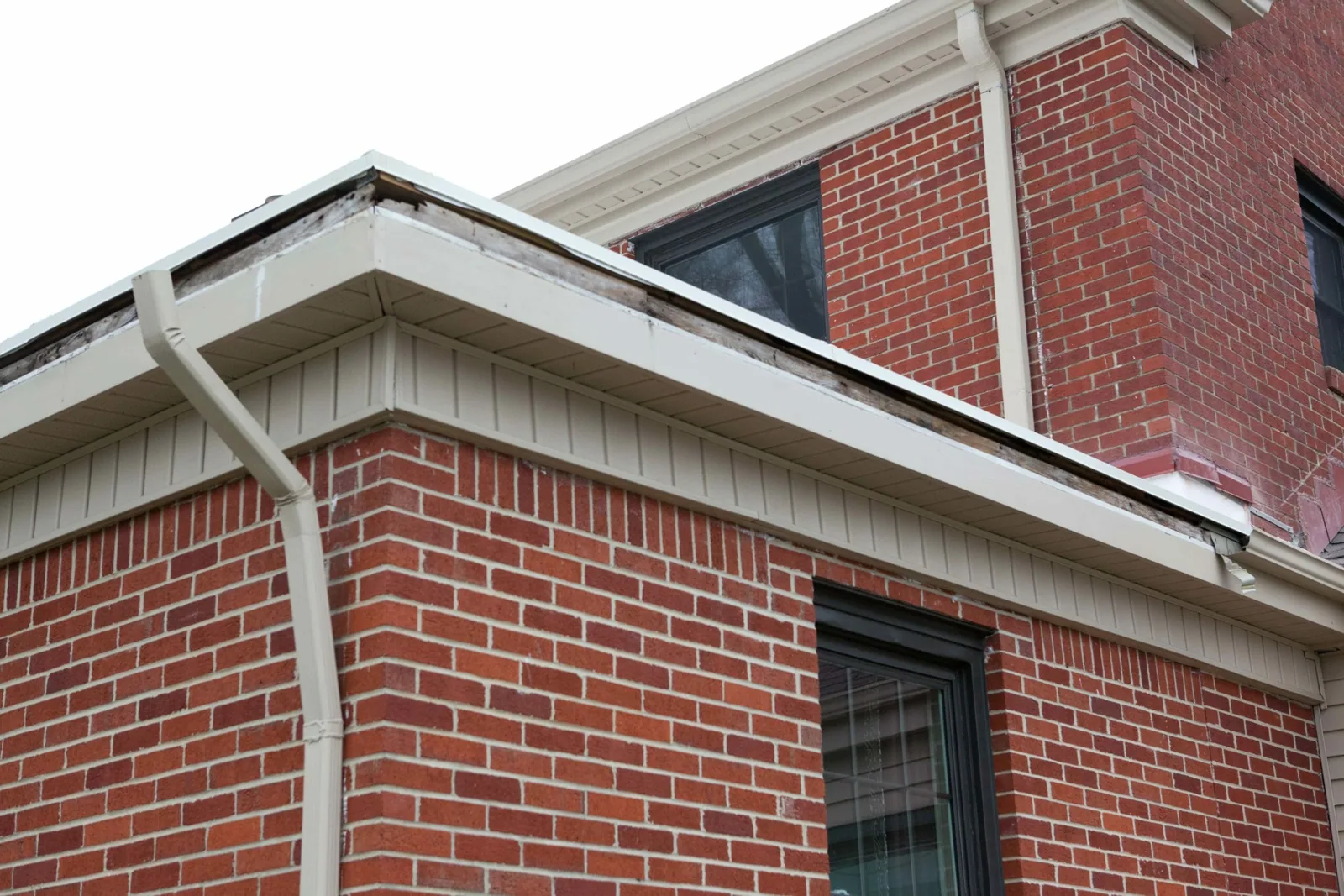
Commercial Roof Edge Metal, Coping and Gutters in Thornton, CO
Inspect and repair Thornton roof edges, coping, gutters and downspouts. Document terminations, drainage paths and wall transitions.
Loose coping at a corner can leave the roof edge and wall transition exposed to water. We inspect perimeter metal, attachment, seams, joints, gutters and downspouts as part of one water-control path. A repair scope identifies where the assembly has loosened, opened or stopped draining, then shows what must be reset or replaced. In Thornton, large retail and industrial properties sit alongside medical and office buildings. The use affects access and phasing; we verify the actual edge details before selecting material or repair method.
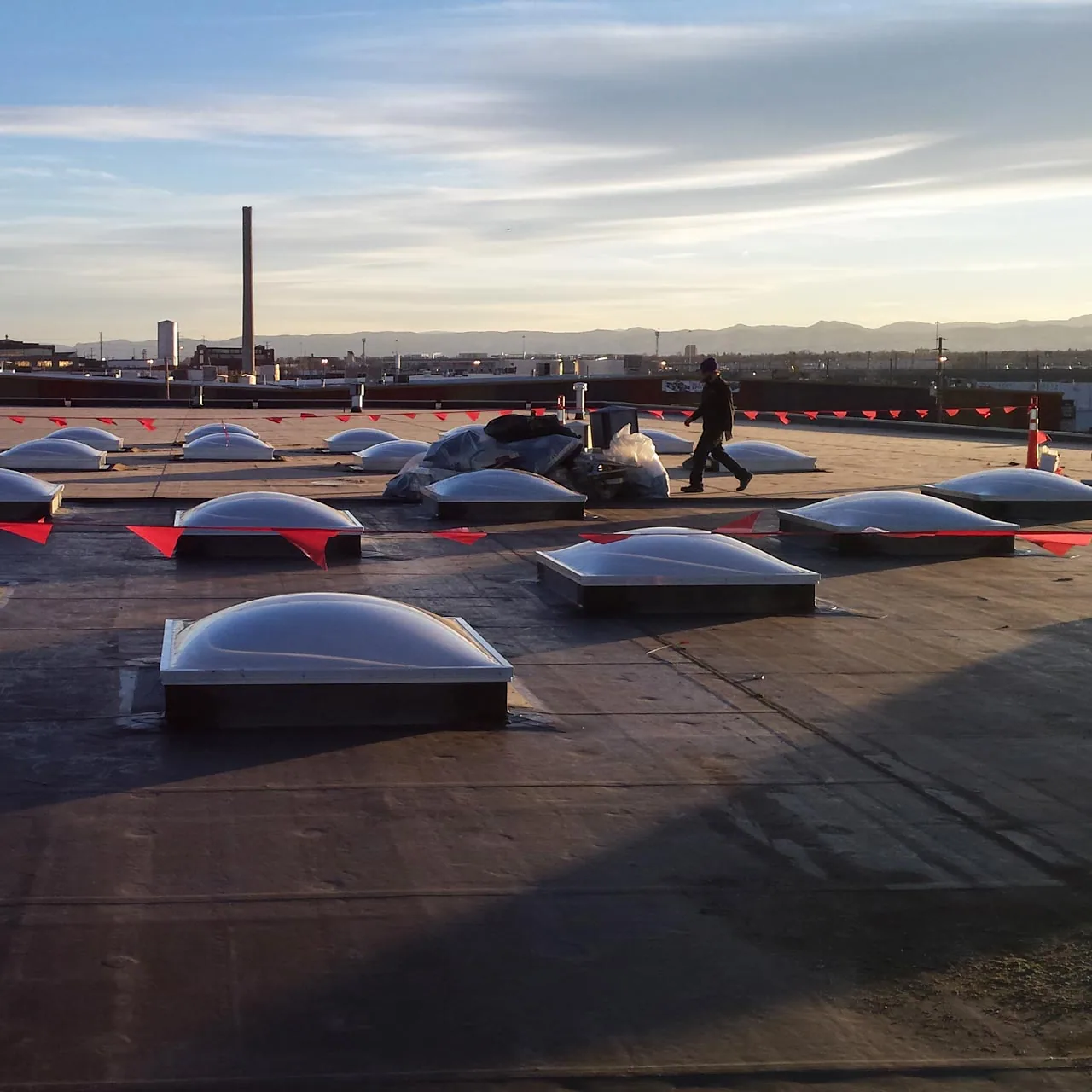
Perimeter detail: check the termination
At the roof edge, we check cleats, fasteners, laps, corners, end dams, sealant and the connection between membrane and metal. Coping needs secure attachment and closed joints. A loose section can admit water behind the edge and expose the roof termination. We document the length and location of affected metal, whether the membrane remains secure and if substrate repair is needed before the replacement piece can be installed.
Thornton’s Business Park district places some higher-intensity warehouse activity along I-25 and E-470. At a logistics property, rooftop access and staging may need to work around truck routes. Crossroads 25 is a local industrial development at that junction, but it does not tell us what edge system any tenant uses. We inspect the building and coordinate access before setting the sequence. Our Crossroads 25 service-area work and other industrial scopes begin with that property-level check.
Gutter route: follow water to grade
Gutters and downspouts need clear flow, sound hangers, stable joints and a discharge point that carries water away from the building. We inspect pitch, seams, outlets, straps and transitions into underground leaders where accessible. A sagging section can hold debris and water; an open joint can wet the wall below. We distinguish cleanout from replacement and note whether the roof edge itself needs correction to feed the gutter.
At a retail property such as Denver Premium Outlets in Thornton, pedestrian routes, storefront access and operating hours can shape where lifts and materials are staged. The center’s retail scale is a site fact, not an assumption about its roof or drainage. We confirm the building edge, protect public paths and sequence work with the facility contact. A downspout repair should leave the full route open, not merely close a visible seam.
Material and movement: set a durable repair
Metal panels expand and contract, so laps and joints need room to move without opening the weather seal. We check dissimilar materials, corrosion, loose fasteners, failed sealant and water marks below the edge. Replacement metal must match the profile and connect to the membrane termination. A patch that traps water or blocks drainage can create a second problem at the same location.
We photograph the detail before work, identify the pieces to remove and note the tie-in needed at the membrane or wall. If the substrate is soft or concealed damage appears after opening, we stop at a safe boundary and document the added work. For a broader membrane issue, a roof repair scope may be needed with the metal correction. When the membrane termination itself is failing, our cover board and insulation work may become part of the larger assembly review.
Access plan: keep the building operating
Perimeter repair can require lifts, roof access, sidewalk controls and coordination near loading or tenant entrances. We confirm utility lines, parking, delivery windows, fall protection and areas below the work. If tenants remain open, the sequence should keep entrances usable and communicate any temporary closure. Rooftop equipment near the edge may require shutdown or protection while metal is removed and reset.
Thornton’s climate brings winter snow exposure, and Denver records show substantial snowfall in January and February. We use that regional context to plan the seasonal work window, then verify conditions on the job date. Wet metal, ice or a snow-covered edge can delay safe installation. If weather pauses the work, we secure exposed areas and state what remains before the crew leaves.
Scope and cost: measure the connected work
Cost depends on metal length, profile, height, access, corrosion, membrane tie-in, substrate condition, gutter support, discharge routing and protection below. We identify whether the work includes cleaning, resecuring, replacement, flashing or wall transition repair. If a hidden condition could add material or labor, the proposal states what will trigger an adjustment. That makes a perimeter scope easier to compare with another proposal.
Where edge issues repeat across a property, we map them by elevation and roof zone. The record can prioritize active leaks and loose metal first, then schedule stable sections within a capital window. We can coordinate adjacent drainage work and penetration details during the same access plan when inspections support it. Each item remains tied to its own confirmed condition.
Closeout: confirm the water-control line
We record the repaired perimeter, materials, completed joints and any area left for follow-up. Photos show the installed termination and gutter route. If the discharge or wall transition could not be inspected, we note that limit. The closeout gives the facility team a reference for future leaks and helps maintenance staff identify where seasonal cleaning or another check is due.
Send building plans, photos, leak history, access limits and the date of any planned work near the edge. We will inspect coping, metal, gutters and downspouts, then provide a verified scope. If water is actively entering, tell us which interior areas are affected so protection can be coordinated before the permanent repair.
Commercial Roofing Questions
How can we tell whether a leak comes from the coping or the roof membrane?
We inspect the coping joints, cleats, edge termination and membrane transition together. Water can travel behind metal before appearing indoors, so we compare exterior marks with the roof zone and interior report. If the boundary is concealed, we identify a test or selective opening that can confirm the repair area.
Can you replace only one loose section of coping?
A local replacement can work when adjacent sections remain secure and the membrane termination is serviceable. We check the corner, laps and substrate before defining the length. If movement or attachment failure continues beyond the visible section, the repair boundary may need to expand. The scope records which metal remains in place.
Why does a gutter keep overflowing after it is cleaned?
The cause may be insufficient pitch, damaged hangers, a restricted downspout, a disconnected leader or a roof edge that sends water past the gutter. We check the connected path and note what is accessible. If the outlet is clear but water still backs up, we identify whether repair, replacement or plumbing review is needed.
Can perimeter work be done while stores or offices remain open?
Often, with lift placement, pedestrian protection and work hours agreed in advance. We plan around entrances, deliveries, parking and occupied rooms below. A section may need a short closure while metal is removed or reset. The access plan identifies those limits before materials arrive.
What should we include in an edge-metal estimate?
Compare the measured locations, metal profile, membrane tie-in, fasteners, substrate assumptions, gutter support, downspout routing and protection below. Confirm which items are repair, replacement or cleaning. If hidden conditions may change the quantity, the estimate should explain how they will be documented and approved.
Repair the full perimeter water path
Send roof plans, edge photos, leak history, access rules and the operating calendar. We will inspect the metal termination, gutters and downspouts and define the work by location.
Call 555-555-5555 or send the form and we will set up a visit.