
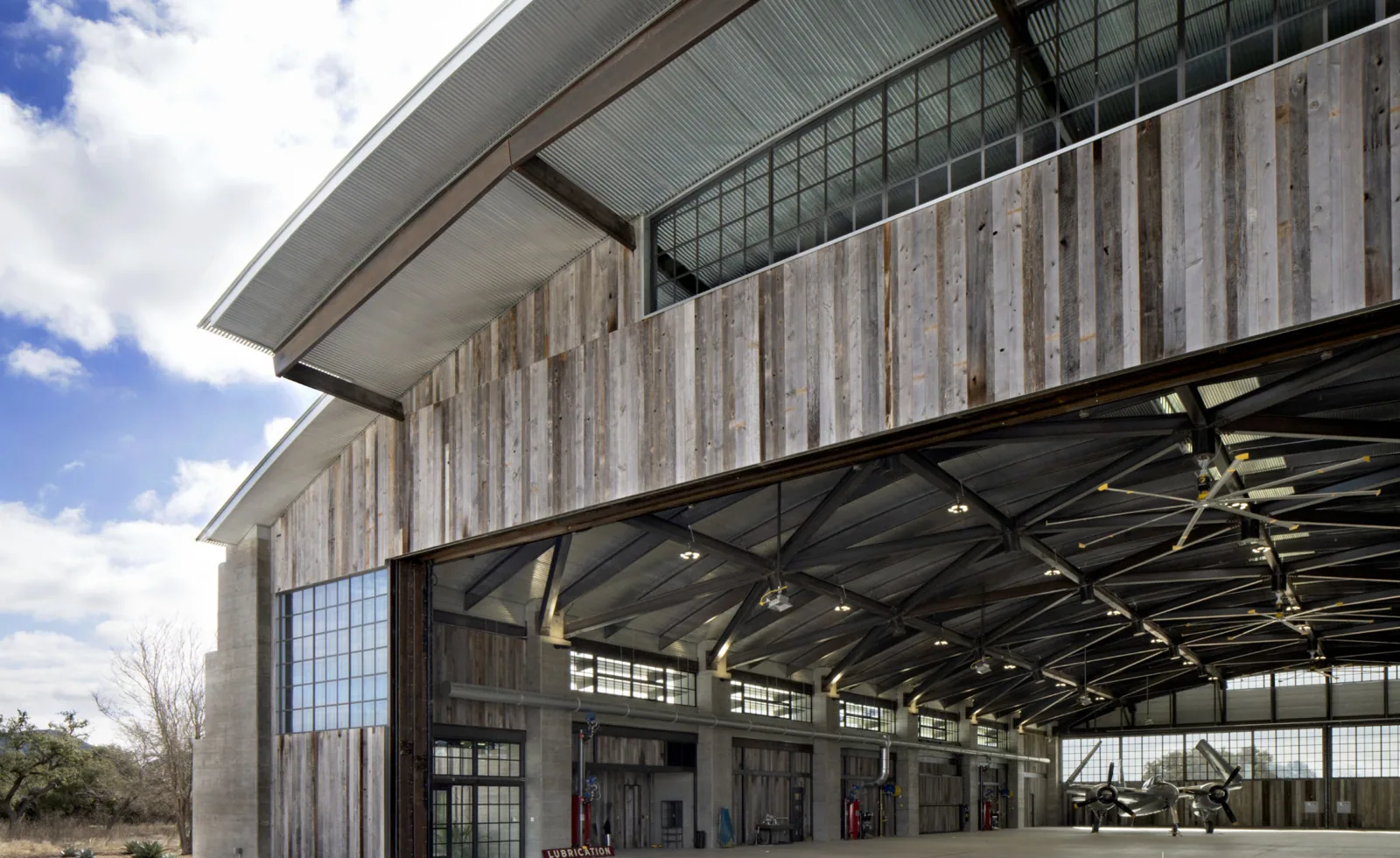
Aircraft Hangar Roofing in Thornton, CO
Plan aircraft hangar roof repairs around clear-span interiors, metal systems, door access, and aviation operations near Thornton, Colorado.
A roof opening above an aircraft bay can put a valuable asset and a flight schedule at risk. We inspect the roof assembly, identify clear-span access limits and plan a secure work boundary before pricing repair or renewal. Hangars may use long metal panels, low-slope membrane sections or transitions between them. The work plan should protect aircraft movement, door operation and the daily close-in point.
Span and panel: inspect movement across the roof
Long roof runs expand and contract with temperature changes. We check panel seams, clips, fasteners, ridge and eave conditions, penetrations and connections at adjacent walls. A standing seam can look intact while flashing at a vent or equipment base has opened. We inspect the whole water path and document where panel movement or prior repair affects the detail.
Rocky Mountain Metropolitan Airport is less than half a mile from Arista, a mixed-use district in Broomfield near the US 36 corridor. That proximity gives the north metro market an aviation-adjacent employment context, but it does not identify a hangar or roof system. We confirm the facility and access path. Arista near the airport is a local reference for planning work around aviation-related activity.
Aircraft clearance: protect the bay and door route
Before moving lifts or material inside, we confirm aircraft locations, clearance requirements, door travel and approved equipment paths with the facility. A bay may need to remain clear even while other areas are under repair. We set the work boundary, fall-protection approach and material staging outside the movement envelope. If a door must remain available, the daily sequence cannot block its track or travel area.
Roof access may be from an exterior ladder, hatch or approved lift. The facility controls badging, escort and operations restrictions where they apply. We do not assume access from a map. The project lead identifies who can authorize entry and when flight or maintenance activity pauses. Each phase has a secure stopping point before the next aircraft movement.
Condensation: separate vapor from roof leakage
Condensation on a cold panel can appear as a leak even when rain has not entered. We compare the timing with heating, ventilation and hangar-door activity, then inspect panel joints, insulation and vapor-control details. A roof penetration or failed seam can still be the source. We document the likely path and distinguish surface moisture from a confirmed opening before recommending repair.
A hands-on roof inspection records seams, fasteners, flashings and drainage. If the interior moisture pattern is broad, infrared mapping can help select areas for confirmation. The scan does not replace a test opening where direct evidence changes the scope. Notes identify which section was measured and what remains inaccessible.
Base context: coordinate controlled facility access
Buckley Space Force Base in Aurora supports space-based missile warning and infrared detection missions. Its tenant organizations include Air and Army National Guard and Navy Reserve units, along with Aerospace Data Facility-Colorado. This is the nearby military context; each aviation facility sets its own roof type, access plan and project requirements. We confirm those details from the owner’s documents before mobilizing.
For a public hangar, government or military roof, submittals may carry additional requirements. We follow the owner’s documents and access controls and do not assume one procurement path applies to another site. Public-building roof work can also involve security boundaries and service continuity. We identify the decision-maker for any temporary opening or schedule change before mobilization.
Storm exposure: inspect the actual roof after hail or wind
NWS recorded one to two inch hail and roof damage from a May 30, 2024 storm that crossed Thornton and Northglenn. That regional event can prompt an inspection when the hangar reports impact or a new leak. It does not identify damage at the facility. We check exposed panels, edge metal, skylights, fasteners and flashing and photograph each finding by bay.
Denver snowfall records are regional context, and current surface conditions set the work date. Snow or ice can limit safe access on a high, open roof. We define how much area may be removed and how the assembly will be secured before the shift ends. Hail-damage review can document observed conditions before repair quantities are approved.
System choice: repair panels or renew the assembly
A loose fastener, failed lap or localized flashing defect may be repaired when adjacent panels and supports remain sound. Widespread corrosion, repeated water entry or movement damage may justify a larger section. We inspect representative areas and explain what test would change the recommendation. If a metal retrofit is considered, the proposal should account for existing panel profile, attachment, drainage, curb details and door clearances.
Standing-seam metal can be assessed as an existing or replacement system when the assembly fits. A flex-industrial roof may share metal details but has different operating access. Warehouse buildings can share long low-slope zones. The hangar plan remains tied to aircraft clearance and the owner’s operating window.
We check panel ends at walls and changes in roof height as well as the broad field. A replacement scope should identify how new penetrations will be flashed and whether existing supports can remain. Those details affect both water control and the route used for later aircraft equipment service.
Closeout: confirm the bay is ready for use
Closeout photos show repaired panels, fasteners, flashing and any membrane transitions. We record materials, test limits and areas not inspected. The facility confirms that staging, equipment paths and door approaches are clear before returning the bay to normal use. If temporary cover remains, the record identifies who checks it and the next date for permanent work.
Thornton’s I-25 corridor and the nearby airport district help frame access across the north metro area, but the property sets the actual logistics. Send roof drawings, panel profile, leak history, aircraft clearance needs, door schedule and access requirements. We will return a verified scope with staging and secure close-in assumptions. If active water entry threatens the bay, emergency protection can limit exposure while repairs are organized.
Commercial Roofing Questions
Can roof repairs happen while aircraft remain in the hangar?
Only when the facility approves the work zone, overhead controls and aircraft clearance. We identify which bay must remain empty and set the access route before moving equipment inside.
How do you diagnose condensation on a metal hangar roof?
We compare moisture timing with indoor conditions and door or ventilation activity, then inspect panels, insulation and vapor-control details. A roof leak remains possible, so findings distinguish likely condensation from a confirmed opening.
What should be checked after hail on a hangar roof?
We inspect panels, seams, fasteners, edges, skylights and penetrations for visible impact or displacement. The regional storm record prompts review; the facility’s condition determines the repair.
Does a metal roof need full replacement when a seam leaks?
Not necessarily. We review adjacent panels, attachment, flashing and moisture before deciding whether a local repair is suitable. Repeated failures or broad deterioration can change the scope.
What information should an aviation facility provide?
Share roof drawings, panel type, aircraft clearance rules, door operation windows, access controls, leak reports and any mission or maintenance dates that restrict work.
Schedule hangar roofing around bay access
Send the roof drawings, panel profile, aircraft clearances, door schedule, leak report and access rules. We will document the condition and return a controlled work sequence.
Call 555-555-5555 or send the form and we will set up a visit.