

Commercial Roof Maintenance in Thornton, CO
Schedule roof maintenance in Thornton to clear drains, check details and record repairs before seasonal work windows tighten. Prioritize by condition.
A drain restriction before freeze-up can turn a small maintenance item into a winter service call. We set a roof maintenance schedule around the building’s drainage, access, equipment and operating calendar. Each visit checks the details that can interrupt water flow or admit moisture, then records what needs repair and what can stay on the watch list. In Thornton, Denver’s regional climate data shows meaningful winter snowfall, while a May 2024 hailstorm crossed Thornton and Northglenn. Those records help time reviews; the actual roof condition sets the work priority.
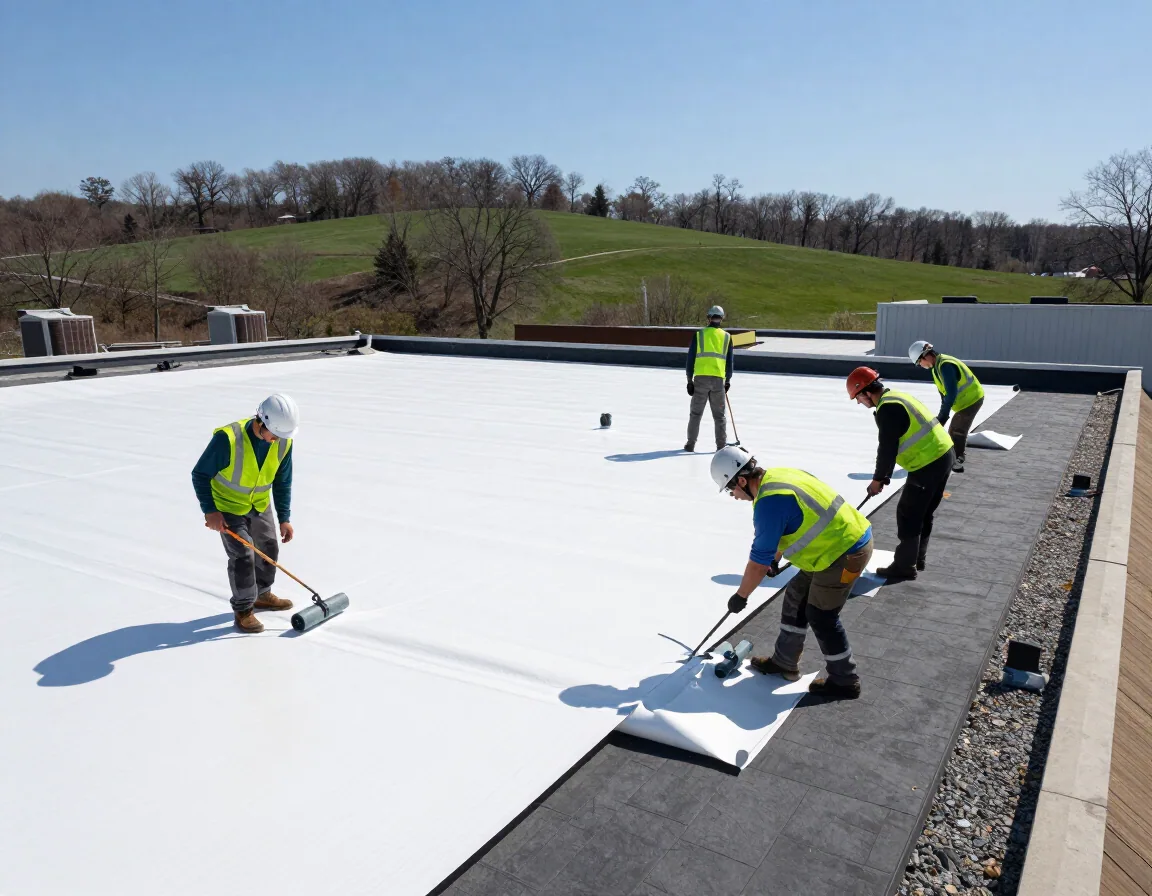
Visit cycle: tie the schedule to roof risk
A useful maintenance interval reflects condition, prior leaks, tree or debris exposure, rooftop traffic and the consequence of an interruption. We review the roof history before setting the next visit. Buildings with recurring drain blockages may need more frequent checks than a roof with stable drainage and no recent entry. A schedule also changes after repairs, equipment work or severe weather. We note the next review date and what should trigger an earlier visit.
Thornton’s commercial inventory ranges from logistics and manufacturing properties to medical and retail buildings. At North Washington Commerce Center, the first industrial phase includes a fulfillment building with multiple dock positions and service doors. That use points to different access coordination than an occupied clinic. We plan visits to avoid delivery peaks and arrange roof access with the facility contact. No property receives a checklist based only on its land use.
Drainage path: keep water moving
We clear debris from drains, strainers and scuppers, then check that the path to each outlet is open. The inspection notes standing water, blocked overflow routes, loose drain components, damaged seals and low areas that hold water. A maintenance visit can remove surface debris, but it cannot correct every slope or deck issue. Where ponding continues, we map the area and recommend a separate repair or tapered insulation review.
Water at an edge or downspout can also show a disconnected route, overflow or damaged gutter. We look at adjacent membrane and flashing so routine clearing does not hide a larger defect. If correction requires more than cleaning, the scope identifies the drain, scupper or transition and explains the next step. Our drainage correction work can address details that need repair, while the maintenance record tracks the follow-up date.
Roof details: check the points that move
Routine roof maintenance includes a close look at seams, flashing, curbs, penetrations, skylights, edge metal and equipment supports. We note loose terminations, open laps, brittle sealant, punctures and areas where previous repairs need another review. We do not cover a questionable detail with new sealant without preparing the surface and checking the assembly. A small defect can become a larger repair when water reaches insulation or interior finishes.
Thornton’s Market at 88th is a redevelopment site at Washington Street and 88th Avenue, so its existing and planned building conditions must be kept distinct. On occupied retail properties nearby, tenant hours, public access and roof work above active spaces shape the maintenance sequence. We document the address and roof zone for each finding. If repair is needed, we can connect the visit to planned repair or flashing work without adding unapproved items to the maintenance list.
Seasonal work: use the available window
Before winter, we review outlets, edge conditions, access routes and repairs that need dry installation conditions. Snow and ice can limit roof access and conceal details, so the work sequence should leave time for priority fixes before conditions worsen. Denver records are useful regional context for Thornton, not a measurement from a specific building. We check the current forecast and surface conditions when work is scheduled.
After hail, we add a targeted inspection rather than waiting for the next routine visit. NWS documented one to two inch hail and roof damage along the May 30, 2024 track through Thornton and Northglenn. We record visible conditions and separate storm-related findings from routine wear. For a broader review, a hands-on inspection or storm repair assessment can establish the repair boundary.
Repair reserve: turn findings into a work list
Each visit ends with actions grouped by urgency: correct an active water path, schedule a developing defect, or monitor a stable condition. We identify access needs, materials and any area requiring testing before a scope is final. That gives the facility director a repair reserve tied to roof zones rather than an open-ended list. If repeated repairs suggest a replacement threshold, the record identifies that pattern and sets a capital review date.
Cost and timing depend on roof size, access, number of details, equipment congestion, removal needs and whether work can be combined safely. We separate routine cleaning from repair labor and note concealed conditions that may change the scope. For owners managing several facilities, multi-site roof planning can group visit dates and condition records. A capital priority list can then compare urgent work against the next funding window.
Condition record: keep the next visit useful
The visit report names the building, date, roof zones reviewed, access limits, completed maintenance and recommended work. Photos show each open item and its location. We note whether a drain was cleared, a patch was checked or a condition needs a return inspection. If the roof plan is incomplete, we identify the missing section so the next crew can close the gap without treating the visit as full coverage.
Share the roof inventory, leak history, equipment calendar, access rules and budget deadline. We will set a visit sequence, document conditions and prioritize any active leak. Maintenance should reduce avoidable disruption while preserving a clear record of when each roof needs attention next.
Commercial Roofing Questions
What belongs on a commercial roof maintenance visit?
We review drainage, seams, flashings, penetrations, curbs, roof edges and rooftop equipment. We remove accessible debris from outlets and record conditions that require repair or testing. The visit also checks access limits and recent leak areas. Its written record separates work completed from items that remain open.
Can regular maintenance prevent every leak?
No schedule can remove every weather or material risk. Maintenance can find blocked drainage, loose details and developing defects before they cause more disruption. We record what is visible and identify concealed conditions that need testing. The visit reduces avoidable surprises by keeping the repair history current, but it does not replace a condition review after a severe storm or active leak.
Should the same maintenance plan cover every building in our portfolio?
A common record format helps comparison, but each schedule should reflect the building’s roof, access, use and repair history. A logistics facility near I-25 may need a delivery-aware access plan, while an occupied medical building requires coordination around sensitive rooms. We identify roof-specific tasks and set a visit frequency that fits the actual condition.
What changes after a hail event in Thornton?
We move exposed roofs into a targeted inspection queue and document visible conditions by zone. NWS recorded one to two inch hail and roof damage along the May 2024 path through Thornton and Northglenn. The report does not tell us whether a particular building was damaged. We inspect the property and separate storm findings from existing maintenance items.
How do maintenance findings affect next year’s budget?
The record can group actions into urgent repair, scheduled repair, monitoring and capital review. We note recurring issues, access constraints and tests that may change the work. This lets the facility team compare roof priorities against budget dates. When repeated repairs approach the replacement threshold, we document why a larger scope should be evaluated.
Set a maintenance schedule by roof priority
Send the roof inventory, access calendar, repair history, capital deadline and any active leak. We will map visit tasks, document findings and prioritize each building’s next action.
Call 555-555-5555 or send the form and we will set up a visit.