
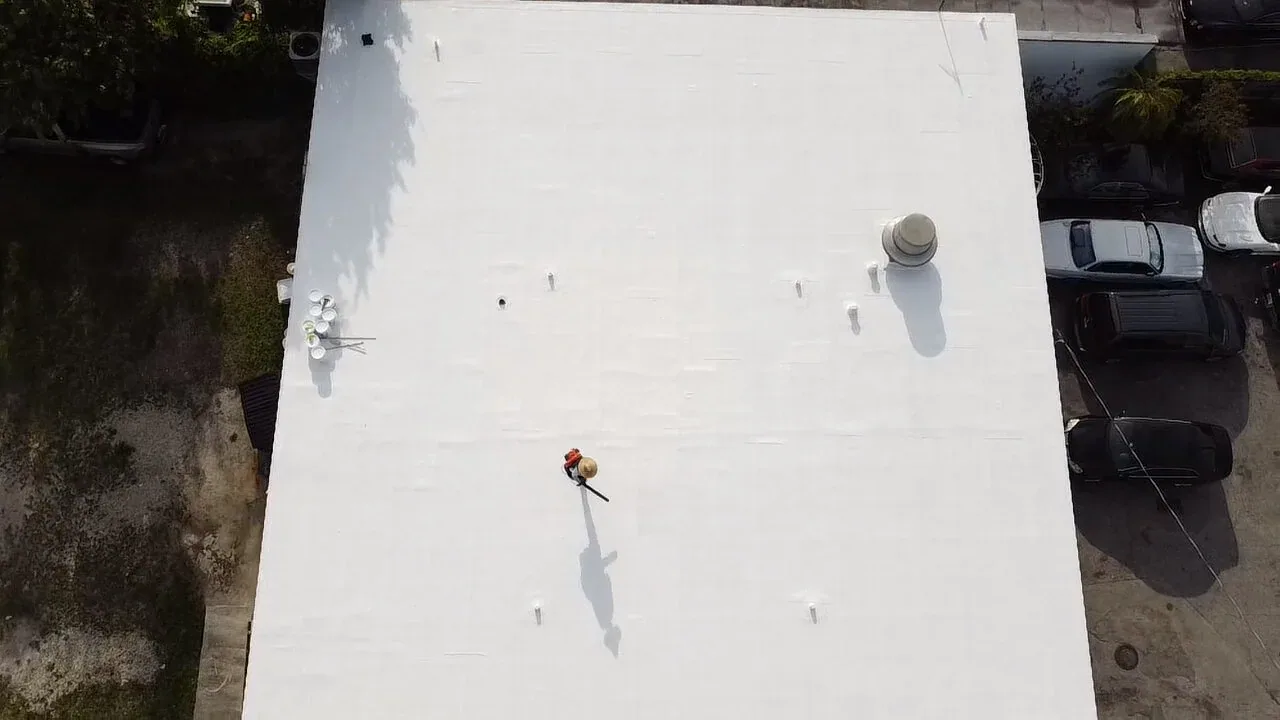
Commercial Silicone Roof Coatings in Thornton, CO
Evaluate silicone roof coatings in Thornton. We test adhesion, inspect moisture and drainage, then define preparation, repairs and maintenance needs.
A shallow pool that remains after the outlets are clear deserves a system review before a silicone coating is specified. Silicone can perform in ponding conditions when the product and assembly support that use, but it does not create slope or repair wet insulation. We inspect the substrate, test adhesion and map drainage before defining preparation and coating scope. The building’s condition sets the restoration decision.
System fit: confirm substrate and product requirements
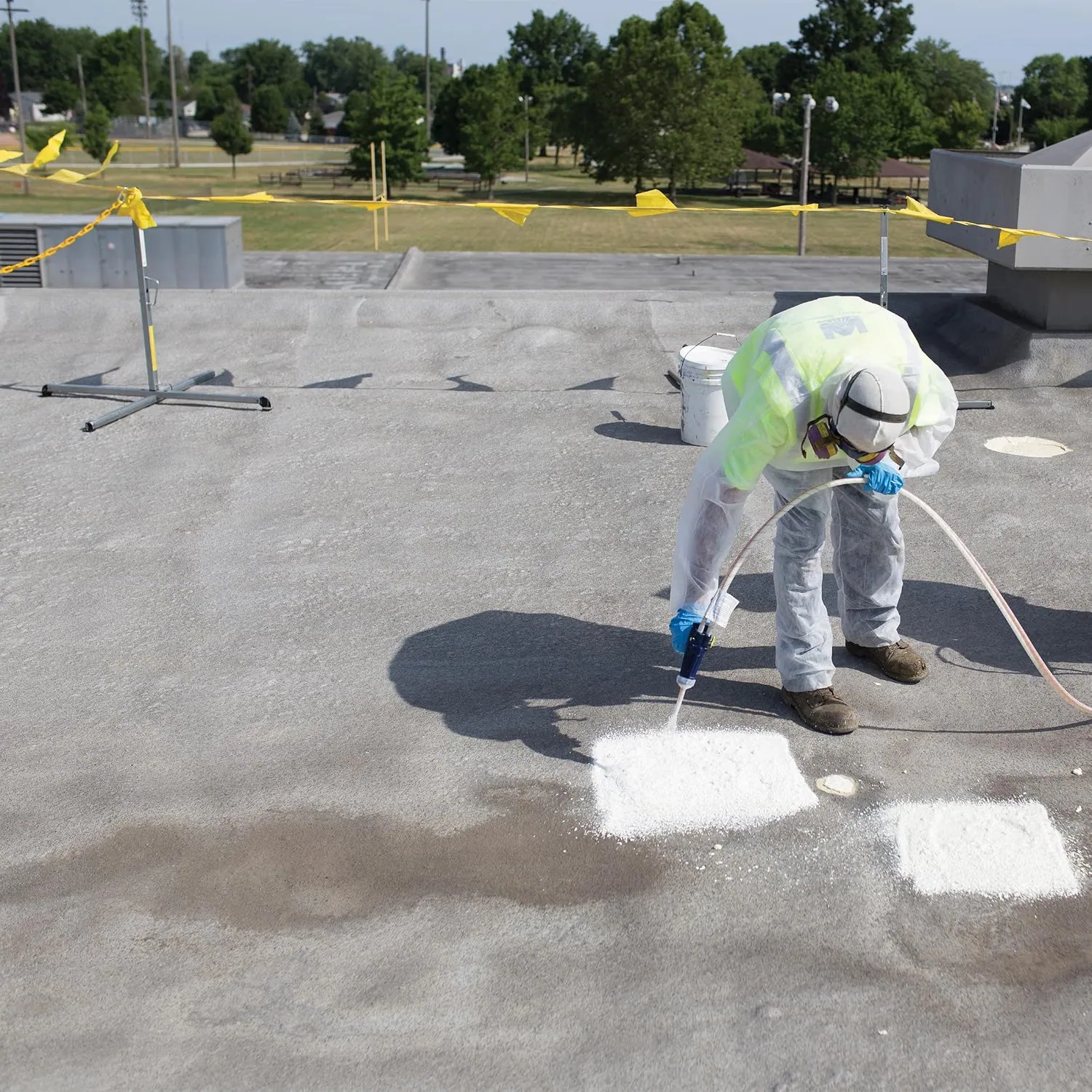
Silicone coating can be applied over eligible roof surfaces to protect an existing assembly. The exact substrate, primer, reinforcement and coating specification determine compatibility. We review the roof material and prior coatings, then perform adhesion testing where needed. If the surface is contaminated, chalked, wet or unstable, preparation or removal may be required. A proposal should state the approved substrate, test results and areas excluded from application.
Silicone is not a replacement for a failed membrane, wet insulation or insecure attachment. We inspect seams, penetrations, edges and flashings, then repair those conditions before coating. SPF systems commonly rely on a protective coating, while acrylic coatings have different water-exposure limits and preparation requirements. We compare product data with the building’s actual roof, not just the desired finish.
Water exposure: separate ponding from drainage failure
Silicone formulations are often selected for water resistance, yet standing water still needs review. We check how long pools remain, whether the coating manufacturer permits that exposure and whether water is entering a seam or low area. Blocked drains need clearing. A recurring depression may require taper or structural review. The coating scope shows what drainage work comes first and which condition remains after application.
At 25 Commerce Park, the listed industrial and commercial uses include distribution and manufacturing. The range can mean different roof layouts among buildings, so we inspect each surface before grouping work. A coating should not be treated as a universal finish for an entire campus. For an outlet or scupper issue, drainage service can be scheduled before the coating crew mobilizes.
Surface preparation: remove weak layers before application
Coating performance starts with a stable surface. We remove loose material, clean the substrate, repair seams and details, and allow the surface to dry as required. Old coating layers can interfere with adhesion or hide repairs, so we identify what will remain and what must be removed. If moisture mapping or an opening finds wet insulation, coating over that area is not an acceptable fix. The repair boundary must extend to sound material.
Thornton and Northglenn were in the path of the May 30, 2024 hailstorm, which brought reported roof damage. We inspect the specific building for punctures, impact to flashings and coating damage before restoration. A regional weather event does not establish coating failure at a given address. We photograph observed damage and keep repairs separate from field application. Moisture mapping can guide confirmation of suspect areas.
Application window: confirm cure and access conditions
Surface temperature, moisture, wind, dew and forecast affect coating preparation and cure. We check the roof before each application shift and set a boundary that can be completed and secured within the day. If weather interrupts, the plan identifies how the uncured area will be protected. We also coordinate air intakes, tenant access, rooftop equipment and material staging. Product instructions and site rules control the application conditions.
Denver’s July records provide heat context for regional scheduling, while the actual Thornton roof surface determines whether coating can proceed. Sunlight does not prove that a damp area or shaded detail is ready for coating. We verify each zone and log delays. If an active leak is present, repair work can address the opening before a broad surface coat is applied. The coating scope then starts from repaired, dry substrate.
Maintenance plan: record the coating system
A coating changes how the roof is inspected and maintained. We document product, preparation, repair locations, application limits and areas that need future review. Foot traffic, rooftop service and new penetrations can damage the surface after closeout. The owner should preserve access paths and include coating checks in its maintenance calendar. After severe weather, a focused review can identify punctures, displaced equipment pads or new wear at service routes. Any added opening should be repaired with materials compatible with the installed coating system. We identify where future repairs should use compatible materials and what condition would require a new evaluation.
Cost depends on cleaning, removal of loose coating, detail reinforcement, repair quantity, test patches, roof height and access. A lower coating quantity does not make a wet assembly suitable. The estimate separates preparation and repair from the field coat, with allowances only where the scope explains the uncertainty. A restoration assessment can compare coating with replacement, while insulation work can resolve confirmed wet layers.
Closeout: define what the silicone system covers
Photos show the prepared surface, repairs, completed application and excluded details. The closeout lists each roof zone and any condition that remains outside the work. We note the product data and application record required for future maintenance. If the owner is comparing several buildings, separate closeout files prevent one test result from being applied across roofs that use different materials.
Send the roof plan, coating history, leak locations, drainage notes, access calendar and capital deadline. We will test the substrate, check water exposure and return a scope with preparation, repair and application boundaries. Near Thornton Urban Center, building access and tenant use can influence the work window; a site visit confirms the details that affect each roof.
Commercial Roofing Questions
Can silicone coating go over a roof with ponding water?
It may be suitable if the product allows the exposure and the existing roof is sound. We inspect how water reaches the area, confirm outlets work and test the substrate. A coating cannot correct a low deck or failed drainage path.
How do you know the coating will adhere?
We identify the existing membrane and coating, prepare the surface and run adhesion testing when required. The report records test locations and product compatibility. If the surface fails, we define additional preparation or a different roof scope before application.
Does silicone stop a leak at a seam?
A field coat should not substitute for repairing a failed seam or flashing. We trace the leak, restore the detail and check for moisture below it before covering the surrounding area. The proposal lists repairs separately from the coating layer.
How is silicone different from acrylic roof coating?
The materials have different exposure characteristics and application requirements. We compare their product data with roof slope, ponding, substrate and maintenance access. The selection follows inspection and adhesion testing, not a generic preference for one coating family.
What should the owner retain after coating work?
Keep product data, preparation and repair records, application logs, photos and a map of excluded areas. Those files help guide future inspections and compatible repairs. We can provide a closeout organized by roof zone and identify follow-up observations.
Test the roof before specifying silicone
Share coating records, leak locations, drainage notes, roof plan, access calendar and budget date. We will test adhesion, verify moisture and return defined preparation and application limits.
Call 555-555-5555 or send the form and we will set up a visit.