
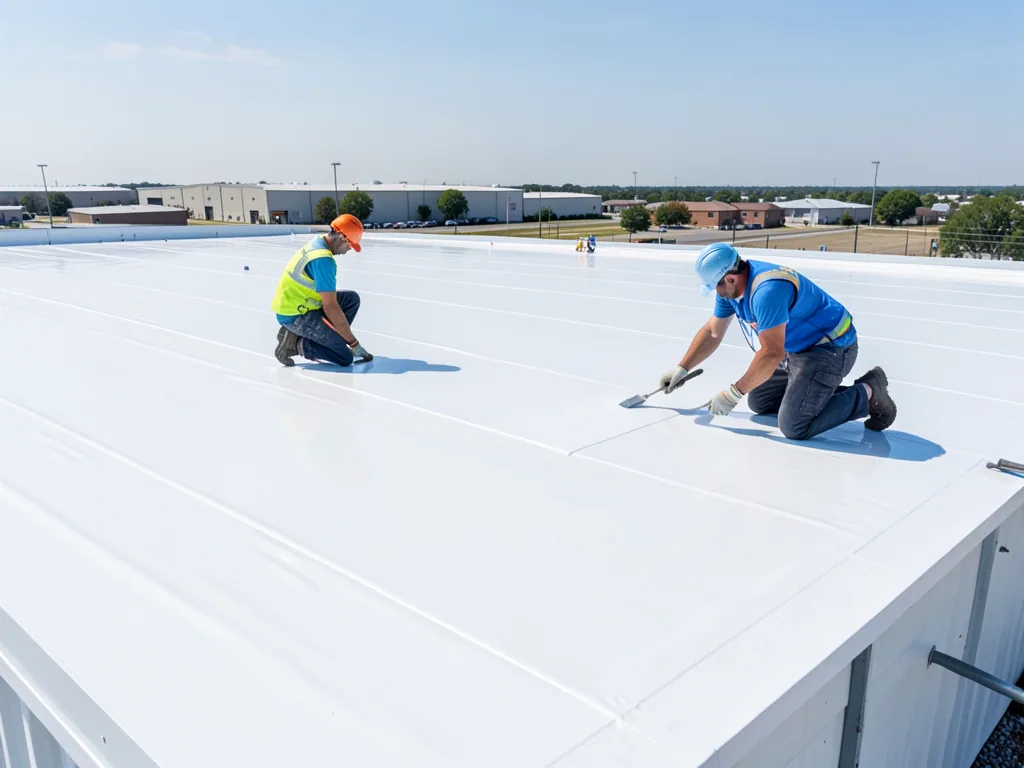
Commercial Acrylic Roof Coatings in Thornton, CO
Assess acrylic roof coatings in Thornton. Confirm drainage, substrate, adhesion and cure conditions before pricing repairs and surface restoration.
A short rain window can decide whether acrylic coating work starts or waits. The roof must be prepared, dry and suitable for the product before application. We inspect slope, ponding, seams, substrate and prior coatings, then mark repairs that need to precede the finish. Acrylic can fit some restoration scopes, but persistent water and wet insulation call for a different correction.
Product fit: match acrylic to slope and exposure
Acrylic roof coatings are water-based or waterborne formulations used over eligible roof substrates. Product specifications set surface preparation, primer, application thickness and cure conditions. We identify the existing membrane or coating and confirm compatibility before proposing a system. The scope names the roof areas to receive coating and separates field application from repairs at seams, drains and penetrations.
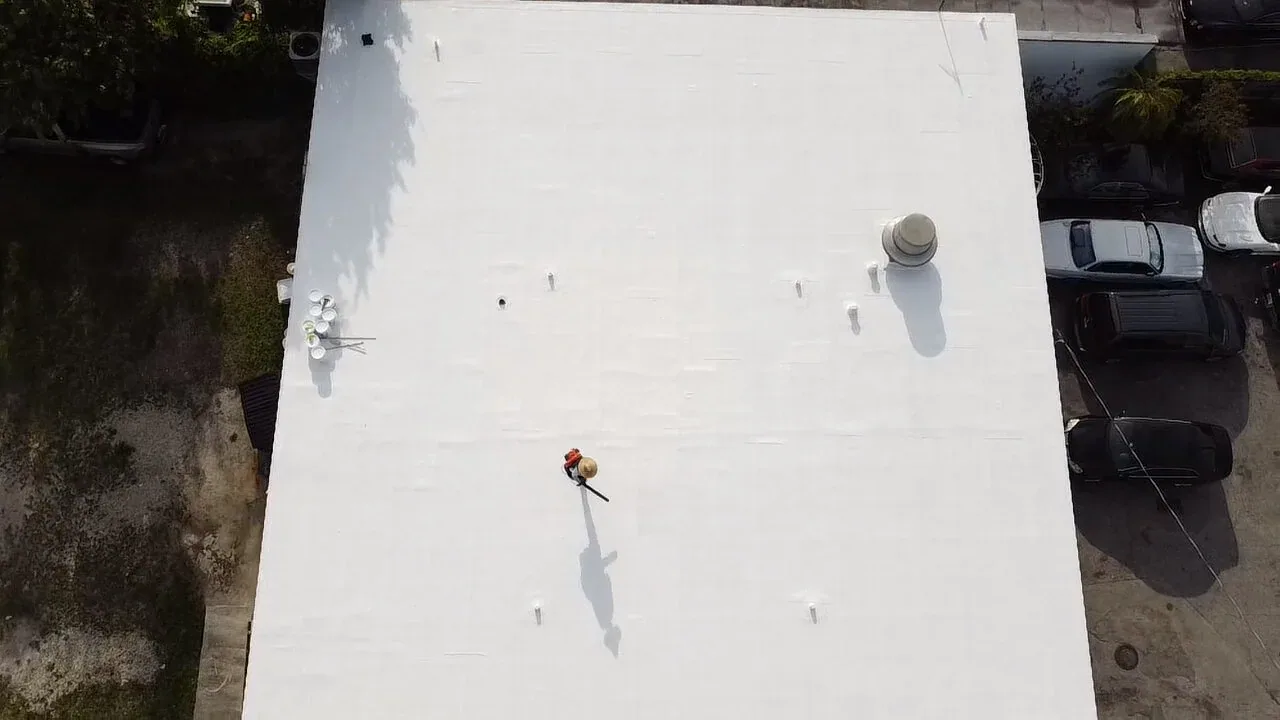
Standing water can challenge an acrylic system. We map low zones and review how long water remains after rainfall. A coating may be appropriate where runoff is adequate and the product allows the exposure, but it does not create slope. Drainage corrections or tapered insulation may need to come first. If persistent ponding remains, silicone can be compared based on the product data and roof conditions rather than a general promise.
Preparation: repair the roof before coating
Preparation includes cleaning, removal of loose material, seam repairs, flashing work and primer where the product requires it. We inspect adhesion and identify areas where the existing coating is chalked, peeling or contaminated. A test patch can help determine whether the surface can accept the proposed material. If adhesion fails or moisture is present, the scope may require additional preparation, selective removal or another assembly option.
We also inspect penetrations, curbs, edge metal and prior patches. A field coating cannot restore a loose counterflashing or repair wet insulation underneath. The work plan lists those details separately and defines the close-in boundary. A restoration assessment can compare surface work with replacement, while flashing repair addresses a failed opening before the field coat is applied.
Cure window: wait for suitable surface conditions
Acrylic application needs suitable surface temperature, moisture and time to dry. Dew, overnight temperature, wind, shade and forecast rain can affect cure. We check each zone before application and set work limits that can be protected if weather changes. The schedule identifies when the area can be reopened to foot traffic or equipment service. If conditions fall outside product requirements, we hold the work and confirm a new window.
Denver’s July climate record offers heat context for regional scheduling, but a Thornton roof’s actual surface and shade pattern determine the workday. The current forecast and site readings guide the crew. For an occupied building, we coordinate air intakes, tenant routes and rooftop access. Phased building work can help set the affected zone and protection window before material arrives.
Hail review: identify impact before restoring the surface
Hail can damage a coating, expose substrate or affect details around vents and skylights. We photograph suspected impact and inspect the membrane below the finish. Thornton and Northglenn were in the path of a May 2024 hailstorm that brought one to two inch hail and roof damage. That report supports a follow-up inspection, but it does not identify which acrylic roofs sustained damage. We tie the repair scope to conditions visible on the property.
Northglenn Marketplace includes attached and stand-alone commercial structures with tenant spaces of varied size. A retail center may have different roof sections and access rules, so we record each building area rather than apply one test across the property. If impact penetrated the membrane, hail-related repair should be completed before coating. Our roof inspection can document seams, flashings and the limits of each review.
Coating limits: protect the roof without hiding failure
An acrylic system can renew a suitable surface, but it will not correct loose attachment, widespread moisture, failing deck or a drainage design problem. We test suspect areas and state where the coating can proceed. Wet insulation needs removal or another approved repair. A weak substrate may need an opening and replacement. The proposal distinguishes a maintenance coating from a rebuild so the owner knows what condition remains below the finish.
Thornton’s Denver-area summer heat and seasonal snow make product selection and access part of the yearly maintenance plan. Regional records do not substitute for the actual roof condition. We document installed product, repairs, application date and areas excluded from the work. The owner can use those records to plan later inspection and maintain compatible repair materials. If a coating repair is needed, SPF restoration is evaluated as a separate substrate-specific system, not an interchangeable finish.
Estimate: separate preparation from the finish coat
Cost depends on cleaning, repair quantity, primer, coating system, number of passes, access, masking, roof height and substrate condition. We list repairs and field application separately. If adhesion or moisture testing is incomplete, the proposal explains which result could change the scope. For a roof with several additions, quantities are recorded by zone so one section’s condition does not set the price for all the others.
At Washington Point, tenant mix and nearby 120th Avenue traffic can affect deliveries and staging. The property’s access instructions and roof inspection determine the actual work sequence. For another area, Old Town Eastlake has a defined streetscape and commercial plan, but the address alone does not indicate substrate or coating eligibility. We confirm each site, then return preparation, repair and application limits for the capital review.
Closeout: retain cure and maintenance records
Closeout photos show surface preparation, repaired details, coating coverage and locations that were deferred. We record product data, test results, weather conditions and cure limits. If the application stopped at a seam or transition, the record notes what remains and when a return visit is needed. That information supports inspection and avoids confusion between coated and uncoated zones during later work.
Send the roof plan, coating history, leak reports, drainage notes, access calendar and budget date. We will inspect the substrate, verify the application conditions and define what must be repaired before coating. A TPO membrane can be compared where the assembly needs replacement instead of restoration. For a broader surface review, repair planning can identify the work required before the coating decision.
Commercial Roofing Questions
Can acrylic coating be applied over a roof that ponds water?
Only if the product allows the exposure and the existing assembly remains suitable. We inspect how long water stays, check drains and identify low areas. A coating will not raise a depression or fix a blocked outlet, so drainage work may be part of the scope.
How long does an acrylic coating need to dry?
The selected product’s instructions and current site conditions set the cure period. Temperature, humidity, dew, shade and rain forecast affect the application window. We identify when the area can accept foot traffic and what protection is needed if weather interrupts.
Can acrylic coating cover an older coating?
We identify the existing material, clean and prepare the surface, then test adhesion when required. Compatibility and bond strength must be confirmed before application. Loose, wet or contaminated layers may need removal rather than another coat.
Will acrylic coating repair hail punctures?
A puncture or damaged flashing needs a direct repair before field coating. We inspect the membrane below the coating, document impact and restore the affected detail. The regional May 2024 hail report does not establish damage at a particular roof.
How do you compare acrylic with silicone?
We review product data, ponding, roof slope, substrate, adhesion and maintenance needs. Each system has its own application conditions and limits. The proposal ties the material choice to the tested roof rather than a generic performance claim.
Check the weather window and substrate first
Share the roof plan, coating history, leak reports, drainage conditions, access calendar and capital deadline. We will test the surface and define preparation, repairs and application boundaries.
Call 555-555-5555 or send the form and we will set up a visit.