
Commercial Heat and UV Roof Damage Repair in Thornton, CO
Assess heat and UV wear on commercial roof membranes, coatings and details, then plan repairs for Thornton facilities and properties.
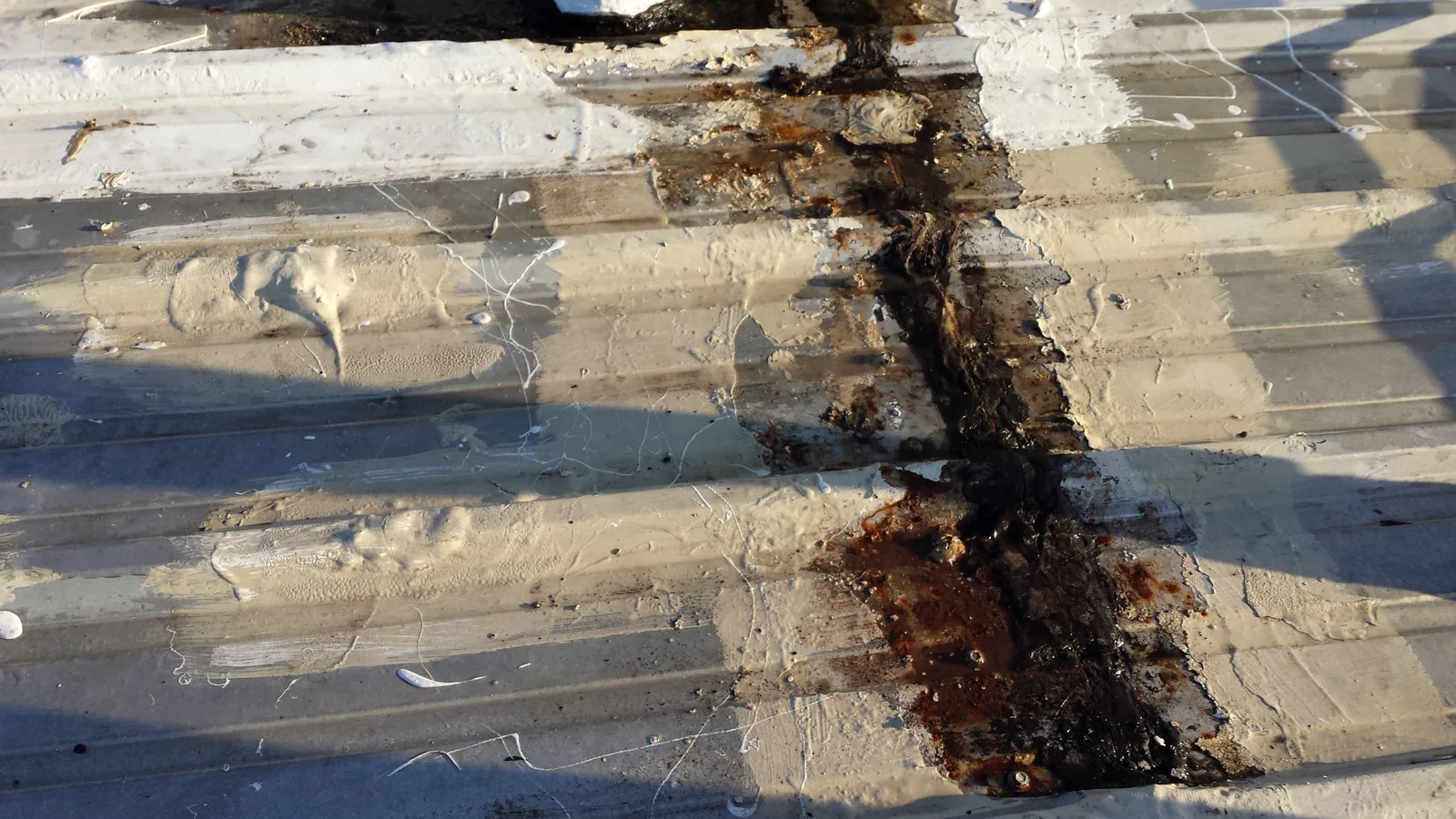
A darkened membrane or brittle coating edge can change a repair decision before water reaches the interior. We inspect surface condition, seams, flashings and exposed equipment supports, then record what has changed and where. Heat and ultraviolet exposure act on materials over time, but a regional temperature record does not measure a Thornton roof. The property’s assembly and verified condition determine the work.
Surface assessment: distinguish wear from a repair defect
We look for cracking, loss of flexibility, surface erosion, open seams, blistering, shrinkage and failed coating edges. Each finding receives a roof-zone location and close photograph. A chalky or faded surface alone does not establish membrane failure. We check whether the material is split, detached, brittle at a transition or otherwise unable to perform at the observed detail. If the condition remains uncertain, the report identifies a test or follow-up inspection.
Denver’s July normal is 75.1 degrees Fahrenheit in the 1991 to 2020 record; NWS lists July 2026 at 78.7 degrees, its warmest July entry. These are Denver climate records, useful for regional planning rather than as readings from a Thornton roof. At 25 North Business Park, planned uses include warehouse, distribution, showroom, flex, manufacturing and food production. Each facility still needs its own access schedule and roof assessment. 25 North Business Park is a local commercial-development reference.
Material review: test the system before choosing a coating
Thermoplastic membranes, EPDM, modified bitumen, built-up roofing and metal respond differently to heat and surface aging. We identify the existing system, previous repairs, attachment and condition at seams and penetrations. A coating is only a candidate when the substrate is sound, compatible and prepared to the system requirements. Applying a new layer over loose, wet or brittle material can leave the underlying defect in place.
We compare localized patching, coating restoration and replacement by roof zone. The assessment notes adhesion, surface preparation, reinforcement needs, drainage, perimeter details and any moisture test. Silicone coating restoration or an acrylic coating system may suit some verified assemblies; neither is assumed appropriate from the surface color alone. Open seam repair remains a separate detail when a joint has failed.
Detail review: inspect transitions and rooftop equipment
Heat can expose weaknesses around curbs, pipe boots, metal edges and prior repairs. We inspect the complete transition and nearby membrane rather than applying a patch to the visible edge only. Equipment service paths may add abrasion or stress near supports. If the route has no walk protection, we identify where access changes or pads could reduce repeat damage.
Creekside Innovation Park is planned at 148th Avenue and Washington Street for aerospace, light manufacturing, distribution and research uses. The target-use list says nothing about the roofs at individual properties. It does illustrate why operating schedules and rooftop equipment access need facility-level confirmation. Creekside Innovation Park is a second local employment reference for planning site access and service windows. Eagle 25 Logistics Center is planned at the southeast corner of I-25 and E-470 with multiple speculative buildings. That is a local employment-area reference, not evidence about any roof assembly. Before an inspection, we confirm the actual gate, hatch, lift area and facility contact. Eagle 25 Logistics Center is one local access reference.
Moisture check: find what the surface cannot show
Surface aging can coexist with wet insulation or an unrelated leak. We map interior reports, check drains and seams, and use moisture survey methods when results could change removal quantities. Infrared readings identify areas for confirmation; they do not replace a test opening when the assembly layers need direct review. The record names the sample boundary and any portion that remains untested. We can schedule a later review after a defined weather interval or a reported change in roof condition between scheduled inspections and repairs.
If a roof has repeated repair patches, we compare their dates and locations with current conditions. A single warm-season inspection may miss a change after rain or a cold period. We can schedule a follow-up to see whether a suspected crack remains active. Infrared moisture surveying can help prioritize test sites, while a hands-on inspection documents accessible surface and edge conditions.
Capital choice: compare repair with renewal timing
A small brittle detail may be repairable if the surrounding assembly remains sound. Widespread cracking, repeated seam failure, loose attachment or moisture evidence can move the decision toward broader renewal. We state the affected area, repair life assumptions and any test that could change the option. The facility can then compare current repair reserve with planned replacement timing without relying on a general age estimate. We separate surface preparation from membrane repair, identify equipment that must be protected and list the conditions that can stop application. Any moisture finding is quantified only to the tested boundary. That distinction matters if the remaining roof is in service while a smaller area is coated or restored.
Cost drivers include removal, insulation, deck condition, edge metal, equipment coordination, substrate preparation and the size of any treated area. A coating proposal should state surface preparation, reinforcement, repairs below the coating and areas excluded. Roof coating restoration can be compared with ponding-water repair where the inspection supports both routes. We list each option separately and identify what remains concealed.
Closeout: preserve the condition through the next review
The closeout includes roof-zone photographs, material identification, test results, repaired areas, coating preparation and any limitation. If the roof remains under observation, the record names the location and next review point. Facilities staff can use that reference to compare surface changes, new leaks or equipment work with the previous condition. An open issue remains assigned rather than disappearing into a maintenance note.
Send the roof plan, repair history, leak calls, access calendar and capital date. We will assess the material, identify tests that could affect the decision and return a repair or renewal sequence by zone. A dated condition record supports the next budgeting review.
Commercial Roofing Questions
Does a hot July record mean our Thornton roof has heat damage?
No. Denver temperature records describe regional conditions. We inspect the building’s membrane, coating, details and repair history before assigning a roof condition or scope.
Can a coating restore a brittle membrane?
Only if the underlying assembly is suitable, dry, attached and prepared to the selected system requirements. We inspect and test the substrate before recommending coating work.
How can we tell if the roof needs a patch or a larger renewal?
We map the extent of cracking, seam condition, attachment, moisture and repeated repairs. The report names the affected zones and which test could move the replacement threshold.
Will infrared testing show exactly what material to remove?
It can help identify areas for confirmation. We document the survey boundary and use physical verification where needed before setting removal quantities.
What should we provide before a heat-wear inspection?
Send the roof plan, system information if available, prior repair records, leak dates, access rules and planned capital timing. Those records help compare current findings with earlier conditions.
Check heat-related wear by roof zone
Share the roof plan, assembly details, repair history, leak reports and capital date. We will inspect the membrane and transitions, then compare verified repair options.
Call 555-555-5555 or send the form and we will set up a visit.