
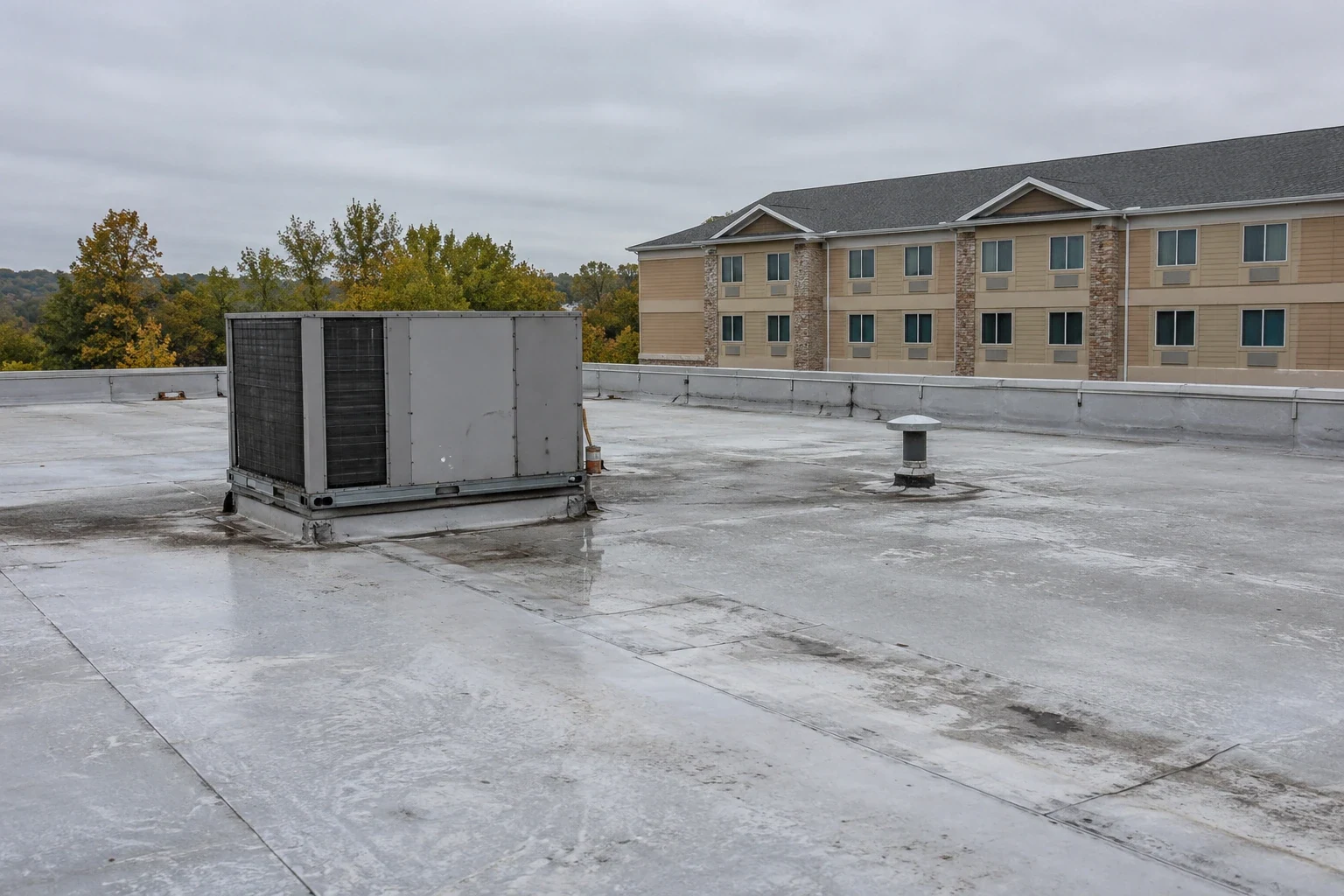
Commercial Roofing for Hospitality Groups in Thornton, CO
Plan hotel and hospitality roof work around guest access, room use, kitchens, event schedules, building records and renewal budgets in Thornton, Colorado.
A hotel roof can affect guest rooms, kitchens, event space and the arrival sequence at once. Our review starts with the reported impact and follows it to the roof zone, equipment or edge detail that needs attention. We record operating limits before recommending work. The property team receives a scope that identifies what can proceed, what needs testing and how each stage will return the affected area to service.

Property map: separate guest and back-of-house constraints
We collect roof plans, room layouts where relevant, equipment schedules, leak calls, prior repairs and the event calendar. The inspection record connects each finding to a building and roof zone. We also identify staff lift access, loading areas, guest entrances, fire routes and the person who controls roof access. A roof over a ballroom may require a different work window from one above a back-of-house corridor.
Nearby hospitality patterns include Arista in Broomfield, where two hotels are part of a mixed-use district, and Downtown Westminster, a redevelopment area with new hotel and apartment openings alongside planned retail and public space. These examples describe local development, not roof conditions at a particular hotel. They reinforce the need to plan around shared streets, parking and neighboring uses. At Arista and Downtown Westminster, shared streets, parking and neighboring uses can affect where a crew stages and how guests move during roof work.
Guest continuity: isolate the work area
Before mobilization, we confirm occupied wings, quiet hours, housekeeping routes, accessible entrances, event bookings and emergency circulation. The hotel identifies any rooms that must remain open and who may authorize a temporary closure. We divide the roof into zones that can be protected and secured. Crew arrival, debris removal and lift operations are scheduled to avoid guest drop-off and peak service periods when feasible.
Daily handoff includes the work area, temporary weather protection, noise or access restrictions and the person accepting the space. If interior protection is required, the scope names the rooms, contents and process for clearing them. A property should not reopen a restricted room solely because roof work has stopped; the site lead confirms the interior and access condition first. Occupied-building reroofing can support a phased schedule when full closure is impractical.
Mechanical roof: coordinate kitchens and equipment
Hotels often have multiple rooftop systems, kitchen exhaust, ventilation, plumbing vents and service lines. We map the equipment and inspect its curbs, transitions, supports and adjacent membrane. A kitchen odor or ceiling mark may have an unrelated source, so we trace the reported symptom before selecting a repair. Equipment changes require coordination with the facilities lead and qualified service provider; the roofing scope should state where isolation or restart approval is needed.
We also review drains, overflow paths, walk pads and areas where service work repeatedly crosses the membrane. If there is standing water, we document its location and whether the drain or roof plane needs further evaluation. The finding remains separate from a leak diagnosis unless evidence connects them. TPO roof assembly review can be considered where appropriate to the existing system, while drainage review addresses a distinct condition.
Weather readiness: protect rooms and common areas
Thornton and Northglenn were crossed by a May 2024 hailstorm, with one- to two-inch hail reported and roof damage noted in the area by the National Weather Service. A hotel can use a local event to trigger an exterior check and review of guest reports. The storm record does not establish damage at a specific property. We document the actual surface, edges, equipment and reported interior locations before setting a repair plan.
County emergency guidance places the Front Range tornado window in late spring and summer, from mid-May into mid-August. That period may overlap outdoor events, wedding bookings and peak travel. The property’s incident plan should set who can restrict a rooftop or room, how temporary cover is checked and when a permanent inspection can occur. Roof access depends on safe conditions, and any water entry should be recorded by room and time.
Renewal options: align scope with property budgets
A local flashing or membrane defect may call for a limited repair when the adjacent assembly remains serviceable. Repeated room reports, moisture evidence, brittle details or broad deterioration may warrant testing or replacement planning. We connect each recommendation to evidence and identify the limit of the inspection. If concealed materials remain unknown, the scope names the test needed and the person who approves opening the roof.
For groups with several buildings, we compare condition, guest impact, access and planned renovations across properties. A phase can be scheduled around lower occupancy or major event dates when that fits the evidence. Capital planning can organize decision dates, and roof condition reports preserve a comparable record. Property-management programs can help coordinate shared records across sites; general-contractor coordination is appropriate when a broader renewal is supported.
Handoff: reconnect roof work to guest records
Closeout should identify roof zones, repairs, products, photographs, testing, inspection limits and any open action. We note the date that temporary protection was removed and which rooms or service areas were released. If a condition remains, the hotel receives its status and the next step. Those details help front desk and facilities teams answer later questions without guessing whether a room was affected. The record can also distinguish a roof repair from separate mechanical service, interior restoration or a guest-room maintenance call. If a room returns to service with a monitoring step, name the staff owner and follow-up date in the closeout.
Keep event calendars, room reports, maintenance tickets, equipment schedules and roof records together by property. The next inspection can then compare a new call with earlier work. Warranty records can be checked against the completed scope. Send property addresses, access rules, occupancy constraints, known leaks and planned renovations. We will return a sequence that identifies guest-facing safeguards, contractor handoffs, cost assumptions and decision points for the property team.
Commercial Roofing Questions
Can a hotel remain open during roof replacement?
The schedule may be phased when access, noise, lifting and weather protection can be controlled. Hotel staff identify occupied rooms, events and routes before the work plan is set.
How are guest complaints connected to roof findings?
We record the room or area, report time, weather context and roof zone reviewed. A visible stain alone does not identify the leak source, so findings and limits remain explicit.
What should a hospitality group provide before inspection?
Provide roof access rules, equipment schedules, room or event restrictions, leak tickets, plans and prior repair records. A property contact should be available to confirm operating limits.
Does regional hail history prove hotel roof damage?
No. A regional report can prompt an inspection, but each roof and reported interior area must be checked directly. We separate observed damage from suspected conditions.
How can several hotel roofs be budgeted together?
Use a common record for condition, impact, access, cost assumptions and the next decision date, while keeping recommendations specific to each property. That supports phased funding without averaging away local differences.
Plan roof work around the guest experience
Share property records, room and event constraints, equipment schedules and leak reports. We will document conditions and a phased scope for facilities review.
Call 555-555-5555 or send the form and we will set up a visit.