
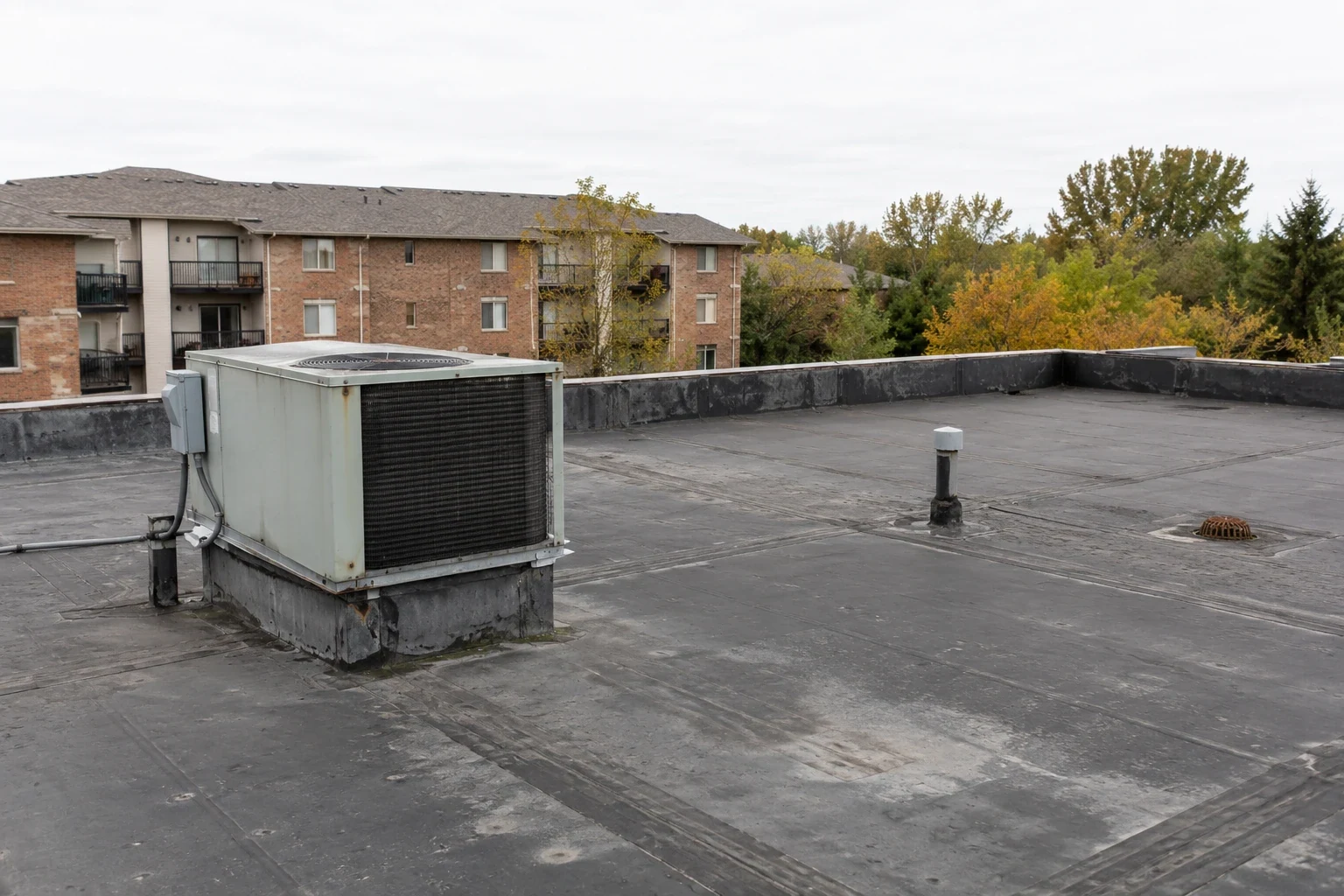
Apartment Roofing in Thornton, CO
Coordinate apartment roof repair and replacement with resident access, occupied units, shared drains, and capital planning in Thornton, Colorado.
A leak over an occupied unit can affect a resident before maintenance can reach the roof. We connect the report to the roof zone, document the interior impact and set an access plan with property staff. Apartment roofing involves resident notice, shared entries and repeated equipment details. The scope should show who needs access, how units are protected and which findings change the repair reserve.
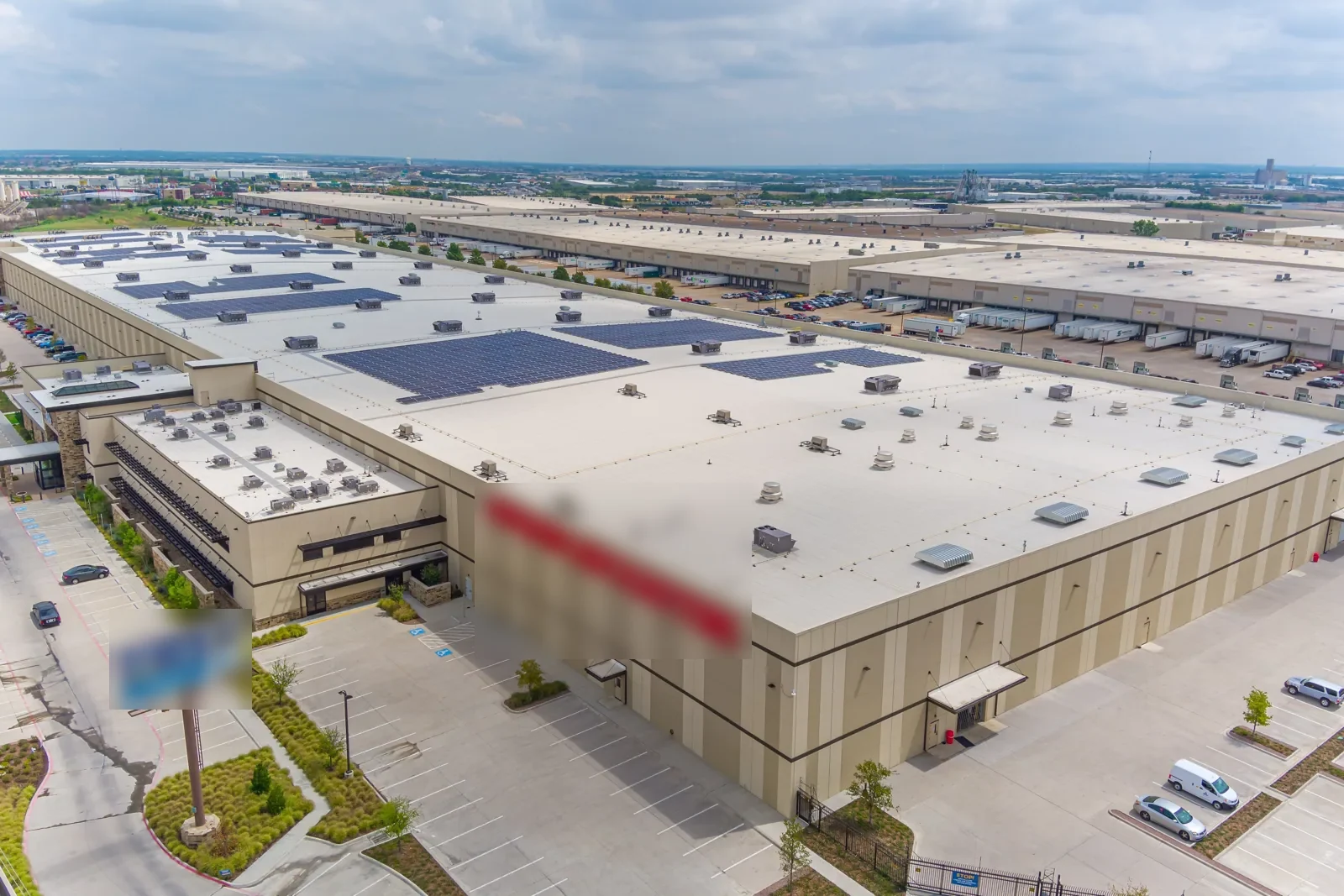
Resident notice: define access and unit protection
We work with management to identify affected units, hallways, balconies or common rooms below the repair. The property team sets notice requirements, entry rules and any quiet hours. The sequence identifies crew access, material staging, lift placement and a safe route that does not interfere with residents. If an interior ceiling must be protected, we agree on the room and release point before opening the roof.
Arista in Broomfield has a mixed-use development program that includes 2,138 multifamily units, office space and two hotels. That scale provides regional context for coordinating shared residential and commercial access, but it does not describe any one apartment roof. We inspect the actual building, confirm its entrances and document occupied areas. Arista is a local multifamily reference for access planning across a mixed-use district.
Leak report: trace the route above the unit
A ceiling stain may be below a drain, pipe penetration, parapet or rooftop unit, and water can move along the assembly before it appears indoors. We compare the resident report with roof details, weather and prior repairs. Photos record the interior location and the roof condition. If the source remains unclear, we define what test or selective opening could confirm the path and set a limit before expanding the work.
A hands-on inspection documents visible seams, drains, flashings and transitions. If moisture may extend into adjacent units, moisture mapping can help identify areas for confirmation. The record states what was measured and what was inferred. Management can then decide whether to protect one unit or schedule a broader investigation.
Common areas: keep entries and services available
Roof work can intersect parking, walkways, building entries, trash access and resident deliveries. We identify each potential conflict and set the work boundary with management. If a lift or material drop uses a parking space, the schedule states when it is reserved. Emergency exits and service routes stay subject to the property’s rules. A section-by-section sequence can reduce the number of areas affected at one time.
Downtown Westminster’s redevelopment plan includes about 2,300 homes at capacity, alongside retail, parks and public space. Its mix of uses is a local example of residential buildings sharing a district with active public routes. That plan does not establish the access rules at another apartment property. We verify the actual site and coordinate resident notices, delivery times and closeout. Downtown Westminster is a nearby housing and redevelopment context.
Drainage and edges: inspect repeat leak points
If residents report water after a storm, we compare the affected building with the NWS May 2024 record for Thornton and Northglenn. That event included hail between one and two inches and roof damage, but the reports do not establish impact on an apartment property. We photograph the actual roof, trace the resident’s report and distinguish observed damage from earlier patches.
Winter snow affects access planning. Denver averages are regional climate context; the current forecast and surface govern any Thornton work date. Drain and scupper work can be separated from a broader renewal proposal.
Repair reserve: compare a patch with a larger project
A localized flashing or seam repair may hold when nearby insulation and membrane remain sound. Repeated leaks, moisture across several zones, poor attachment or degraded edges can shift the decision toward replacement. We map findings by building section, confirm test limits and identify what evidence supports the next action. If a recover is considered, the existing assembly, drainage and perimeter height need review first.
A hotel roof also needs occupied-building phasing, but guest turnover and event schedules differ from resident notice. Senior-living facilities may add care operations that require separate coordination. We price access, interior protection, resident communication assumptions and repair quantities distinctly so ownership can compare options across its portfolio.
Capital window: align permits, weather and funding
Capital timing depends on how many buildings can be opened, how residents are notified and whether material can reach each roof without blocking shared routes. We show measured quantities and flag concealed conditions that may change removal. A repair reserve can be compared with phased renewal that avoids exposing several buildings at once. If the project requires a permit review or revised drawings, those steps need a date before procurement.
Cost also reflects roof access, equipment, membrane layers, interior protection, lift needs and the number of phases. For a leak that cannot wait for a scheduled capital window, emergency protection can reduce exposure while a permanent repair is arranged. Management receives an updated sequence before the crew advances to another building.
Property record: close out by building and zone
Closeout identifies repaired roof zones, materials, photos, drains, penetrations, rooms protected and areas not tested. We note any temporary repair and the next inspection recommendation. When a property has several buildings, the record keeps each assembly and resident report attached to the right structure. This supports maintenance planning and helps management answer future questions with a clear repair history.
Send the building list, roof plans, leak reports, notice rules, access calendar and capital target. We will return a sequence with protection requirements and daily close-in points. Eastlake at 124th Station Area allows residential and employment uses near transit, which is useful context for coordinating area access. It does not determine the work limits at a specific property. Eastlake at 124th Station Area is another local reference for transportation and mixed-use access.
Commercial Roofing Questions
How do residents get notified before roof work?
Property management sets the notice process and identifies affected units, common areas and access restrictions. We provide the work zone, expected timing, noise periods and any route changes so notices reflect the actual sequence.
Can one leak affect more than one apartment?
Water can travel along the roof deck or framing before it reaches a ceiling. We inspect the likely source and adjacent roof details, then document rooms or units that may need monitoring. Testing can establish whether insulation is wet beyond the visible stain.
Can a roof be repaired without entering each unit?
Many roof observations can be made from above, but interior access may help confirm the leak path or protect a room. Management coordinates entry with residents. We identify any required access before the visit and record areas that could not be checked.
What changes the cost of apartment roof replacement?
Building height, number of roof sections, access, equipment, membrane layers, resident protection, staging and daily close-in affect the scope. We state the measured quantities and how hidden damage is handled before production.
How do you prioritize roofs across a multifamily portfolio?
We compare active leaks, moisture, attachment, repair history, access constraints and upcoming capital dates by building. A documented condition record separates immediate protection from work that can be scheduled later.
Set apartment roof work around residents and funding
Share the building list, roof plans, leak reports, resident notice rules and capital target. We will map conditions and return a sequence by roof zone.
Call 555-555-5555 or send the form and we will set up a visit.