
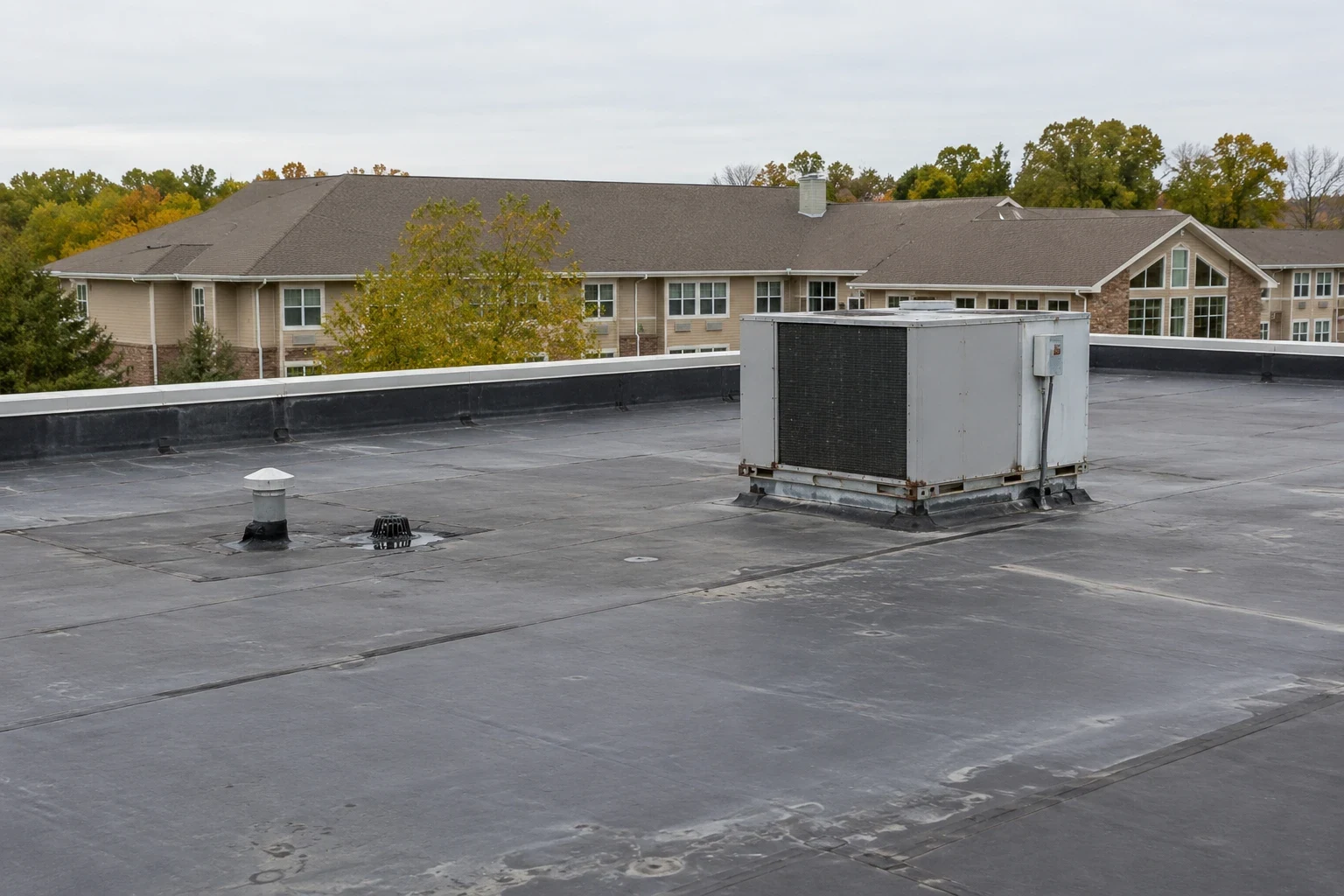
Senior Living Roofs in Thornton, CO
Coordinate senior living roof repairs around resident safety, care schedules, access routes, and capital timing in Thornton, Colorado.
Resident access can change the repair window before the roof source is confirmed. We inspect above the report, map the interior area and coordinate entry with staff. Senior living buildings need quiet work zones, clear emergency routes and a secure close-in after each shift. A condition record helps operators decide which repairs belong in the current reserve and which can wait for a planned capital window.
Resident protection: define the room and route
We identify the unit or shared room below the roof zone and ask the facility contact which routes must stay open. Staff can set privacy, escort and notice rules before crews arrive. The work sequence names roof access, staging, noise periods, interior protection and the person who releases the area. If a room must close briefly, the scope states the expected duration and the conditions that could extend it.
Arista in Broomfield includes a mixed-use program with 2,138 multifamily units, office space and hotels. That residential scale is useful context for access planning, but it does not describe a senior community or its roof. We confirm the building and care operations. Arista offers a local reference for housing within a larger property setting.
Care schedule: keep clinical and dining functions available
Medication rounds, dining, therapy, deliveries and staff changes can limit roof access at different times of day. We ask the operator to identify sensitive periods and rooms below the work. High-noise tear-off can be scheduled apart from inspection or detail repair. If ventilation equipment or rooftop supports need protection, the facility engineer approves any shutdown and return-to-service check. The plan makes those responsibilities visible before mobilization.
Each phase advances only as far as the crew can secure before leaving. We use a boundary that facilities staff can inspect and understand. If hidden deck damage or wet insulation changes the repair, the crew reports it before expanding the opening. That gives the operator a clear choice about temporary room restrictions and the timing of the next phase.
Leak diagnosis: separate roof entry from indoor systems
Water in a resident room may come from a roof seam, plumbing, condensate or equipment connection. We compare the report time with weather and mechanical activity, then check drains, curbs, wall transitions and prior repairs. Photos connect the interior location to the roof zone. If the source remains uncertain, we identify the next test and state how its result would change the removal limits.
A hands-on inspection records membrane, flashing and drainage conditions. When moisture may extend beyond the visible ceiling mark, infrared mapping can direct follow-up checks. The report distinguishes scan data from direct confirmation. We document rooms protected and areas that could not be reached, so the next care or maintenance shift has a usable update.
Weather calendar: secure the roof before the shift ends
The May 2024 NWS summary reports roof impacts and hailstones from one to two inches during a storm that crossed Thornton and Northglenn. That event can prompt a timely roof walk if a care team notices impact or new water entry. It does not establish damage at a particular senior property. We photograph the actual membrane, edges, penetrations and equipment bases, then set protection from the condition found on site.
Denver snow averages are regional context, not a measure from one Thornton roof. We check current forecast, surface and access before opening a section. A daily plan sets the largest safe work area and the point when the roof must be secured. Snow and ice damage review can document observed conditions after winter exposure.
Scope choice: compare a room repair with broader renewal
A failed curb or seam may be repaired when the surrounding insulation, attachment and membrane remain serviceable. Repeat leakage, wet materials or edge deterioration can support a larger section or replacement. We map each finding and label evidence that supports the recommendation. If a recover is considered, we verify existing layers, drainage and perimeter details before adding material. The operator can compare near-term repair with work scheduled during lower occupancy.
A multifamily roof can share resident notice requirements, while a hospital campus adds clinical routes and equipment controls. Senior living has its own care calendar and resident safeguards. We separate access, interior protection and phased work in the estimate so a manager can see which constraints affect price and duration.
Capital priority: document the next decision date
Thornton studied redevelopment potential across 30 parcels in South Thornton. This local planning effort provides context for institutional property decisions, but it does not describe a senior community or its roof. A property near South Thornton Healthcare District still needs direct inspection and an access plan. We tie each finding to the building and its care schedule.
At closeout, we provide photos, repaired details, material information, areas tested and limits on access. The record identifies temporary work and any follow-up needed. Send the roof plan, resident reports, care schedule, access rules and capital deadline. We will prioritize by water risk and operating consequence. For an urgent leak, emergency protection can reduce interior exposure until a permanent repair window is approved.
Handoff: return the affected area to staff
After the work, the facility contact should know which roof zone was repaired, what material was installed and which rooms or routes were protected. We confirm the roof is secure and clear staging from the approved path. If a temporary cover remains, closeout identifies who will monitor it and when permanent work is expected. That gives the next staff shift a clear handoff rather than a verbal update alone.
Send drawings, leak logs, room locations, equipment notes, restricted hours and the date when funding or occupancy decisions are due. We will return a verified scope with an access-aware work sequence. Occupied-building phasing can make daily release steps explicit where residents remain in place.
Commercial Roofing Questions
How do you protect residents during a roof repair?
We set a work boundary with the facility, identify rooms and routes below it, and agree on interior protection before opening the roof. The schedule lists noise periods, crew access and the daily handoff. Staff control any resident movement or room closure.
Can work continue while residents stay in the building?
A limited phase may proceed when the facility approves access, ventilation, noise and protection measures. Each shift ends with a secure roof condition. Larger removal may require a planned room or area restriction.
How do you investigate a leak over a resident room?
We compare the ceiling report with roof details and nearby plumbing or equipment activity. Photos tie the interior area to the likely entry point. If the source is uncertain, we define a test before opening more of the assembly.
What should the operator send before an inspection?
Room locations, resident-care schedule, roof drawings, prior repairs, staff access rules and any active water entry help prepare the visit. We can then identify which people and spaces need coordination.
Does a hail report set the repair scope?
No. It can prompt a timely inspection, but we document conditions at the property before recommending repair or replacement. The report notes visible impact and any areas that need testing.
Set the roof sequence against the care calendar
Share the roof plan, resident reports, care schedule, access rules and capital deadline. We will document affected zones and return a controlled work sequence.
Call 555-555-5555 or send the form and we will set up a visit.