
Hotel Roofing in Thornton, CO
Schedule hotel roof repairs around guest occupancy, event areas, rooftop equipment, and the next capital window in Thornton, Colorado.
A ceiling report in a guest room can affect the next arrival before the source is clear. We inspect the roof zone above, document the interior exposure and set a work window with the property team. Hotels combine guest rooms, kitchens, meeting space and equipment areas. The plan should identify what can stay in service, which route crews use and how the building is secured at the end of each shift.
Guest zone: match the repair to occupied rooms
We start with the room number, report time and any recent HVAC or plumbing work. The roof walk checks drains, seams, curbs, penetrations and transitions above the affected area. Water may move before it reaches a ceiling, so we map the probable path instead of placing a patch directly above the stain. The record identifies rooms protected, rooms that may need access limits and what remains uncertain.
Arista in Broomfield includes two hotels totaling 243 rooms within a mixed-use district near US 36. The planned program also includes office space and multifamily housing, so property access may involve several uses. That context helps frame coordination needs, but does not describe any individual roof. Arista is a local lodging and mixed-use reference; we verify the hotel address and guest operations before setting the sequence.
Quiet hours: plan noisy work between operating peaks
Guest check-in, housekeeping, events and food service can make the same roof zone unavailable at different times of day. We coordinate noise periods, deliveries, lift placement and temporary access changes with hotel operations. If a room or meeting area below needs to close, the plan states the likely duration and handback point. A broader tear-off may fit an off-season or a planned renovation window, while a small flashing repair may need only a shorter closure.
Material staging should not block guest drop-off, fire access or receiving. We identify crew routes, loading rules and overhead protection before equipment arrives. Daily cleanup and a secure close-in allow the hotel to return the space to service. Occupied-building phasing can set work boundaries where hotel functions continue during construction.
Mechanical details: inspect curbs and service paths
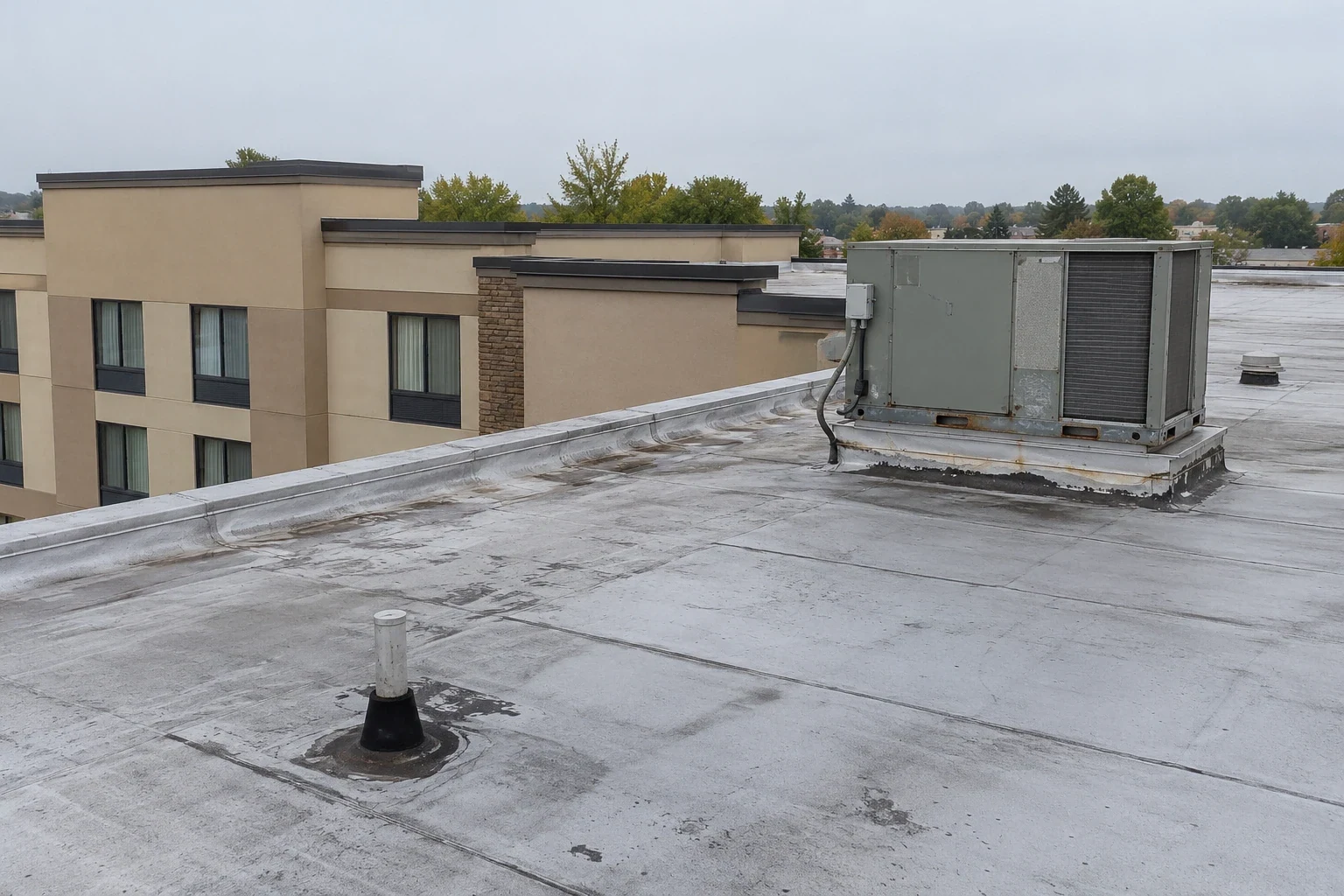
Rooftop units, kitchen exhaust, vents, pipe supports and access hatches can create leak points or restrict a repair route. We inspect flashing at each base and note equipment that needs protection or shutdown approval. A roof plan should separate mechanical work from membrane repair so a later service visit does not disturb the new detail. We photograph the condition before and after the work.
Denver Premium Outlets is an open-air retail property in Thornton with stores, dining, parking and shared common areas. Its operating mix provides local context for guest-facing routes and shared access, while the hotel’s own plan determines staging. Equipment curb work can be scoped with the membrane where both details are affected. The Grant Street retail campus is another nearby example of a property where public movement and service routes must be coordinated.
Storm assessment: document impact before repair
The NWS storm summary dated May 30, 2024 records hail and roof damage across Thornton and Northglenn. The reported stones reached the one to two inch range. A hotel review should determine whether its membrane, equipment bases or flashing show impact, especially when guest rooms report new water entry. We document each observed condition and keep regional weather context separate from the building findings.
Adams County identifies a mid-May through mid-August peak period for Front Range tornadoes. After wind exposure, we check corners and edges when roof access is safe. Guest operations may need a quick room decision, but the repair recommendation follows site evidence. A documented roof review records the condition by area.
Repair threshold: compare room impact and roof condition
A single failed seam or curb may be repaired when the surrounding assembly remains sound. Repeat leaks, wet insulation or widespread movement can point to a larger section or full replacement. We separate the room report from the roof finding and identify what test would change the scope. If a recover is considered, existing layers, drainage, perimeter height and attachment need review before adding material.
A multifamily roof can have resident access and notice needs, while a retail center may add multiple tenant entries. Hotel projects bring guest turnover and event schedules. We write those assumptions by building and roof zone. Downtown Westminster’s redevelopment plan includes hotel openings along with retail and homes, a reminder that renovation and active operations can overlap in a district. Downtown Westminster is a local planning context, not a condition report for a particular hotel.
Capital window: price access, closure and close-in
Cost depends on roof area, height, system layers, equipment density, tear-off depth, guest protection, staging and work hours. Night work or limits on room access can affect mobilization. We show which quantities are measured and how concealed deck or insulation conditions are approved. The hotel can compare a localized repair with a phased reroof while seeing the closure assumptions for each option.
Thornton’s 2024 building and existing-building codes apply to covered permit work. Energy-code requirements can affect insulation and permit planning, so we confirm the applicable rules before ordering materials. The schedule should allow time for review, equipment coordination and a secure daily boundary. If the property has a renovation date, the roof scope should state which work must finish before rooms or meeting space return to service.
Handoff: return rooms and preserve the roof record
Closeout notes list repaired areas, materials, photos, interior protection, test limits and any follow-up inspection. We identify the room or function below each work zone and confirm that guest access routes are clear. If temporary protection remains, the record states who will monitor it and when permanent work is planned. This helps operations connect a later report with the exact detail repaired.
Send the roof plan, room reports, event calendar, HVAC locations, access rules and capital deadline. We will return a work sequence with quiet-hour assumptions and daily close-in points. For an active leak, emergency roof protection can reduce interior exposure while a lasting repair is arranged. Insulation replacement can be included where testing confirms wet material.
Commercial Roofing Questions
Can roof work proceed while hotel rooms are occupied?
It can when the hotel and roofing team agree on room access, noise windows, guest routes and daily close-in. Some tasks may require a temporary room block or off-hour work. We identify those assumptions before staging.
How do you handle a leak reported from a guest room?
We inspect the roof area above and compare the report with seams, drains, equipment curbs and plumbing or HVAC changes. The condition record states the likely path and any test limit. A targeted opening may be needed if wet layers change the repair.
What should a hotel do after hail or wind?
Report affected areas and any water entry, then arrange safe roof access for inspection. We photograph observed damage and separate storm impact from earlier wear. A regional weather report alone does not establish a claim or replacement need.
What affects the schedule for a hotel reroof?
Guest occupancy, events, service hours, lift access, equipment coordination, weather and the number of secure daily phases all matter. We build the sequence around the hotel calendar and list any room or route restrictions.
Can insulation be replaced without reroofing the whole hotel?
A limited repair may work when the affected area is contained and surrounding layers remain sound. We test or open a defined zone, then set removal limits. Widespread moisture or attachment problems can change the recommendation.
Set a hotel roof sequence around occupancy
Share guest-room reports, event dates, rooftop equipment locations, access rules and the capital window. We will map priorities and return a work sequence for hotel operations.
Call 555-555-5555 or send the form and we will set up a visit.