
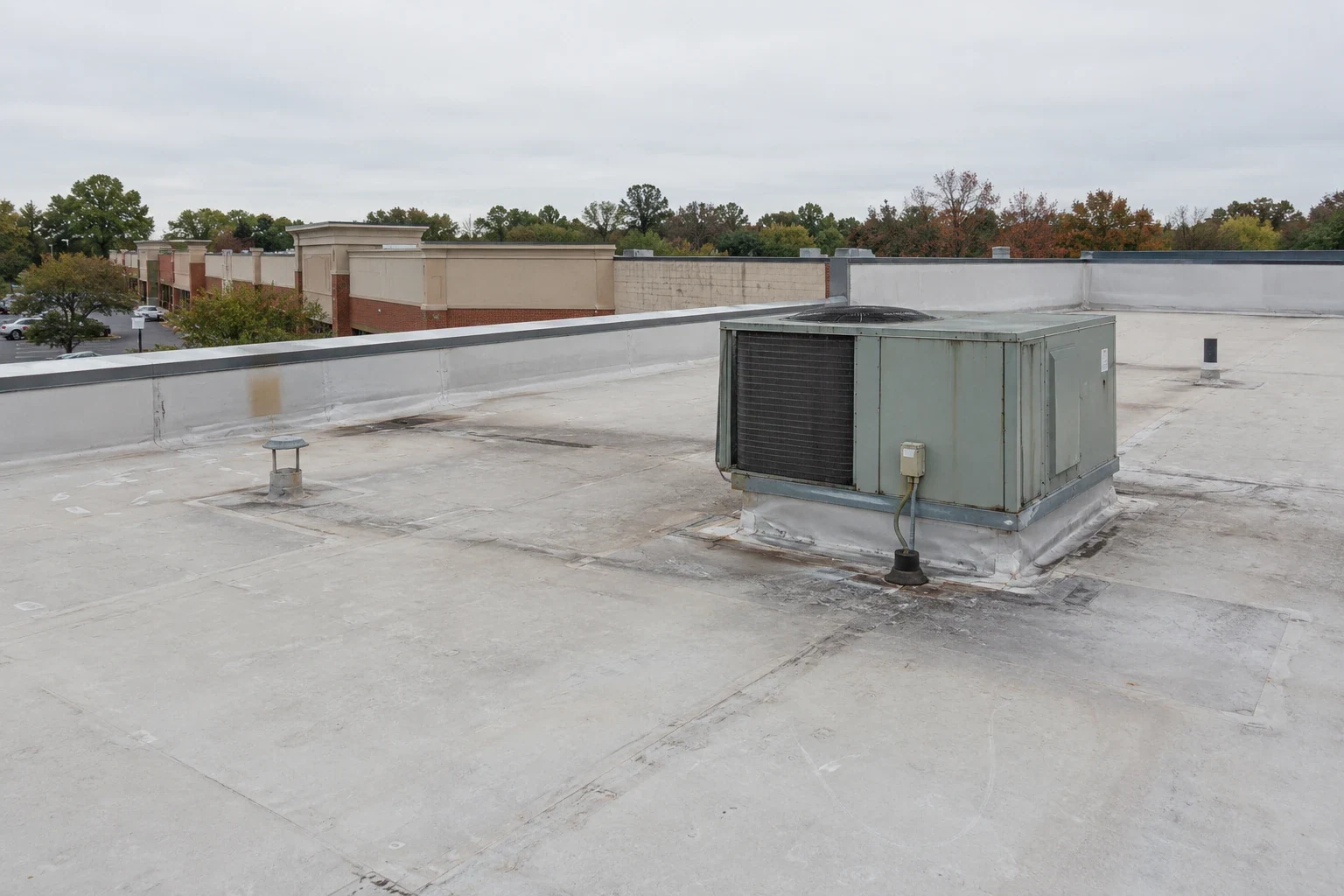
Shopping Center Roofing in Thornton, CO
Plan shopping center roof repairs around tenant access, shared drainage, storefront protection, and capital timing in Thornton, Colorado.
A roof leak above one tenant can become a common-area issue before the next delivery cycle. We locate the affected roof zone, trace water paths and separate the repair from work that can wait. Shopping centers combine suites, storefronts, shared drains and service corridors. The scope needs to show which tenant areas are affected, how access will work and what the owner must coordinate.
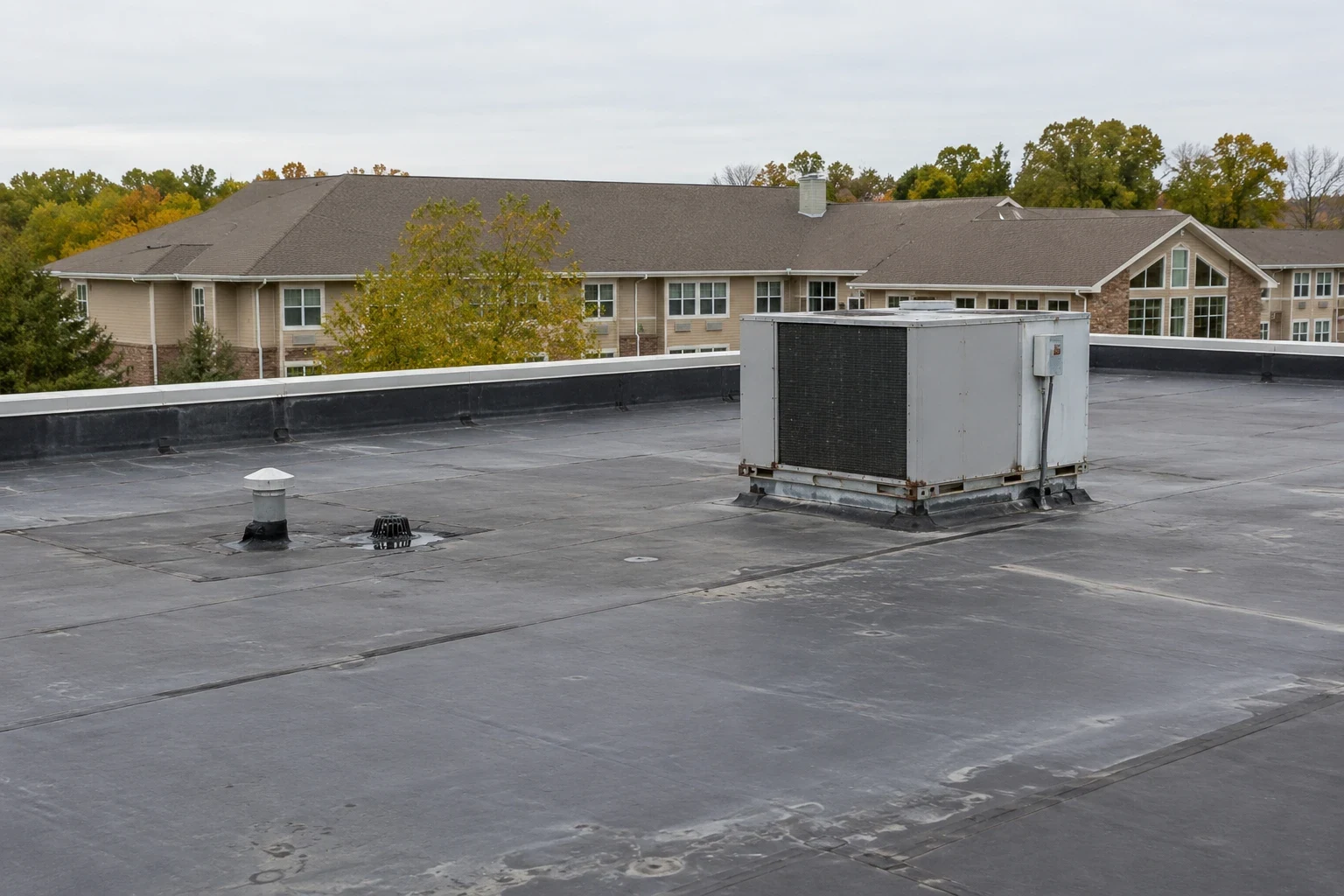
Tenant map: match roof zones to occupied suites
We compare lease plans or a site map with the roof layout, then mark the suite, corridor or common area below each finding. A leak above a restaurant, salon or office can need different protection and notice. We confirm the interior contact, delivery limits and work hours for every affected space. Separate zone IDs help property staff route updates without sending a campus-wide notice for a small repair.
Denver Premium Outlets is an open-air shopping center at 13801 Grant Street in Thornton, with more than 75 stores advertised by its operator. That scale signals varied tenant access and shared common areas, but it does not establish the roof system or condition. We inspect each building and note which entries or storefronts require protection. Denver Premium Outlets is a local retail reference for the access planning involved.
Storefront protection: keep customer paths legible
Roof access may cross parking, sidewalks, loading lanes or a public entrance. We identify lift placement, staging and overhead protection before materials arrive. If the repair affects signage, a canopy or a tenant entrance, the plan states when the route changes and when it reopens. A center manager can then coordinate notices with each operator and keep alternate customer access visible.
Work over an occupied suite may require interior covering, dust controls or a short closure. We set the affected area and daily cleanup point with the property contact. Tear-off creates more noise and debris than a surface repair, so we schedule those tasks separately. Occupied-building phasing can define the controls when stores remain open, while a replacement scope should set perimeter protection and delivery timing.
Drainage path: trace shared water before patching
On connected retail buildings, water can travel from a higher roof section to a low outlet far from the tenant report. We inspect drains, scuppers, valleys, wall transitions and prior patches before selecting a repair. If debris is blocking an outlet, clearing it may restore flow. Persistent ponding can point to a slope, insulation or deck issue and should be evaluated as a different scope.
At Northglenn Marketplace, the city describes a built-out 58-acre retail center with attached and standalone commercial structures and tenant spaces of different sizes. That variety illustrates why shared drainage and separate roof sections need to be mapped precisely. It does not provide a condition report for any suite. Northglenn Marketplace offers a nearby example of varied retail roof areas. Drain and scupper work can be priced separately from membrane repair.
Storm review: distinguish impact from ordinary wear
The NWS May 30, 2024 summary records one to two inch hail and roof damage during a storm affecting Thornton and Northglenn. That regional entry can move a property review forward when tenants report impact. It does not establish damage at a shopping center. We photograph observed membrane, rooftop equipment and perimeter conditions, then record which suites or common areas need follow-up.
Denver snow records add seasonal context but do not measure a Thornton retail roof. We confirm the work date against the forecast and surface. Every exposed section needs a secure stopping point if weather interrupts the shift. A hail-damage inspection can document findings before replacement quantities are discussed.
Portfolio scope: set repair limits and replacement triggers
A targeted repair fits when the defect is isolated and surrounding membrane, insulation and attachment are sound. Repeat leaks, wet board, loose edges or separated seams can shift the decision toward a larger section or replacement. We map findings by building and tenant, show test limits and identify what could change the recommendation. That lets ownership compare immediate leak control with a planned capital project.
A big-box retail roof often presents broad store areas and equipment clusters, while a grocery roof may add refrigeration and protected delivery windows. A shopping center can include both operating patterns. We identify each roof assembly and tenant requirement before grouping buildings into a bid. A recover is considered only when existing layers, drainage and edge conditions allow it.
Budget window: price access and tenant coordination
Cost and duration depend on roof area, height, membrane layers, equipment density, tear-off, disposal, interior protection and the number of separate mobilizations. Evening work or restricted customer routes can change labor and staging. We state whether quantities are confirmed or estimated and set an approval method for concealed deck or insulation damage. The owner can compare a localized repair, phased replacement and a single center-wide project using the same assumptions.
Market at 88th is a former shopping center site at Washington Street and 88th Avenue where the city is pursuing a retail-oriented mixed-use reuse plan after demolition. That redevelopment status is relevant to acquisition planning, but it does not tell us the condition of an operating center nearby. We verify the current property, lease status and roof access. Market at 88th is a local planning reference, not a roof survey.
Closeout: return tenant areas with a clear record
At completion, we photograph repaired seams, drains, edges and penetrations and identify the tenant or common area below. The record notes materials, testing limits, temporary protections and any remaining concern. Property staff can use it to answer a later leak report and compare the work with other buildings in the portfolio. We also state whether access routes and staging areas have been restored.
Provide a tenant map, leak log, delivery restrictions and roof drawings. We will identify each work area, approvals needed and the close-in point for every phase. For connected buildings, a documented inspection can establish condition by roof zone. Kitchen exhaust and service hours can affect how restaurant tenants fit into a shared sequence.
Commercial Roofing Questions
Can roof repairs happen without closing every store?
A repair can often be limited to one roof zone and one access path. We confirm the affected tenant, noise window, storefront controls and daily close-in before work. A larger tear-off may need a planned closure or after-hours phase.
How do you allocate a leak to the right tenant or building?
We compare the reported interior location with the roof plan, drains, seams and transitions above it. The condition record identifies the likely source and any testing limit. If the water path is still uncertain, we propose a bounded investigation before expanding the repair.
Does a hail report mean the whole center needs a new roof?
No. We inspect the property for specific impact and separate fresh damage from prior repairs or ordinary aging. The scope follows observed conditions, not a regional event alone.
What changes the cost of a retail center reroof?
Separate buildings, tenant hours, overhead protection, lift access, equipment, membrane layers and interior controls all affect cost. We show those assumptions by zone and explain how hidden damage would be approved.
What should the manager coordinate before mobilization?
Share tenant contacts, delivery schedules, restricted entrances, parking rules and any dates with heavy customer traffic. We will map access, staging and notices into the sequence before material delivery.
Coordinate roof work across tenants and common areas
Send the tenant map, roof drawings, leak locations and operating windows. We will return a zone-based scope that shows access, protection and budget assumptions.
Call 555-555-5555 or send the form and we will set up a visit.