
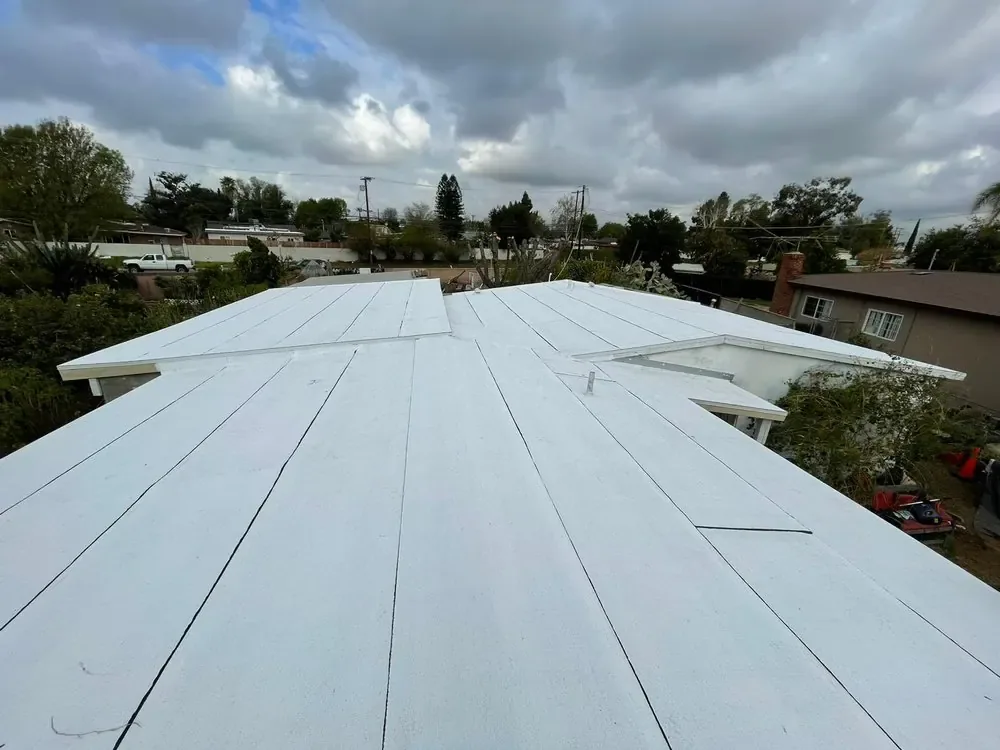
GAF Commercial Roofing in Thornton, CO
Compare GAF commercial roof assemblies, repair paths and replacement timing for facilities in Thornton, CO, using verified conditions by roof zone.
A membrane decision changes when hail marks, seam movement and wet insulation appear in different roof zones. We inspect the existing assembly before matching a GAF commercial system to the building. Thornton’s May 30, 2024 hailstorm crossed Thornton and Northglenn, with NWS reporting one to two inch hail and roof damage. That event can prompt an inspection, but it does not establish damage at an individual property. We record what is visible, what needs testing and which repair or replacement choice fits the facility’s capital window.
GAF offers commercial roofing assemblies across several system types. The right comparison starts with deck condition, existing layers, drainage, edge details, equipment, access and the building’s operating schedule. A product name does not settle those questions. Our scope ties the specified materials to roof zones, transition details and a work sequence that can be inspected before close-in.
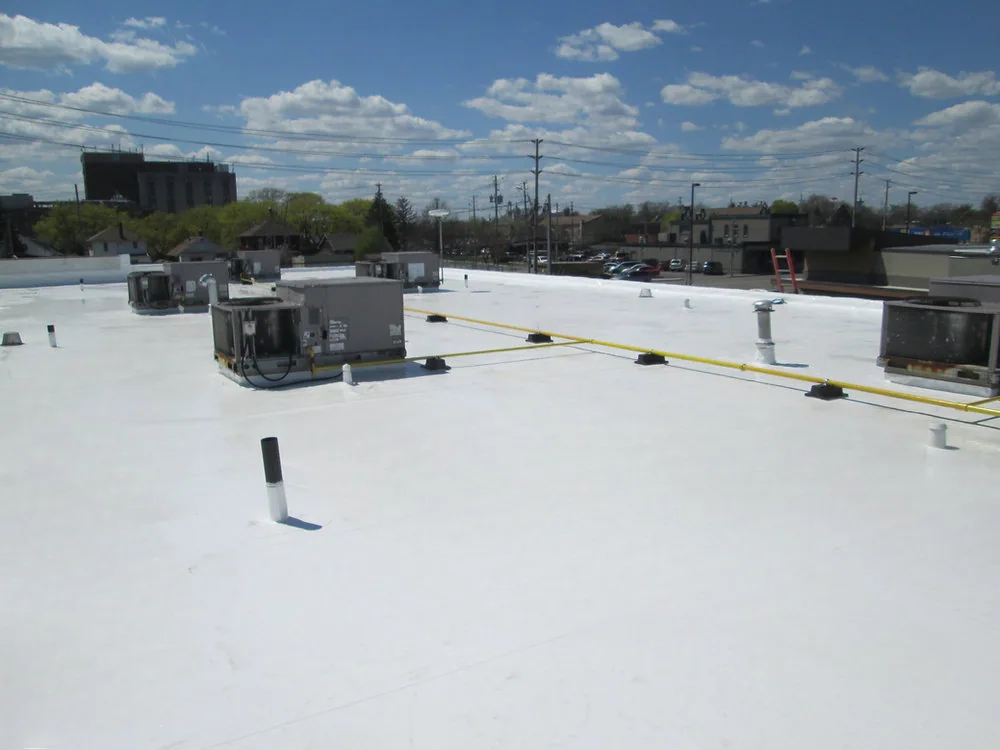
Assembly review: start with what the roof can support
We identify the present membrane or surfacing, attachment method where visible, insulation condition, cover board, deck concerns and prior repairs. Core cuts or other testing may be needed when the layers remain uncertain. We state the sample locations and restoration plan before opening the roof. An assembly proposal should distinguish confirmed conditions from assumptions, including whether removal reaches the deck or stops at an accepted layer.
Thornton Business Park allows office, clinic, industrial, transport, warehouse and hospital uses, while limiting higher-intensity warehouse uses to selected areas along I-25 and E-470. Those facility types can carry different interior sensitivities and access rules. They do not identify a roof system. We confirm the property’s actual assembly and operating limits before assigning materials or sequencing. Thornton Business Park District provides useful land-use context for a facility inventory.
Our comparison may include GAF membrane options, insulation changes, cover board, edge metal and flashing. We also evaluate compatibility with retained materials. A recover can reduce demolition only when the existing roof and code path support it. If wet insulation, unstable attachment or accumulated layers change that premise, removal may be the more accountable scope. A commercial roof inspection records visible conditions before we price that decision.
System fit: compare membrane choices by exposure
GAF’s commercial portfolio includes single-ply and asphalt-based roofing options. We narrow the choice by expected exposure, substrate, roof geometry, detailing and maintenance access. A single-ply assembly needs consistent seam work, secure perimeters and correctly formed transitions. An asphalt-based assembly has its own surfacing, flashing and application requirements. Neither category should be selected from a product label alone. For an apples-to-apples scope review, we may compare Carlisle SynTec or Johns Manville assemblies against the same verified conditions.
Thornton's winter season can constrain access and open-roof duration. We check drainage, scuppers, low points and penetrations before sequencing work, then use the forecast for the actual installation dates. Denver climate normals provide regional context only. TPO roofing is one possible system comparison when the verified deck and facility use support it.
Thornton permit guidance now references the 2024 editions of the international building and existing-building codes for covered applications. The city’s energy criteria changed in mid-2026. We verify the permit date and project scope to determine the applicable review. A manufacturer data sheet does not serve as project approval.
Condition map: keep repairs distinct from renewal
A puncture, open seam or failed curb flashing may be locally repairable when adjacent material remains serviceable and the cause is understood. Repeated wet areas, widespread attachment concerns or deteriorated transitions can point toward broader renewal. We document the affected roof zone, photo evidence, test limit and repair boundary. That lets the owner compare immediate protection with a planned GAF replacement without conflating the two budgets.
At 5280 Logistics Park and Crossroads 25, industrial and distribution activity makes delivery timing and equipment movement part of work planning. Those named projects are local operating references, not proof of any particular roof construction. For an active facility, we confirm loading periods, roof access, lift staging, tenant notices and the approved close-in window. An orderly occupied-building reroof separates work areas and protects routine operations where practical.
Following a reported hail or wind event, we note the incident date, affected elevations, water reports and sections outside the inspection boundary. The area-wide hail record can help set inspection priority, but our recommendation follows the property evidence. Hail-damage evaluation can document impacts without promising a coverage outcome.
Budget window: make the material decision auditable
Pricing changes with tear-off depth, insulation replacement, cover board, deck repairs, edge metal, penetrations, staging and occupied-area protection. We identify each included and excluded item. If hidden conditions may change the scope, the proposal lists the verification step and how a change would be handled. A comparison between GAF and another manufacturer should hold the assembly assumptions constant, or show why the scopes differ.
Winter planning requires a daily check of temperature, precipitation, wind, dry-in material and the crew’s ability to secure the open section. We define milestones for removal, dry-in, membrane installation and inspection before work begins. If weather makes the specified process unsuitable, the open area is protected and the next phase waits for acceptable conditions. That sequence informs the schedule without assigning a regional snow total to the property.
For portfolios, we can rank buildings by active water entry, observed deterioration, test need and capital timing. North Valley Tech Center is a named South Thornton economic generator. Its presence adds local context to planning for area facilities, but it does not tell us a roof’s condition or schedule. Confirmed scope and unresolved questions can carry into a funding review.
Installation control: verify details before close-in
Before work starts, we align the submittal, roof plan, material staging, access route, occupied zones and weather limits. Field checks cover substrate preparation, insulation fastening or adhesion, membrane attachment, seams, perimeter restraint, penetrations and drainage transitions. Photos are tied to roof zones. A change in deck condition or existing layers is recorded before it becomes concealed.
Closeout includes the areas completed, materials installed, repair boundaries, inspection records and remaining limitations. Manufacturer documentation is reviewed against the specified assembly. We do not represent a manufacturer relationship or promise a warranty term. Where a project requires a specific inspection, registration or warranty process, its requirements are identified and verified for that scope before work begins.
Maintenance records help the facility team see whether isolated repairs remain isolated. A post-project inspection can note open actions, drain conditions and any access restriction that affects future review. Photo-based condition records preserve the baseline for later review.
Commercial Roofing Questions
What should be confirmed before selecting a GAF assembly?
Start with the deck, existing layers, moisture evidence, drainage, attachment, perimeter details and permit scope. We identify which items are verified and which require testing, then compare assemblies against the building use and installation window.
Can a GAF membrane go over the existing roof?
A recover is possible only when the existing system is stable, dry enough for the design and acceptable under the applicable code and manufacturer requirements. We verify layers and moisture first. Where those checks fail, removal may be needed.
How do you decide between repair and replacement?
We map the defect, adjacent material and history of prior work. A contained issue with sound surrounding material may support repair. Broad deterioration, repeated wet insulation or failed transitions can move the decision toward renewal. Testing is listed where it could change that call.
What changes the schedule for a commercial GAF installation?
Access approval, tear-off depth, deck repairs, weather, material staging, occupied operations and the close-in plan control the sequence. We compare those constraints with the capital date and identify milestones that need owner approval.
What does the owner receive after installation?
The closeout should include the completed work areas, material and detail records, dated photos, inspection notes, open items and maintenance considerations. Any manufacturer-specific document or process is confirmed for the project rather than assumed.
Set the GAF decision against the roof record
Send the roof plan, known assembly, leak history, access calendar and capital deadline. We will inspect the defined zones and return a verified scope with repair and renewal options.
Call 555-555-5555 or send the form and we will set up a visit.